|
Pan American Experiences
|
------- |

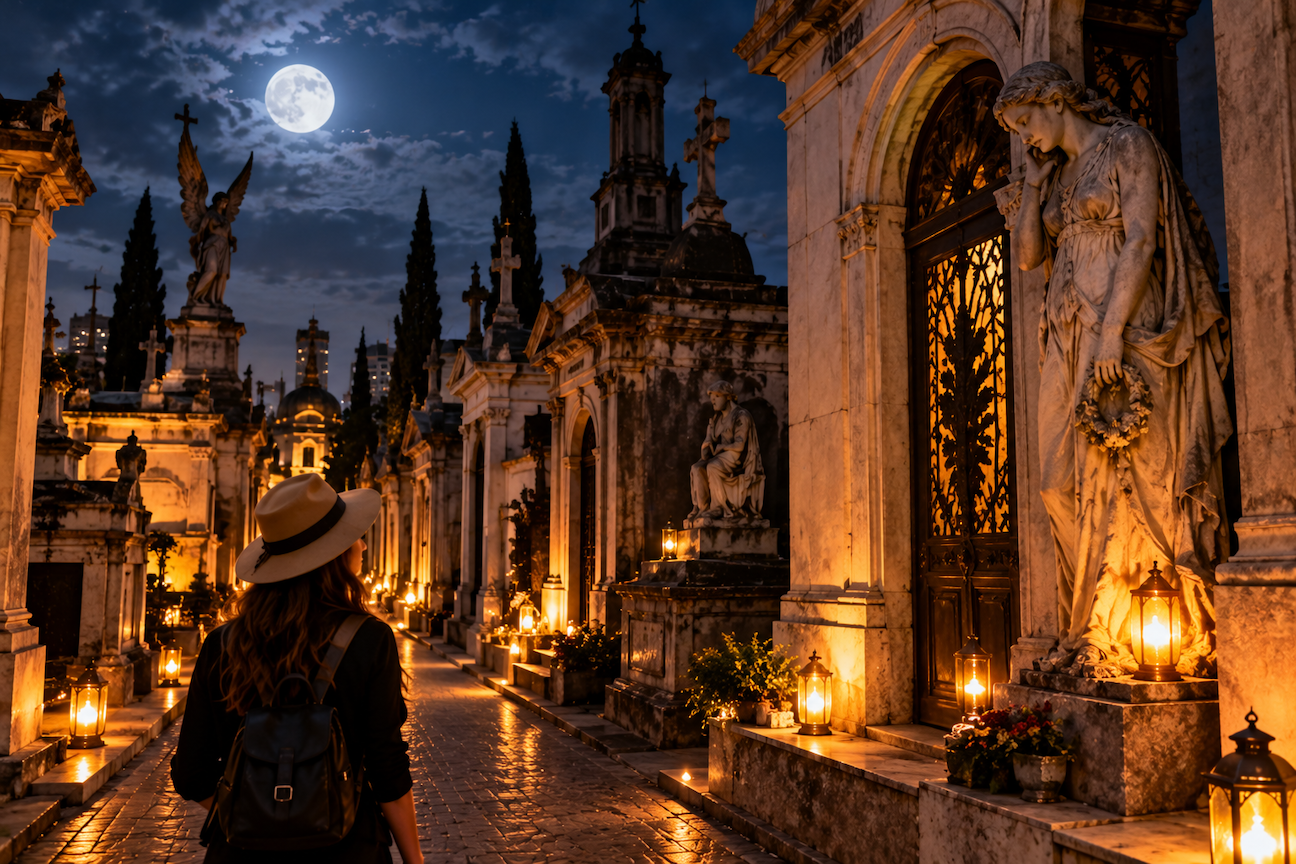
A haunting journey through the hemisphere’s historic cemeteries, where moonlit mausoleums, intricate tombstones, and solemn statues reveal stories of love, loss, war, and the traditions that keep memories alive.
|
HEMISPHERE ------------------------------------------987[TRAVEL PLANNING] | |||
New Experiences ArticleFrom Gothic Cemeteries to Ancestral Traditions Across the AmericasBy Marbel Montoya for Ruta Pantera on 10/20/2026 11:23:18 AM |
||||
| This Halloween, let’s trade haunted houses for the real thing. Across the Americas, cemeteries preserve stories of love, war, migration, epidemics, slavery, Indigenous heritage, and families who refuse to let their dead be forgotten. Some are eerie cities of marble mausoleums and narrow passageways; others are colorful gathering places where candles, flowers, food, and music welcome the departed. A few are solemn military landscapes where thousands of identical headstones mark the cost of war.
Call it grave watching: a journey through the places where the living leave clues about the people who came before them. The challenge is to look beyond the gothic atmosphere and learn how to read the landscape. Who was remembered, who was excluded from the official record, what symbols appear on the stones, and what do families still do to honor their ancestors? These are the questions that turn a cemetery visit into a meaningful travel experience. Buenos Aires, Argentina | Recoleta Cemetery: A City of Marble and Mystery Recoleta Cemetery is one of the hemisphere’s most extraordinary places to wander among the dead. Opened in 1822 as Buenos Aires’ first public cemetery, it resembles a miniature city, with narrow lanes lined by marble mausoleums, elaborate sculptures, religious symbols, and architectural styles ranging from neoclassical to Art Nouveau. The tombs tell stories of political ambition, wealth, national identity, and the families who once competed to build the most impressive final resting place. The most famous stop is the tomb of Eva Perón, known as Evita, whose life and legacy remain deeply embedded in Argentine politics and popular culture. But the cemetery rewards slow exploration: look for broken columns symbolizing a life cut short, angels guarding entrances, hands clasped in farewell, and inscriptions that reveal how families wanted the world to remember them. The atmosphere is wonderfully gothic, but the real fascination lies in the social history preserved in stone. How to Visit: Recoleta offers tourist visits daily from 9 a.m. to 5 p.m., with free guided tours in Spanish listed by the city government at scheduled times. Check the official tourism website for the latest arrangements before visiting. Getting there is easy from central Buenos Aires by taxi, ride-hailing service, or public transport to the Recoleta neighborhood. Official information: Buenos Aires City — Recoleta Cemetery Mexico City, Mexico | Mixquic: When the Cemetery Comes Alive For a very different encounter with the dead, travel southeast from central Mexico City to San Andrés Mixquic, a community famous for its Día de los Muertos traditions. On November 1 and 2, families gather to honor deceased relatives, decorating graves and preparing offerings that reflect the continuing relationship between the living and the dead. Candles illuminate the cemetery, flowers brighten the graves, and the atmosphere shifts between solemn remembrance and communal celebration. Mixquic is not a haunted attraction staged for visitors. It is a living community whose traditions have become increasingly popular with travelers. That distinction matters, especially during the busiest nights, when the streets can feel festive and crowded. Visitors should understand that ceremonies are expressions of family and cultural identity, not performances designed for tourist cameras. How to Visit: From Metro Tláhuac, the journey to Mixquic generally takes just under 40 minutes by taxi, depending on traffic. November 1 and 2 are the main dates, but transport and cemetery access can be restricted during peak celebrations. Plan ahead and follow local instructions about where visitors may go. Official information: Mexico City Tourism — San Andrés Mixquic Pomuch, Campeche, Mexico | The Maya Tradition of Cleaning the Bones In the Maya community of Pomuch, death is not understood simply as a final goodbye. Families maintain a distinctive funerary tradition known as Choo Ba’ak, or the cleaning of bones. After a period of time, the remains of deceased relatives are carefully cleaned, placed in small ossuaries, and wrapped in freshly embroidered cloths. The ritual is associated with the community’s observances around Hanal Pixán, the Maya tradition often translated as the “food of the souls.” For an outsider, the practice may initially seem startling. Yet its meaning is rooted in intimacy, continuity, and care: relatives tend to the remains of their loved ones with the same attention they might give to a family home. The embroidered cloths, the maintenance of the ossuaries, and the repeated act of returning to the cemetery express a relationship with ancestors that remains active across generations. Pomuch is an especially powerful destination for travelers interested in Indigenous heritage, but it demands more sensitivity than a typical sightseeing stop. Do not assume that every part of the ritual is open for observation or photography, and never touch human remains or interfere with family ceremonies. Ask local guides how visitors can learn without disrupting the people whose tradition they are witnessing. How to Visit: Pomuch is in the municipality of Hecelchakán, in Campeche state. Travelers can arrange local transport or a community-led excursion from nearby towns; specialist sustainable-tourism operators in the region have offered visits that combine local food, Maya heritage, and the cemetery. Confirm the current program and permissions before booking, especially around late October and early November. Official background: Mexico’s National Institute of Anthropology and History — Pomuch and Bone Cleaning Arlington, Virginia, United States | A Military Cemetery and a Nation’s Memory Arlington National Cemetery is one of the most recognizable military burial grounds in the United States. Across its expansive, rolling landscape, rows of white headstones mark the resting places of service members, veterans, and some members of their families. The Tomb of the Unknown Soldier, the gravesite of President John F. Kennedy, and memorials to military service draw visitors from around the world. |
||||
|
The experience is less about supernatural fear than the unsettling scale of loss. From a distance, the rows of stones can appear almost identical; closer up, each name and date restores a person’s individual story. Visitors can explore the grounds through the cemetery’s interpretive tram tour or use the ANC Explorer tool to locate graves and learn about those buried or commemorated there.
Arlington is an active cemetery, and funerals continue to take place. That means a visitor may encounter a procession or ceremony that takes precedence over sightseeing. Lower your voice, stay clear of funeral parties, and remember that the site is both a public historic destination and a place where people come to grieve. How to Visit: Arlington is open daily, generally from 8 a.m. to 5 p.m. The Arlington Cemetery Metro station on the Blue Line is a short walk from the main entrance. Tram tours operate daily, subject to schedule and operational changes. Official information: Arlington National Cemetery — Plan Your Visit New York City, United States | African Burial Ground: The Ancestors Beneath Manhattan One of the most important burial sites in New York is not a sprawling cemetery filled with visible headstones. The African Burial Ground National Monument in Lower Manhattan commemorates a burial place used by free and enslaved Africans during the colonial period, when the city was known as New Amsterdam and later New York. Human remains were rediscovered during construction in the 1990s, bringing renewed attention to a community whose lives and deaths had been largely erased from the city’s public memory. Today, the site includes an outdoor memorial and a visitor center with exhibits that explore the history of enslavement, the contributions of Africans to the development of the city, and the significance of preserving ancestral remains. It offers a different kind of grave-watching experience: rather than admiring ornate monuments, visitors confront the question of whose stories receive public recognition and whose have to be recovered. How to Visit: The memorial and visitor center are free and generally open Wednesday through Sunday from 10 a.m. to 4 p.m. The visitor center is at 290 Broadway, near City Hall, and is accessible by several subway lines. Ranger-led tours can be reserved in advance. Official information: National Park Service — African Burial Ground National Monument Arizona–Mexico Borderlands | Remembering Migrants Who Never Made It Home Not every grave-watching journey leads to a famous cemetery. Along the Arizona–Mexico borderlands, people have died while crossing remote desert terrain, and many remains have historically gone unidentified. Their stories connect the geography of migration with the human cost of dangerous journeys, leaving families separated from the possibility of a confirmed burial or a proper farewell. Rather than seeking out remote recovery sites or treating migrant graves as Halloween attractions, travelers can engage with the subject through memorial projects, public history, and carefully documented information. Humane Borders, working with the Pima County Office of the Medical Examiner, maintains an interactive mapping project that documents recorded migrant deaths in Arizona’s borderlands. The map provides a way to understand the scale and geography of these losses without disturbing graves or trespassing on sensitive sites. For travelers interested in migrant memorials and altars, the most responsible approach is to seek out public, community-authorized commemorations and learn from organizations working with affected families. The point is not to find the scariest place, but to recognize the real lives behind the statistics. How to Engage: Begin with the public mapping resource and the organizations documenting migrant deaths. Do not travel into remote desert areas looking for remains, memorial markers, or recovery sites, and never move or photograph personal belongings left as memorial offerings without permission. Research resource: Humane Borders — Migrant Death Mapping Indigenous Burial Grounds | Some Places Are Not Tourist Attractions Across the Americas, Indigenous communities maintain ancestral burial grounds, sacred landscapes, and places where human remains connect living families with their histories and spiritual traditions. Some are protected archaeological or cultural sites; others are on Indigenous land or in locations where access is restricted. Their significance cannot be reduced to the atmosphere of a spooky cemetery. If a burial ground is publicly accessible, learn its history from the Indigenous community or the authorized site managers. Follow posted rules, stay on designated paths, and do not touch, remove, or photograph human remains or funerary objects where such activity is prohibited. Never enter a closed or unmarked burial site simply because it appears on a map or in a social media post. A community’s decision to keep a place private is part of its heritage, too. A respectful Indigenous heritage itinerary might include a cultural center, a community-approved historical tour, or an interpretation program led by Indigenous guides. The goal is to understand how ancestors, land, and identity are connected—not to cross a boundary for the sake of a photograph. Visitor guidance: U.S. National Park Service — Guidelines for Visiting Archaeological Places How to Read a Tombstone Like a Travel Detective A grave marker is a small historical document. Start with the name and dates, then look for the details that might otherwise be missed: a carved flower, an anchor, a broken column, a military insignia, a family crest, a line of poetry, or a phrase in a language that has fallen out of everyday use. Symbols vary across religions, eras, and cultures, so treat your first interpretation as a question rather than a conclusion. A local guide, cemetery archive, or museum may be able to explain what a motif meant in its historical context. Next, consider the materials. Marble, granite, limestone, iron, and wood age differently, and the style of a monument can reveal something about the period in which it was made. Notice how graves are arranged: are families grouped together, are some sections divided by religion or military service, or do certain communities have distinct burial traditions? These patterns can tell you as much about the living society as the people who are buried there. Then look for the gaps. Some graves are richly decorated while others are unmarked. Some names are recorded in official archives, while others were lost through enslavement, discrimination, migration, or poor recordkeeping. Asking why a person was remembered—or forgotten—is often the most revealing part of the visit. And please, do not leave offerings, carve initials, sit on graves, or pose disrespectfully for a “scary” photo. Photograph monuments when permitted, but avoid capturing mourners or private family rituals without consent. The best grave-watching tour leaves the site undisturbed and the traveler better informed. Planning Your Halloween Cemetery Tour Late October and early November are excellent times to explore cemetery history in the Americas, but the season also brings crowds, special events, and temporary restrictions. Check official opening hours and access policies, reserve guided visits where required, and allow extra time for transportation. Wear comfortable shoes, bring water, and remember that some historic cemeteries have uneven paths, fragile monuments, and limited lighting. Most importantly, decide what kind of experience you want. If you are drawn to gothic architecture and legends, Recoleta offers elaborate tombs and stories of Argentina’s past. If you want to understand a living tradition, Mixquic and Pomuch show how families continue to care for their dead. If your interest is history and remembrance, Arlington and the African Burial Ground reveal the ways societies honor some lives and struggle to recover others. A graveyard may be quiet, but it is never truly empty of stories. This Halloween, take the tour, read the stones, ask thoughtful questions, and remember that every name belongs to a human life—not a prop in someone else’s ghost story. |
||||
 Add this article to your favorites
[FOR MEMBERS ONLY] Copy this link to send this article to a friend: [FOR MEMBERS ONLY] |
||||
|
|
||||
|---|---|---|---|---|
| |
|
|
|
|
×
|
||||
|
References: Recoleta Cemetery — Buenos Aires City Government San Andrés Mixquic — Mexico City Tourism Pomuch — National Institute of Anthropology and History Arlington National Cemetery — Official Visitor Information African Burial Ground National Monument — National Park Service Humane Borders — Migrant Death Mapping National Park Service — Archaeological Site Visitor Guidelines |
||||
Please leave a comment about this article: 987 |
|
| Enter your email address: |
Your email will not be displayed. |
| Your nickname: | |
| Your comment: | |
| Was this article helpful to you? | |
|
|
|
Articles about exciting travel experiences in our hemisphere.
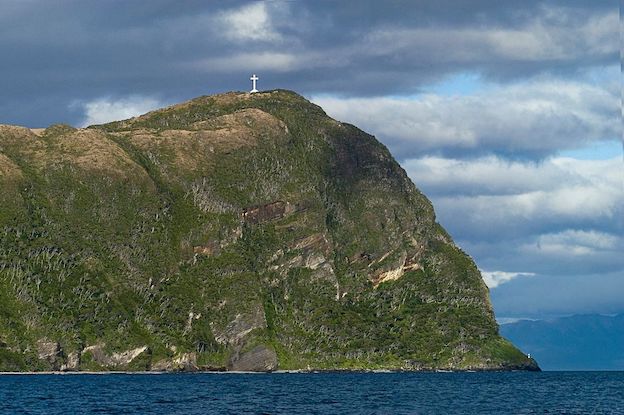
Cape Froward, Chile

Welcome to the World’s Largest New Year’s Celebration
For those traveling from North, Central, or South America, New Year's Eve in Rio offers a rich narrative about how a city can transform a universal holiday into a unique celebration, rooted in local traditions and open to the world.









|
Experiences Finder
(Search our catalog of Experiences here.) |
|---|