|
Pan American Experiences
|
------- |

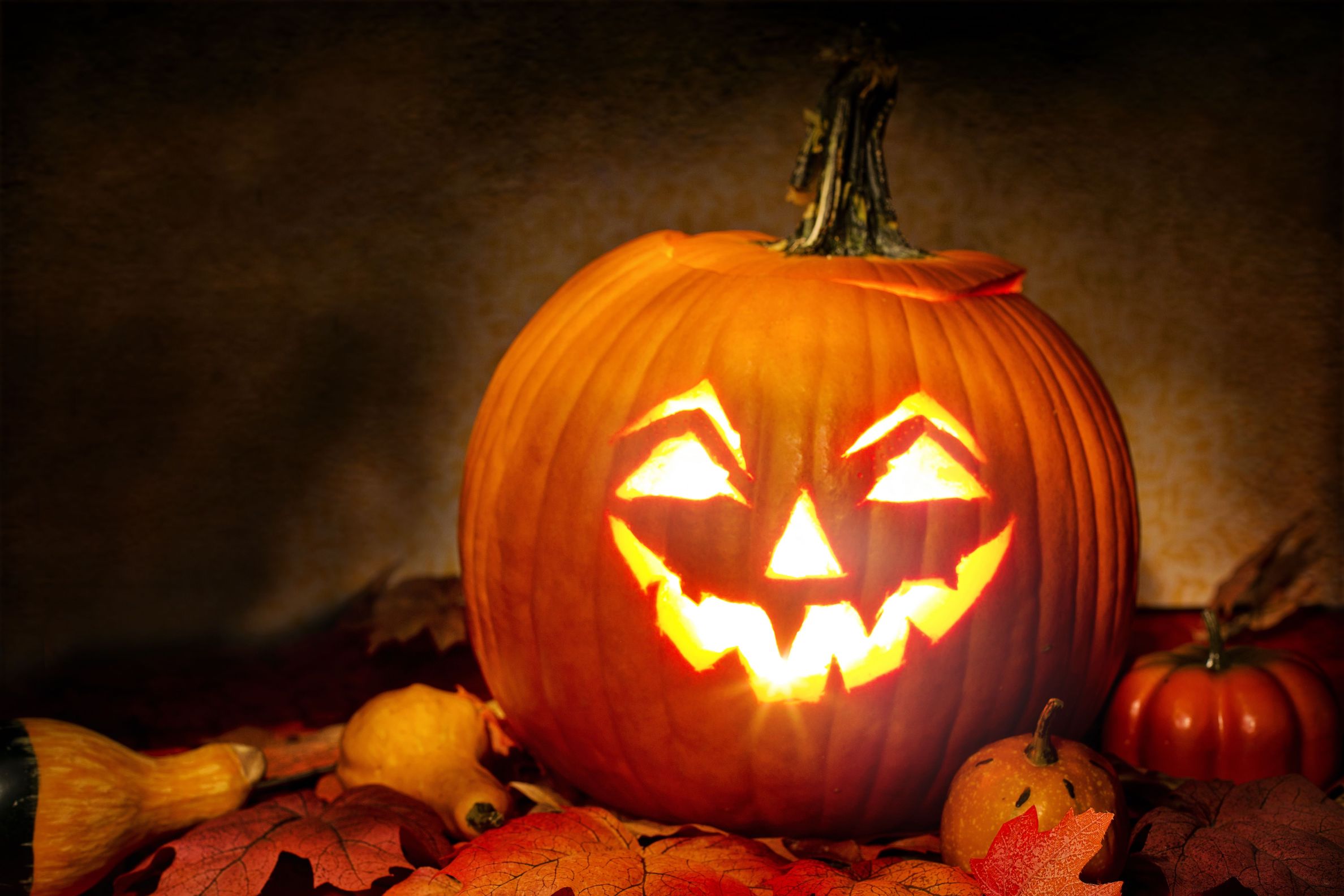
Photo: Jill Wellington / Pexels.
An Archaeological Journey Through the Ancient Maya Citadel of Tikal
It's Starting To Sound a Lot Like Christmas
Cartagena’s Urban Birds: From Historic Walls to Caribbean Mangroves
|
HEMISPHERE ------------------------------------------972[BUSINESS FEATURE] | |||
Macabre Tourism in the Americas: The Business of Halloween and the Day of the DeadTourism Economics, Heritage and Commodification: Data, Trends and Strategies for the Continent's Tourism SectorBy Estefanía Muriel for Ruta Pantera on 10/29/2026 11:23:18 AM |
||||
| Introduction: When the Supernatural Generates Revenue
Few raw materials are as abundant as fear and as constant as the memory of the dead. Between late October and early November, the Americas monetize both with a discipline any revenue manager would envy: millions of people buy costumes, flowers, bread, candles, and tickets, and cross borders to be scared in Massachusetts or to remember their dead in Michoacán. Moreover, they do so with very different motivations. In the United States and Canada, horror entertainment dominates; in Mexico and much of Central America, it's the Day of the Dead, with its indigenous and Catholic roots. Confusing these two traditions is the most frequent commercial and cultural mistake in the industry. Halloween as an Economic Sector in the United States First, a correction. A widespread belief holds that Halloween is the second highest-spending holiday in the United States, after Christmas. Data from the National Retail Federation (NRF) does not support this. The NRF itself projects $13.5 billion in spending for Halloween in 2026 (NRF, 2026a), a figure lower than the $38 billion projected for Mother's Day (NRF, 2026b), the $29.1 billion for Valentine's Day (Statista, 2026), and the $24.9 billion for Easter (NRF, 2026c). The winter season of November and December, defined by the NRF as excluding cars, gasoline, and restaurants, is projected to reach $1.013 trillion in 2026, following $972 billion in 2025 (NRF, 2026d). Halloween is a second-rate phenomenon in terms of revenue but a first-rate phenomenon in terms of visibility. The confusion is understandable. Halloween is probably the second most popular holiday in terms of home presence: outdoor decorations, costumes, and an increasingly longer season, with 49% of consumers starting to shop in September or earlier, up from 34% in 2016 (NRF, 2026a). But visibility doesn't pay the bills. Projected spending of $115.14 per person in 2026 ($114.45 in 2025) falls far short of the nearly $189 per person spent on Valentine's Day and Easter in 2025 (NRF, 2026a; Statista, 2026). That said, the figures are remarkable and resilient. NRF recorded a record $13.1 billion in 2025 and projects $13.5 billion in 2026; 74% of consumers plan to celebrate, up from 73% in 2025 and 68% in 2019 (NRF, 2026a). Spending is divided among costumes ($4.4 billion, with purchases by 71% of respondents), decorations ($4.3 billion; 78%), and candy ($4.1 billion; 96%), plus an additional $800 million in gift cards. Within costumes, adults account for $2 billion, children $1.5 billion, and pets $920 million (NRF, 2026a). In other words, candy is what almost everyone buys, but it's not what generates the most revenue, and the pumpkin spice of corporate rhetoric, thankfully, isn't included in the measurement. It should be noted that the NRF report doesn't quantify an "entertainment" category or spending on attractions, which is precisely what interests the tourism industry: Halloween-motivated travel is excluded from retail statistics. Two methodological nuances. First, this is a survey of 7,889 consumers conducted from September 1 to 9, 2026, with a margin of error of plus or minus 1.1 percentage points, so the figures are projections of intentions and not actual sales (NRF, 2026a). Second, there is a useful trend for small businesses: 13% plan to shop at local stores, almost double the 7% in 2016 (NRF, 2026a). From the Cash Register to the Passport: The Tourism Product of Terror From consumption to travel, there's a leap that retail statistics don't capture. Horror attractions are the most obvious example. Industry associations estimate between $300 and $500 million in annual ticket sales and nearly 1,200 professional haunted houses in the United States, in addition to thousands of charity events (America Haunts, n.d.). This should be read as an order of magnitude: these are industry estimates, without recent dates or independent auditing, and no current, reliable data could be found. Destinations offer the strongest evidence. Salem, Massachusetts, turned a painful episode—the 1692 witch trials—into its most profitable tourist event of the year. Destination Salem (2025) reported that 96,600 visitors came to the city center on Halloween 2025, a 7.2% increase over 2024, and that October saw 1.1 million unique visitors, the same as in 2024, following 782,000 in October 2019, 445,000 in 2020, and around one million in both 2022 and 2023. The organization cites a 6.3% increase compared to 2024, which it attributes to nine rainy days. The most frequently cited economic impact is the $782 million contributed to the region by visitors in 2022, with 7,850 jobs and over $31 million in state and local taxes (The Ringer, 2023). The operational lesson is that there is a physical ceiling: since 2021, Salem has hovered around one million visitors in October, so growth no longer depends on attracting more people, but rather on distributing them across the calendar and the available space. New Orleans operates on a different logic, that of a destination that thrives on its gothic reputation year-round and intensifies it in October. A representative from the local tourism office stated in 2023 that the city receives between ten and fifteen million visitors annually, describing it as a haunted destination year-round, and ghost tour operators noted that Halloween weekend is among the busiest (Fox 8, 2023). This is a marketing indicator, not a metric; no specific Halloween figures were found for that city. Sleepy Hollow, in the Hudson Valley, demonstrates that literature can be a form of tourism infrastructure. Washington Irving's 19th-century tale underpins a program of nighttime events and horror experiences produced by Historic Hudson Valley, a non-profit organization (River Journal, n.d.). The hotel with a paranormal reputation remains. The Stanley Hotel in Estes Park, Colorado, associated with the novel *The Shining* , developed a portfolio of nighttime tours and paranormal investigations. A 2015 report estimated that up to 15% of its guests came because of this fame and that the paranormal could represent about a third of its annual tour revenue of approximately one million dollars (Malay Mail, 2015). This data is outdated and serves to illustrate the model, not as a current indicator. Regarding dark tourism in a broader sense—that is, travel motivated by death, tragedy, or suffering—there is no reliable continental measurement of its size, and any global figures that circulate should be viewed with skepticism. Day of the Dead: Roots, Geography and Heritage If Halloween sells thrills, the Day of the Dead sells remembrance, and the difference is not a folkloric nuance but a distinct product architecture. UNESCO inscribed Mexico's "indigenous festival dedicated to the dead" on the Representative List of the Intangible Cultural Heritage of Humanity in 2008, after having originally proclaimed it in 2003 (UNESCO, n.d.). The entry describes the temporary return of the deceased to Earth, a celebration that extends from the end of October to the beginning of November and coincides with the end of the annual corn cycle, as well as the fusion of pre-Hispanic religious rites with Catholic festivals introduced by Europeans in the 16th century (UNESCO, n.d.). The inscription protects the practices of Mexican Indigenous communities; it does not, in itself, protect the parade, the catwalk Catrinas, or their commercialized versions. Outside of Mexico, the commemorations of All Saints' Day and All Souls' Day on November 1st and 2nd exist throughout much of Latin America, with their own distinct forms that are not variations of the Mexican model (Sandoval, 2023). Treating them all as "that country's Day of the Dead" is an effective way to lose both the informed tourist and the host community. Mexico: How Much Is Death Worth, with Its Asterisks It is important to distinguish between sources. The most frequently cited figures come from the Confederation of National Chambers of Commerce, Services and Tourism (Concanaco Servytur), a business organization, not a statistical office. Their data series indicates an economic impact of 37.722 billion pesos in 2022, 41.198 billion in 2023, 45.318 billion in 2024, an estimated 49.5 billion in 2025, and a projected 53 billion for 2026—a 7% increase that would equate to approximately 245 million pesos per hour between October 25 and November 2 (Crónica, 2025; Publimetro, 2026). EFE converted the 2026 projection to approximately 2.944 billion dollars (Diario de México, 2026). There are three caveats. First, the series mixes sources: the 2022 and 2023 figures were originally presented by the Federal Tourism Secretariat (Sectur) as consumption of tourism services (Zeta Tijuana, 2022; Expansión, 2023), so it is not a methodologically consistent series. Second, there were labeling errors: some media outlets published 45.318 billion pesos as a 2025 figure, when it actually corresponds to 2024 (El CEO, 2025). Third, local estimates don't align with each other: the Mexico City Chamber of Commerce projected 11.446 billion pesos for the capital in 2025, 4.2% more than in 2024 (N+, 2025), while the president of the baking association spoke of more than 13 billion pesos for the same city (La Verdad Noticias, 2025). None of these are official figures from INEGI. On the official front, the federal Secretary of Tourism, Josefina Rodríguez, projected the arrival of 1.69 million tourists during the 2026 celebrations, 1.2% more than the previous year, of which 26% would be international, with hotel occupancy rates between 70% and 80% in the most popular destinations (Chilango, 2026). These are projections, not actual results. For historical reference, the Ministry of Tourism (Sectur) estimated approximately 2.4 million hotel tourists and a national occupancy rate of 58.3% over seven days in 2023 (Expansión, 2023): a different timeframe and definition, not directly comparable with those of 2026. The capital's Grand Day of the Dead Parade, with an estimated attendance of over one million people (Crónica, 2025), originated in 2016 as an imitation of a scene from a James Bond film (Sandoval, 2023): tradition being inspired by cinema that was inspired by tradition, a loop no audience would want to examine. Concanaco also identifies Mexico City, Oaxaca, Michoacán, Puebla, and San Luis Potosí as key destinations, with Mixquic, Janitzio, Tzintzuntzan, Huaquechula, and the Xantolo festival in the Huasteca region as key locations (Diario de México, 2026). The agricultural sector is one of the few with official statistics. According to the Agri-Food and Fisheries Information Service (SIAP) of the Ministry of Agriculture, Mexico produced approximately 20,659 tons of marigolds (cempasúchil) on 2,203 hectares in 2024, in addition to 3.16 million potted plants and 510,019 bunches (Por Esto, 2026). This is the most recent data available for 2024. In the bakery sector, the industry association estimates sales of pan de muerto (Day of the Dead bread) at nearly 1 billion pesos in 2025, a 3.5% increase over 2024, within a sector of more than 54,000 bakeries, most of them micro and small (La Verdad Noticias, 2025); in Mexico City alone, it is estimated to be produced in 3,722 traditional bakeries (N+, 2025). This is an industry estimate. The beverages, markets, and handicrafts (papel picado, sugar skulls, and other sugar skulls) lack a consolidated and verifiable national data; the available information is anecdotal. This is a gap that public policy should address, because what isn't measured tends to be excluded from investment decisions. |
||||
|
Is Halloween Expanding? Hybridization, Commerce, and Resilience
The strongest evidence comes from Mexico. According to Sandoval (2023), the Mexican tourism industry insisted in the 1970s and 80s that the Day of the Dead had nothing to do with Halloween; after the 1994 North American Free Trade Agreement (NAFTA), some saw Halloween as a symbol of cultural imperialism; by the beginning of this century, a visible fusion was already underway: candy, costumes, and Halloween decorations alongside the Day of the Dead offerings, children trick-or-treating, and bars hosting costume parties. Today, the author states, children ask for "Halloween" for an entire week, characters from horror movies appear in the Grand Parade, and Coco costumes make it impossible to tell whether they belong to one celebration or the other. On the commercial front, costume sales on Mercado Libre Mexico grew by more than 350% between September and October 2024 (Nubimetrics, 2025), a seasonal jump that doesn't equate to annual growth, but reveals where the demand lies. Peru offers the best example of measurable tension, because October 31st is also Creole Song Day. A 2024 Ipsos poll found that 52% of Peruvians preferred to celebrate Creole Song Day, 16% Halloween, and 31% neither (Ipsos Peru, 2024); an anthropologist from the Pontifical Catholic University of Peru (PUCP) attributed this to a "our own first" discourse. However, a study published by Peru Retail (n.d.b.) indicated that 63% of Lima residents would opt for Halloween compared to 28% for Creole Song Day. The two figures are not entirely contradictory: they differ in the population (the country versus Lima), the year, and the methodology. By 2026, the Lima Chamber of Commerce projects that demand for events will grow between 5% and 8% (Peru Retail, 2026). In Costa Rica, the Day of the Traditional Masquerade was set by decree on October 31 (Observador.cr, 2024); that the date coincides with Halloween can be read as cultural policy, although that interpretation is my own and does not appear in the source. For Brazil, Argentina, Chile, Colombia, and the Caribbean, no recent and reliable trade measurements were found that would allow for quantifying expansion. To speak of a uniform continental expansion would be an extrapolation: what is verifiable is intense hybridization in Mexico, open competition in Peru, and scattered trade signals in the rest of the region. Day of the Dead Outside of Latin America Outside of Mexico, the practice has its own history. In the United States, the Day of the Dead became a public and widespread celebration among Latino communities in the 1970s and 1980s, driven by the Chicano movement (Sandoval, 2023). A contemporary example is Hollywood Forever Cemetery in Los Angeles, which celebrated its 26th edition in 2025 in a smaller format, with more than 50 altars and screenings of Coco , all of which sold out (Hollywood Forever Cemetery, 2025); the 2026 event is scheduled for October 24 (Hollywood Forever Cemetery, 2026). In Canada, the Mexican consulate in Vancouver reported a 2015 celebration with over 400 attendees in New Westminster (Secretariat of Foreign Affairs, 2015), and a report indicates that Ottawa, Toronto, and Vancouver have been holding Catrina parades, galleries, and altars for over fifteen years (El Financiero, n.d.). In the United Kingdom, the Mexican embassy scheduled activities from November 2 to 6, 2026 (Embassy of Mexico in the United Kingdom, 2026), and a community festival has been held on Columbia Road, London, since 2017 (London's Day of the Dead Festival, 2025). No systematic measurement of this practice was found in other regions of the world; the evidence is based on events, not statistics. Central America: Reference Points In Guatemala, the giant kites of Santiago Sacatepéquez and Sumpango are the most iconic. It's important to clarify what UNESCO recognized: in 2024, it inscribed the technique of making these giant kites on the Representative List. The kites are crafted over months and displayed at the All Saints' Day and All Souls' Day fairs with the purpose of communicating with ancestors (UNESCO, n.d.; UNESCO, 2024). The recognition focuses on the technique itself, not the tourist event. Attendance is considerable: La Hora (2025) reported over 100,000 people in Sumpango in 2025, with kites reaching up to 15 meters in length. In Todos Santos Cuchumatán, a Mam municipality in Huehuetenango, the ribbon race, also called the "cockfight," takes place on November 1st. It is not a sporting competition, there is no winner, and it is linked to ancestral beliefs and the permission that the religious brotherhood requests from the saints and Mother Earth (Emisoras Unidas, 2019). The riders participate in traditional dress and ritual alcohol consumption, with real physical risks. In 2021, the municipality suspended the activities due to the pandemic, although residents expressed their intention to hold it (La Hora, 2021), a reminder that the final decision regarding these rituals belongs to the communities and not to promotional schedules. In Honduras, on November 2nd, families visit cemeteries to adorn graves with flowers, and flower vendors consider it one of their busiest sales days (El Heraldo, n.d.a). In Lenca communities in the west, according to Tunota (2023), candied squash is left in clay pots by the door for the deceased. In 2024, the entrance to the Comayagüela General Cemetery was decorated with carpets for the first time (El Heraldo, n.d.b). In El Salvador, All Souls' Day is a time when cemeteries are packed: authorities in San Salvador Centro expected at least 80,000 visitors in a recent year, and musical groups charge $10 for three songs (Diario El Mundo, n.d.), a microeconomic phenomenon that deserves to be analyzed. In Nicaragua, November 2nd is dedicated to honoring the dead, and in the western towns, fritters are sold in the cemeteries (La Prensa, 2009). Costa Rica is unique: Executive Decree 25724-C, of December 1996 (some sources cite 1997), established October 31 as Traditional Masquerade Day, and in 2022 the Legislative Assembly declared masquerades a national symbol (Observador.cr, 2024). There, the focus is not on the deceased but on characters like Death, the Devil, or the Segua, a rich heritage of masks. In Panama, November 2 is a day of reflection: in 2025, the Mayor's Office of the capital prohibited music and dancing from 6:00 am to 6:00 pm, with fines ranging from 100 to 1,000 balboas (La Estrella de Panamá, 2025a), and the main event includes a floral offering at the mausoleum of the first president, Manuel Amador Guerrero, in the Amador Cemetery (La Estrella de Panamá, n.d.). It is the opposite of the Mexican festive model, and a warning to anyone who intends to export a single "celebration" script to the entire region. Conclusions and Strategic Recommendations The first conclusion is methodological: the economics of macabre tourism are poorly measured. Official figures are scarce, industry data are not always comparable, and projections are often circulated as if they were actual results. Those involved in the sector should treat all figures as a range and demand that whoever publishes them provide their methodology and the year of the data. For tour operators and agencies, the opportunity lies in separating product lines. The terror of Halloween (haunted houses, night tours, themed events) and the remembrance of the Day of the Dead (offerings, cemeteries, communities) require different scripts, prices, target audiences, and rules of conduct. Experiences with Indigenous communities should be designed in collaboration with them, with capacity limits and schedules defined by them, and with visible financial participation. A sales campaign that begins in September, as 49% of US consumers already do, is consistent with the demand for Halloween; in the Mexican case, bakeries report a bread season that starts 30 to 40 days before the main holidays, so the packaging should also be brought forward. For hotels, the projected 70% to 80% occupancy rate in high-demand Mexican destinations points to revenue management and short stays during long weekends. The Stanley Hotel model demonstrates that paranormal stories can contribute a significant portion of tour revenue, but a reputation for the supernatural is only worthwhile as long as the service of the natural elements (the bed, the breakfast) is up to standard. For restaurants and bakeries, pan de muerto (Day of the Dead bread), chocolate, and seasonal beverages allow for staggered sales and partnerships with local producers of marigolds and flour; small businesses should capitalize on the fact that 13% of US consumers already seek out local businesses for Halloween. For artisans, the challenge lies in differentiating their products from imported goods and registering their production. Designations of origin, collective trademarks, and direct sales at fairs and online reduce dependence on intermediaries. Without consolidated figures for the artisan sector, producers' negotiating position is weaker than it should be. For governments and promotional agencies, the priority is statistics: harmonizing the methodology for measuring economic impact, publishing official data series, and distinguishing between projected results and actual outcomes. In Central America, UNESCO's recognition of Guatemalan kites offers a safeguarding path that other countries could explore with their own traditions. Policies promoting territorial dispersion (ensuring demand isn't concentrated in just a couple of locations) and managing carrying capacity, like the one Salem learned the hard way, are more cost-effective than a new branding campaign. Chambers of commerce, in turn, would gain credibility by publishing the methodology for their estimates, especially when their figures are used as if they were official statistics. For the communities, the recommendation is to establish rules in advance: what can and cannot be photographed, how many visitors each ritual allows, how the income is distributed, and who makes the decisions. It's easier to write these rules before the buses arrive than afterward. Sustainability, Cultural Respect and Commodification The central risk is not that people pay to experience a tradition, but that payment reconfigures the tradition to the point of making it unrecognizable to its bearers. Sandoval (2023) argues that transformation and adaptation ensure the survival of any tradition, and that the fear of “contamination” overlooks the fact that the Day of the Dead is already a fusion of pre-Hispanic and Catholic rites (UNESCO, n.d.a). The argument is sound, but it has its limits: hybridization is a process undertaken by communities; commodification is a process imposed upon them. The difference lies in who decides, who charges, and who can say no. There are three warning signs. The first is saturation: Salem illustrates that a destination can stabilize at one million visitors and still face the challenge of distributing them (Destination Salem, 2025). The second is trivialization: disguising the memory with "Coco-esque " aesthetics or confusing it with Halloween dilutes its meaning, and UNESCO's safeguarding warns against this by protecting the community practice, not the image (UNESCO, n.d.). The third is unequal distribution: one million visitors to a parade in the capital city does not translate into income for the community that sustains the ritual. Community tourism routes, prior consent, and capacity limits are tools for sustainability, not mere ornaments. There's also an irony worth acknowledging. The supernatural is a remarkably stable business: the dead don't cancel reservations, demand discounts, or leave reviews. Precisely for this reason, those who survive them have an obligation to treat their memory as what it is—a living heritage—and not merely as a seasonal commodity. Note on the Limits of Information Reliable and recent measurements of the global size of dark tourism, Day of the Dead crafts at the national level, specific Halloween travel spending in the United States and Canada, and the expansion of Halloween in most of South America and the Caribbean were not found. Several figures for Central America are derived from news coverage without official data series. Where two sources diverged, this was noted. The 2026 figures are projections or estimates as of October 21, 2026, and may be revised after the central dates. |
||||
 Add this article to your favorites
[FOR MEMBERS ONLY] Copy this link to send this article to a friend: [FOR MEMBERS ONLY] |
||||
|
|
||||
|---|---|---|---|---|
| |
|
|
|
|
×
|
||||
|
References: America Haunts. (sf). Haunted house facts . https://www.americahaunts.com/ah/facts/ Chilango. (2026, October 15). Day of the Dead will attract 1.69 million tourists to Mexico; Mexico City, favorite destination of the season . https://www.chilango.com/noticias/dia-de-muertos-atraera-a-1-69-millones-de-turistas-a-mexico-cdmx-destino-favorito-de-la-temporada/ Crónica. (2025, October 26). Retail sector expects economic boost of 49.5 billion pesos for Day of the Dead . https://www.cronica.com.mx/nacional/2025/10/26/espera-sector-comercio-derrama-economica-de-495-mmdp-por-dia-de-muertos/ Destination Salem. (2025, November 5). Halloween Day visitors up 7.2% as Salem sustains record October tourism levels [Press Release]. https://www.salem.org/wp-content/uploads/2025/11/Press-Release-Halloween-Day-Visitors-Up-7.2-as-Salem-Sustains-Record-October-Tourism-Levels-1.pdf Diario de México. (2026). Day of the Dead will generate 53 billion pesos in Mexico, projects Concanaco . https://www.diariodemexico.com/mi-nacion/dia-muertos-generara-53-mmdp-en-mexico-proyecta-concanaco El Mundo Newspaper. (n.d.). Salvadorans fervently remember their loved ones on All Souls' Day . https://diario.elmundo.sv/nacionales/salvadorenos-recuerdan-con-fervor-a-sus-seres-queridos-en-el-dia-de-los-fieles-difuntos The CEO. (October 26, 2025). Day of the Dead, consumption would grow 9.2% compared to 2024: Concanaco-Servytur . https://elceo.com/economia/dia-de-muertos-consumo-creceria-9-2-respecto-a-2024-concanaco-servytur/ El Financiero. (n.d.). How to experience a Day of the Dead Canadian style? https://www.elfinanciero.com.mx/viajes/como-vivir-un-dia-de-muertos-al-estilo-canadiense/ El Heraldo. (n.d.). Cemeteries ready to receive thousands of mourners on All Souls' Day . https://www.elheraldo.hn/tegucigalpa/cementerios-listos-recibir-miles-dia-fieles-difuntos-tegucigalpa-DK28005574 El Heraldo. (n.d.). Day of the Dead [News Chronology]. https://www.elheraldo.hn/cronologia/-/meta/dia-de-difuntos Embassy of Mexico in the United Kingdom. (2026). Day of the Dead cultural festival 2026. https://embamex.sre.gob.mx/reinounido/index.php/en/view-more-press/45-press2020/1945-day-of-the-dead-cultural-festival-2026 Emisoras Unidas. (2019, November 1). Gallery: Riders defy death in Todos Santos Cuchumatán . https://emisorasunidas.com/2019/11/01/carrera-todos-santos-cuchumatan/ Expansion. (2023, October 22). Day of the Dead will generate an economic impact of 41,198 million pesos . https://expansion.mx/economia/2023/10/22/festividades-dia-de-muertos-mexico Fox 8 (WVUE). (2023, October 31). Excited Halloween revelers resurrect New Orleans' fallen economy . https://www.fox8live.com/2023/10/31/excited-halloween-revelers-resurrect-new-orleans-fall-economy/ Hollywood Forever Cemetery. (2025). Day of the Dead 2025: An intimate gathering honoring memory, culture, and community . https://www.ladayofthedead.com/?p=12875 Hollywood Forever Cemetery. (2026). Day of the Dead celebration FAQ . https://www.ladayofthedead.com/faq/ Ipsos Peru. (2024, October 30). 52% of Peruvians prefer to celebrate Creole Song Day on October 31. https://www.ipsos.com/es-pe/node/1033471 La Estrella de Panamá. (n.d.). This is how the tribute to loved ones is experienced at the Amador Cemetery . https://www.laestrella.com.pa/panama/nacional/asi-se-vive-el-homenaje-a-seres-queridos-en-el-cementerio-de-amador-EH17232776 La Estrella de Panamá. (2025a, October 21). Decree of the Mayor of Panama for November 2: Prohibited activities and possible sanctions on the Day of the Dead . https://www.laestrella.com.pa/panama/informacion-util/decreto-de-la-alcaldia-de-panama-por-el-2-de-noviembre-actividades-prohibidas-y-posibles-sanciones-el-dia-de-los-difuntos-AG16895566 La Hora. (October 28, 2021). Traditional horse race in Cuchumatán poses a health challenge . https://lahora.gt/nacionales/analucia/2021/10/28/tradicional-carrera-de-caballos-en-cuchumatan-supone-un-reto-sanitario/ La Hora. (November 1, 2025). In pictures: This is how the giant kite festival is experienced in Sumpango and Santiago Sacatepéquez . https://lahora.gt/nacionales/ypena/2025/11/01/en-imagenes-asi-se-vive-el-festival-de-barriletes-gigantes-en-sumpango-y-santiago-sacatepequez/ La Prensa. (2009, November 1). Day of the Dead, Day of Life . https://www.laprensani.com/2009/11/01/ultima-hora/6621-d%C3%ADa-de-difuntos-d%C3%ADa-de-vida La Verdad Noticias. (2025). Sales of pan de muerto will reach one billion pesos in 2025. https://laverdadnoticias.com/dinero-inteligente/venta-de-pan-de-muerto-crecera-a-mil-millones-de-pesos-en-2025?amp=1 London's Day of the Dead Festival. (2025). London's Day of the Dead 2025 [Crowdfunding Campaign]. https://www.crowdfunder.co.uk/p/qr/pnA4L5bW Malay Mail. (2015, October 6). How haunted hotels turn terror into cash . https://www.malaymail.com/amp/news/travel/2015/10/06/looking-for-fear-haunted-hotels-rake-in-the-cash-with-ghost-tours/982435 N+. (2025). Day of the Dead 2025: Millions in economic boost in Mexico City; list of businesses with the highest sales . https://www.nmas.com.mx/economia/dia-de-muertos-2025-millonaria-derrama-economica-en-cdmx-lista-de-comercios-con-mas-ventas/ National Retail Federation. (2026a, September 22). NRF Halloween survey shows consumer spending expected to reach $13.5 billion . https://nrf.com/media-center/press-releases/nrf-halloween-survey-shows-consumer-spending-expected-to-reach-13-5-billion National Retail Federation. (2026b, April 21). Mother's Day spending expected to hit record $38 billion . https://nrf.com/media-center/press-releases/mother-s-day-spending-expected-to-hit-record-38-billion National Retail Federation. (2026c). Easter . https://nrf.com/research-insights/holiday-data-and-trends/easter National Retail Federation. (2026d, October 15). NRF forecasts 2026 holiday sales growth as consumers remain resilient . https://nrf.com/media-center/press-releases/nrf-forecasts-2026-holiday-sales-growth-as-consumers-remain-resilient Nubimetrics. (2025). Halloween and Day of the Dead 2025: Profitable Ideas for Mercado Libre . https://academia.nubimetrics.com/cinco-formas-de-prepararse-para-el-d%C3%ADa-de-los-muertos-en-mercado-libre Observador.cr. (2024). Traditional masquerades fill the National Library with color in an exhibition to celebrate October 31. https://observador.cr/mascaradas-tradicionales-llenan-de-color-la-biblioteca-nacional-con-exposicion-para-celebrar-el-31-de-octubre/ Peru Retail. (n.d.). Halloween surpasses Creole Song Day: 63% of Lima residents will opt for the international holiday . https://www.peru-retail.com/?p=389869 Peru Retail. (2026, September 14). Halloween and Día de la Canción Criolla (Day of Creole Song) could boost events by up to 8%: spending could reach S/ 300. https://www.peru-retail.com/?p=422024 Por Esto. (2026, October 17). Marigold production in Mexico: more than 20,000 tons and 3 million plants of the "flower of the dead" . https://www.poresto.com/mexico/2026/10/17/produccion-cempasuchil-mexico-mil-toneladas-millones-plantas-flor-muertos.html Publimetro. (October 18, 2026). Day of the Dead in Mexico will generate 53 billion pesos: 245 million per hour . https://www.publimetro.com.mx/noticias/2026/10/18/dia-de-muertos-mexico-2026-derrama-economica-53-mil-mdp/ River Journal. (sf). Halloween happenings… Sleepy Hollow Country's biggest events . https://riverjournalonline.com/?p=3914 Sandoval, M. (2023, November 1). What is Day of the Dead? An expert explains the holiday celebrating loved ones who have died . PBSNews. https://www.pbs.org/newshour/arts/what-is-dia-de-los-muertos-an-expert-explains-the-holiday-celebrating-loved-ones-who-have-died Ministry of Foreign Affairs. (2015, November 10). Day of the Dead: celebrations of this Mexican tradition in Vancouver [Press release from the Consulate of Mexico in Vancouver]. https://portales.sre.gob.mx/saladeprensa/lista-de-consulados/vancouver/7071-consulmex-van-sp-2031019015 Statist. (2026). Cupid's arrow hits wallets harder than ever in 2026 [Graph]. https://www.statista.com/chart/16983/planned-valentines-day-spending-per-person/ The Ringer. (2023, October 30). [Feature on tourism and Halloween in Salem]. https://www.theringer.com/features/2023/10/30/23934926/salem-witch-trials-tourism-halloween Tunota. (2023, October 31). Day of the Dead in Honduras: date, how and why it is celebrated . https://www.tunota.com/honduras-hoy/dia-de-los-muertos-en-honduras-fecha-como-por-que-se-celebra-2023-10-31 UNESCO. (sf-a). Indigenous festivity dedicated to the dead [Representative List of Intangible Cultural Heritage, no. 00054]. https://ich.unesco.org/en/RL/00054 UNESCO. (sf-b). Technique of making the giant kites of Santiago Sacatepéquez and Sumpango, Guatemala [Representative List of Intangible Cultural Heritage, no. 01991]. https://ich.unesco.org/en/RL/technique-of-making-the-giant-kites-of-santiago-sacatepequez-and-sumpango-guatemala-01991 UNESCO. (2024). Decision of the Intergovernmental Committee: 19.COM 7.B.41 . https://ich.unesco.org/en/decisions/19.COM/7.B.41 Zeta Tijuana. (2022, October). Day of the Dead celebrations will generate an economic impact of 37.722 billion pesos in tourism: Sectur . https://zetatijuana.com/2022/10/festejos-de-dia-de-muertos-dejaran-derrama-economica-de-37-mil-722-mdp-en-turismo-sectur/ |
||||
Please leave a comment about this article: 972 |
|
| Enter your email address: |
Your email will not be displayed. |
| Your nickname: | |
| Your comment: | |
| Was this article helpful to you? | |
|
|
|
Articles about exciting travel experiences in our hemisphere.
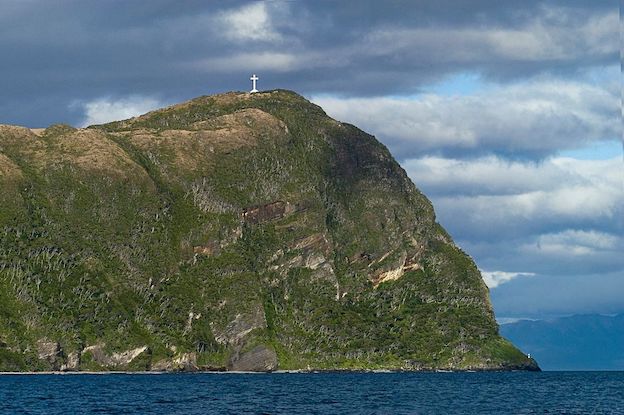
Cape Froward, Chile
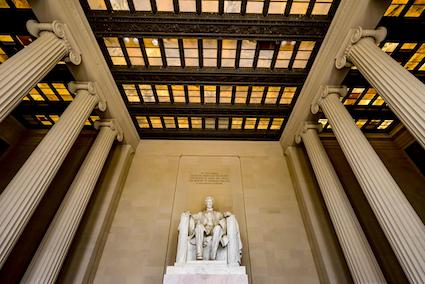
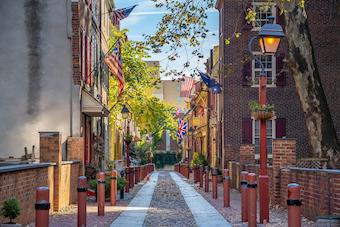
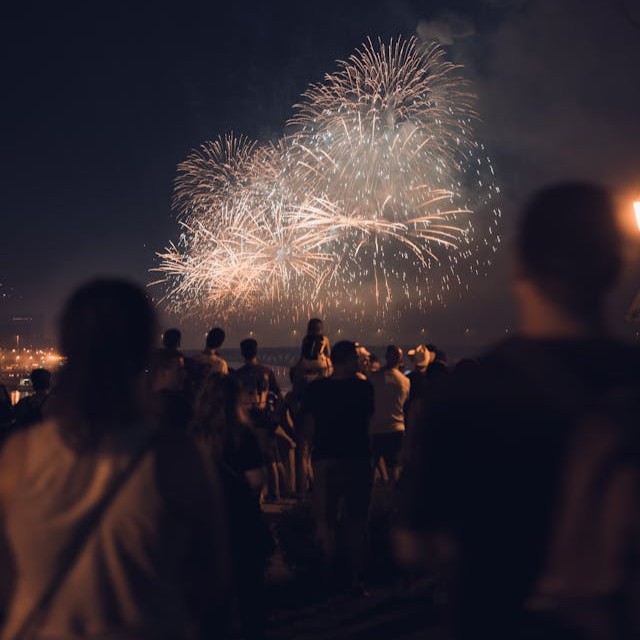

Welcome to the World’s Largest New Year’s Celebration
For those traveling from North, Central, or South America, New Year's Eve in Rio offers a rich narrative about how a city can transform a universal holiday into a unique celebration, rooted in local traditions and open to the world.





|
Experiences Finder
(Search our catalog of Experiences here.) |
|---|