|
Pan American Experiences
|
------- |

Hemisphere Related Articles: |
HEMISPHERE ------------------------------------------956[COLUMN] | |||
US Elections: A New Direction for Pan-American Tourism?The Democratic Victory in Congress Raises Questions About Security, Visas, Sustainability, and Tourism Investments in Latin America.By Estefanía Muriel for Ruta Pantera on 11/5/2026 11:23:18 AM |
||||
| The political map of the United States has just changed, and its consequences could be felt far beyond its borders. On November 3, American voters gave Democrats control of both houses of Congress, a significant political defeat for Donald Trump, the Associated Press reported. The result opens a new chapter of uncertainty for Washington, but it also raises expectations in Latin America and the Caribbean, a region that in recent years has closely experienced the consequences of White House decisions.
For Pan-American tourism, the question isn't simply who controls the Capitol, but what will happen to the policies that determine who can travel, how much it costs, which destinations are considered safe, and which receive international cooperation. From Mexico and Colombia to Cuba, Venezuela, Brazil, and Argentina, relations with Washington influence air routes, hotel investments, trade, and traveler confidence. However, it's important to distinguish between expectations and the decisions that can actually be made. Congress can investigate, influence budgets, amend laws, and exert political pressure, but the president retains broad powers in foreign policy, immigration, and security. A Democratic victory doesn't automatically mean a change of course. It does, however, present an opportunity to review some of the Trump administration's most controversial decisions, with potentially significant consequences for the hemisphere's tourism industry. Regional Security: Less Tension, More Confidence to Travel In Latin America, political stability is also essential to tourism infrastructure. A military operation, a threat of intervention, or a diplomatic escalation can lead to cancellations, itinerary changes, and increased insurance and air operating costs. The Caribbean is well aware of this vulnerability: when tensions rise in Venezuela, airlines must reconsider routes, schedules, and risk exposure. For hotels, cruise lines, and tour operators, even a threat can translate into losses. The new Democratic majority could intensify oversight of U.S. operations in the hemisphere, particularly in Venezuela, Cuba, and the Caribbean. Reuters specifically identifies regional military policy and sanctions as issues that could face increased legislative scrutiny. This does not guarantee an end to operations or an immediate reduction in confrontation, but it could raise the political cost of unilateral decisions and create opportunities for diplomacy. Venezuela represents one of the most delicate scenarios. The resumption of trade with the United States could gradually boost exchanges and the recovery of tourism, but normalization requires reliable institutions, legal certainty, and political stability. A legitimate electoral process would be important for rebuilding international confidence. However, there are no guarantees that the new Congress could implement such a process, nor that US oil policy will change immediately. In Cuba, there is also no basis for announcing the lifting of sanctions or ruling out military intervention. Legislative oversight could spark debate, but tourism recovery needs concrete measures, fuel, connectivity, and sustainable economic conditions. Visas, Deportations, and the Business of Receiving Visitors There's a question millions of Latin Americans may ask themselves before buying a ticket: Will it be easier to travel to the United States? Probably not immediately. Immigration policies, consular requirements, and entry restrictions largely depend on the executive branch. Congress can convene hearings, review budgets, and promote reforms, but reversing existing measures requires specific legislative or administrative decisions. The problem has a clear commercial dimension. According to the U.S. Congressional Research Service, international arrivals declined by 5.5% in 2025 compared to the previous year. Among the factors cited are immigration policies, travel restrictions, visa wait times, and entry costs. Mexico accounted for 18 million arrivals, while Canada registered 16 million, with a particularly sharp drop in the latter market, according to data published by the Congressional Research Service. If the United States wants to compete for international travelers, hospitality must also be reflected in its border policies. For Latin America, any easing of restrictions would have two effects: it would facilitate travel for family members, students, and tourists to the United States and could improve the country's perception as a welcoming destination. It could also strengthen outbound travel from the United States to the rest of the continent. But it would be premature to promise an end to deportations, visa bonds, or immigration restrictions. The industry needs predictable rules, not electoral promises. Climate, Cooperation, and Sustainability: An Opportunity for the Continent Environmental policy also has economic consequences. Latin America possesses some of the most valuable tourism assets on the planet: the Amazon, the Andes, the Caribbean reefs, the Central American forests, and extraordinary cultural diversity. Their conservation requires funding, scientific cooperation, and long-term policies. A Washington less confrontational on the climate agenda could facilitate partnerships to protect ecosystems, strengthen sustainable destinations, and attract responsible investment. However, a change in the legislative majority alone does not guarantee an environmental shift in the White House. The potential restoration of international cooperation programs, including USAID, deserves special attention. Its work has contributed to community development initiatives, conservation efforts, institutional strengthening, and disaster resilience. A Democratic majority could attempt to recover some of the cut foreign aid, although restoring USAID as an agency is not guaranteed. Americas Quarterly warned before the election that even a Democratic Congress would face budgetary and political obstacles to reversing the administration's cuts. For community-based tourism and small Latin American businesses, regaining cooperation would represent an opportunity, not just a promise. There is also Greenland, whose strategic and environmental future has gained international relevance. A less confrontational US relationship with Denmark and Greenlandic authorities could reduce diplomatic tensions surrounding the Arctic. For tourism, the stability of natural areas and environmental protection are economic assets, not mere diplomatic issues. And while reclaiming the name Gulf of Mexico in US political discourse would have symbolic value for many Latin Americans, geographical names do not replace the commercial, environmental, and security decisions that truly drive the industry. |
||||
|
Argentina, Brazil, and the New Continental Political Balance
In Argentina, Javier Milei's government could face a different international landscape if Trump's political support wanes. However, US diplomatic support should not be confused with an Argentine president's ability to sustain his economic program. The evolution of financing, trade, the exchange rate, and business confidence will have far more influence on tourism than the US election outcome alone. If economic conditions deteriorate, Argentinians may reduce their international travel; if they stabilize, they may regain purchasing power and mobility. Brazil offers another perspective. Lula's victory over Flávio Bolsonaro on October 25th preceded the US elections and reflected Brazilian political dynamics. It would be inaccurate to attribute it to a weakening of the Republican Party in Washington. However, a Democratic Congress could provide greater diplomatic space for the agendas of environmental cooperation, regional integration, and institutional defense that the Brazilian government promotes. For tourism, a less confrontational bilateral relationship could foster investment, connectivity, and joint destination promotion. Across Latin America, the outcome also presents an opportunity to review economic relations with the United States without relying solely on ideological affinities. Mexico needs trade stability; Colombia, cooperation on security and development; Central America and the Caribbean, investment and connectivity; and South America, diversified markets. The hemispheric policy analysis published by Americas Quarterly before the elections already warned that tariffs, immigration, and the U.S. military posture were transforming regional relations. The new legislative framework may alter this balance, though it will not eliminate the differences in interests. Tourism Needs More Than Just an Electoral Victory/b> There's a key piece of news that warrants closer examination: in Latin America, decisions affecting the daily lives of millions can ultimately be dictated by Washington. From immigration policies to health, economic, and environmental cooperation, US influence extends to sectors seemingly unrelated to foreign policy. Will travel bans be the next to be debated? It's a possibility worth monitoring, but not a conclusion that can be drawn prematurely. It is also worth asking whether Latin American governments will seize this opportunity to strengthen their own capabilities. No electoral change in the United States will, by itself, resolve the insecurity, inequality, lack of infrastructure, or institutional weakness that limit the tourism development of our countries. The opportunity lies in building an industry less vulnerable to external political fluctuations, with regional cooperation, environmental protection, respect for human rights, and improved conditions for investment and travel. Prevention and Resilience: The Keys to Protecting the Future of Business Tourism The US elections offer an important lesson for business tourism in Latin America: we cannot allow the stability of our markets, destinations, and investments to depend solely on the political changes of another country. This situation should motivate us to strengthen prevention, anticipate geopolitical risks, diversify source markets, and build response mechanisms for potential migration, economic, environmental, or security crises. For hotels, airlines, tour operators, investors, and governments, preparing does not mean waiting for a crisis, but rather developing the capacity to recognize early warning signs, protect operations, and adapt without losing competitiveness. Latin America needs a more connected, professional, and resilient tourism industry, capable of transforming international uncertainty into opportunities for cooperation and investment. The fundamental question is not only how Washington's upcoming decisions will affect us, but what we are doing today to ensure that our tourism future depends increasingly on our own ability to anticipate, collaborate, and act. |
||||
 Add this article to your favorites
[FOR MEMBERS ONLY] Copy this link to send this article to a friend: [FOR MEMBERS ONLY] |
||||
|
|
||||
|---|---|---|---|---|
| |
|
|
|
|
×
|
||||
|
References: Colvin, J., Jalonick, MC, & Weissert, W. (2026, November 4). Democrats win the US House and Senate as voters deliver a strong response to Trump and Republicans. APNews. https://apnews.com/article/midterm-election-house-senate-democrats-republicans-trump-f126e12e05b579a327b98481c0ae2226 Congressional Research Service. (2026, October 9). US tourism: Recent developments and data (R47857). EveryCRSReport.com. https://www.everycrsreport.com/reports/R47857.html CNN. (2026, September 21). What to expect at the UN General Assembly, the biggest event in world diplomacy. https://edition.cnn.com/2026/09/21/world/unga-2026-what-to-expect-latam-intl Al Jazeera. (sf). Al Jazeera: News, analysis and live coverage. https://www.aljazeera.com/#flips-6407917203112:0 Clarín. (2026). The relationship between Argentina and the US after Trump's defeat: The swap, the trade agreement, patents, meat and YPF. https://www.clarin.com/economia/relacion-argentina-eeuu-derrota-trump-swap-atrabajo-comercial-patentes-carne-ypf-mira_0_Niwh7oqHLh.html Jacobstein, E., & Mendrala, E. (2026, May 26). What November's US midterm vote means for the Americas. Americas Quarterly. https://www.americasquarterly.org/article/what-novembers-us-midterm-vote-means-for-the-americas/ Reuters. (2026, November 4). Five ways US foreign policy may change with a Democratic Congress. https://www.reuters.com/world/us/five-ways-us-foreign-policy-may-change-with-democratic-congress-2026-11-04/ Congressional Research Service. (2026, January 22). Greenland, Denmark, and US relations (IN12643). EveryCRSReport.com. https://www.everycrsreport.com/reports/IN12643.html National Geospatial-Intelligence Agency. (2025, February 11). NGA implements renaming of Gulf of America in GNS. https://www.nga.mil/news/NGA_implements_renaming_of_Gulf_of_America_in_GNS.html The White House. (2025, January 20). Restoring names that honor American greatness. https://www.whitehouse.gov/presidential-actions/2025/01/restoring-names-that-honor-american-greatness/ |
||||
Please leave a comment about this article: 956 |
|
| Enter your email address: |
Your email will not be displayed. |
| Your nickname: | |
| Your comment: | |
| Was this article helpful to you? | |
|
|
|
Articles about exciting travel experiences in our hemisphere.
ADVENTURE
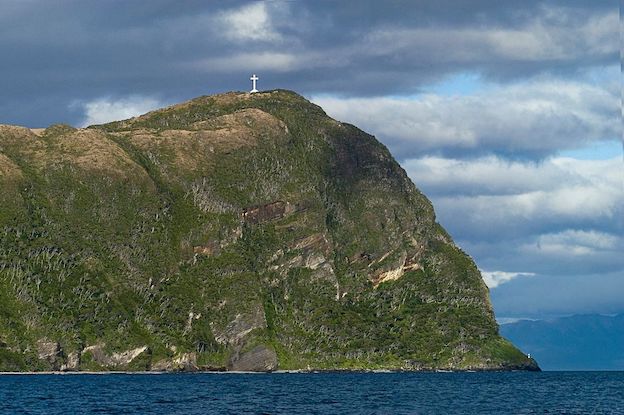
Cape Froward, Chile

BEACH & SUN

Welcome to the World’s Largest New Year’s Celebration
For those traveling from North, Central, or South America, New Year's Eve in Rio offers a rich narrative about how a city can transform a universal holiday into a unique celebration, rooted in local traditions and open to the world.












|
Experiences Finder
(Search our catalog of Experiences here.) |
|---|