|
Pan American Experiences
|
------- |

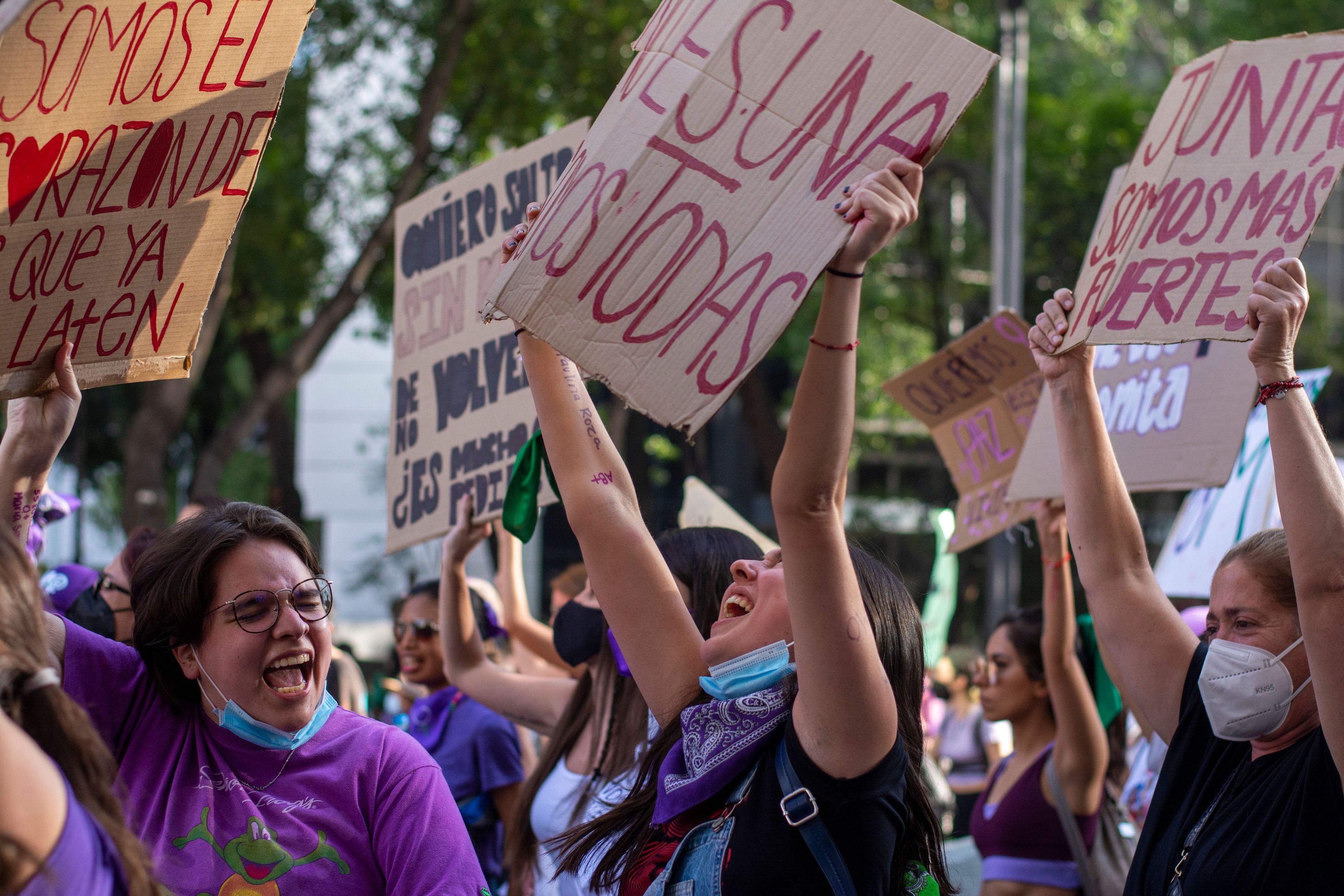
Photo Credit: Ceci Figueroa / Pexels
Apps for Secure LGBTQ+ Travel Across Three Americas
Medellín, Bogotá, Cartagena and Santa Marta: The Colombian Race for Digital Nomadism
Six Places in the Americas Where You Can Still Experience True Silence |
HEMISPHERE ------------------------------------------937[TRAVEL+CULTURE] | |||
Memes, Music & MovementsHow Gen Z Is Rewriting Activism in the AmericasBy Jazmin Agudelo for Ruta Pantera on 11/5/2026 7:09:19 AM |
||||
| A meme can make thousands of people laugh. A song can bring strangers together. A short video can turn a local grievance into a conversation that crosses borders. But what happens when these everyday expressions of internet culture become tools for collective action? Across Latin America, Generation Z is finding new ways to participate in public life, creating digital campaigns, documenting demonstrations, sharing political commentary through humour and using music and visual culture to communicate concerns that traditional institutions sometimes struggle to reach. For this generation, activism does not always begin with a political organisation or a formal public meeting. It might start in a TikTok comment section, a Discord server, an Instagram story or a group chat among friends. Yet the distinction between online and offline participation is becoming increasingly difficult to maintain because digital communication now frequently accompanies what happens in streets and communities. Peru, Mexico and Argentina offer three different examples of this transformation, revealing not one single movement but a changing cultural landscape in which participation is becoming more accessible, decentralised and visually expressive.
Peru: When a Smartphone Becomes a Witness In September 2025, demonstrations in Peru initially triggered by changes to the pension system developed into broader protests concerning corruption, insecurity and institutional accountability. Among the young people participating was Grecia Flores, a 21-year-old activist from Lima and youth representative to the World Food Forum. Her experience offers a revealing perspective on the relationship between digital communication and collective responsibility. During the demonstrations, livestreams became more than a way to follow events. People watching from their phones began recording vehicle number plates, saving screenshots and collecting information when protesters were reportedly taken away in unidentified vehicles. Flores described this activity as a form of citizen surveillance, an attempt to preserve evidence that might later help establish what had happened. Her account, published by the Heinrich Böll Foundation in April 2026, also captured another side of the demonstrations: livestreams showed volunteer medical teams providing first aid, while residents brought water and supplies to help people affected by tear gas. The smartphone had therefore become both a reporting tool and a means of witnessing solidarity. The significance of Peru's experience lies in the combination of documentation, communication and mutual support. Other young Peruvians have used digital platforms to communicate their frustrations directly. Activist Wildalr Lozano, interviewed by CIVICUS in October 2025, described a generation increasingly aware that political change requires sustained participation rather than a single demonstration. This distinction matters because social media can make political engagement appear instantaneous: a post is published, a video becomes viral and thousands of people react within hours. Yet collective action usually depends on what happens beyond the screen. In Peru, digital platforms helped people follow events, share information and respond to situations unfolding in real time, while the physical demonstrations created spaces where those digital connections could become direct forms of support. Technology did not create the underlying grievances, nor did it automatically produce political change. What it did was provide another layer through which young people could document experiences, communicate with one another and make events visible to audiences far beyond the streets where they occurred. Mexico: When a Movement Begins Online Mexico's Generation Z demonstrations in November 2025 revealed a different side of digital mobilisation: the complicated relationship between grassroots organising, online influence and political narratives. The protests followed the November 1 assassination of Uruapan mayor Carlos Manzo and brought together people expressing concerns about violence, corruption and impunity. One of the most interesting details emerged after the demonstrations. According to an investigation published by WIRED México on November 19, the initial organisation of the march had roots in a small Discord community created by young people who wanted to organise independently. The platform allowed participants to exchange ideas, discuss the demonstration and coordinate activities without relying on a traditional organisation. This detail is important because it illustrates how spaces originally associated with entertainment and online communities can become places where civic participation begins. For a generation accustomed to building friendships, communities and identities online, the move from a digital conversation to a physical demonstration may not feel as radical as it might to older generations. However, once the movement attracted attention, its online identity became increasingly contested. Influencers, political commentators and opposition figures amplified the call to demonstrate, while government representatives questioned the movement's independence and presented allegations of coordinated digital promotion and disinformation. Organisers and their supporters disputed the characterisation of the mobilisation as an artificial campaign. The visual language was equally significant: the straw-hat skull flag from the Japanese manga and anime series One Piece appeared alongside protest messages, connecting the demonstrations to an international visual symbol already familiar to younger internet communities. Music also entered the conversation. Molotov's Gimme the Power, a song with a long history in Mexican political and protest culture, circulated as part of the demonstrations' soundtrack, while rap artist Bitrio Smoke released music associated with the mobilisation. Mexico therefore illustrates an important tension in contemporary activism: digital visibility can help young people find one another, but it also attracts competing interests seeking to shape a movement's message. Once a movement becomes viral, the question is no longer only who started it, but who gets to define what it represents. |
||||
|
Argentina: When a Hashtag Becomes a Meeting Point
Argentina offers one of the region's most important examples of digital communication connecting individual experiences with collective mobilisation. In May 2015, journalist Marcela Ojeda published a message on Twitter expressing frustration over the continuing murders of women. The post helped inspire the hashtag #NiUnaMenos, which quickly connected journalists, artists, feminist organisations and ordinary citizens. On June 3, 2015, demonstrations took place across Argentina, bringing gender-based violence and femicide into the centre of public debate. For younger women, the movement created opportunities to participate through different forms of expression and organisation. Posters, digital graphics, slogans and social media campaigns became ways of communicating shared demands and inviting others to join demonstrations. Research by Elisabeth J. Friedman and Ana Laura Rodríguez Gustá, published in 2023, examined why young women joined the movement and highlighted the importance of friendships, student networks and existing feminist organisations. A 2026 digital ethnographic study by Ayleen Cabas-Mijares further explored how #NiUnaMenos used online communication to develop its identity and build connections across different communities. The movement's significance is not that a hashtag alone created social transformation, but that digital communication helped connect people and organisations that already had experiences, concerns and demands to share. Memes, Music & the Algorithm Memes are often dismissed as disposable entertainment, but their cultural significance goes further. A well-designed image, a familiar joke or a short video can communicate frustration in seconds, while shared references create a sense of recognition among people who might otherwise have little in common. Argentina's meme culture provides an interesting example of how these formats can also function as informal information channels. Melisa Cecilia Visentin, known online as Memisa, explained in a 2024 interview with TN that memes are not only humorous images but can also serve as a means of communicating information. Her work illustrates how creators build narratives through everyday visual references and audience participation. This does not mean every viral meme is activism, or that humour necessarily produces political engagement. It shows instead how digital creativity can make public conversations more accessible, particularly to audiences who do not necessarily follow traditional news outlets. Yet the same qualities that make memes effective can also make them dangerous as information tools. A joke can expose an issue while oversimplifying it, a manipulated image can circulate faster than a correction, and the same visual language that helps people communicate can also be used to mislead them. Music has long accompanied political expression in the Americas. From protest folk songs to rock, hip-hop and contemporary urban music, artists have used sound to reflect social tensions and preserve collective memory. What is changing is how quickly music can circulate and how closely its distribution is connected to online communities. In Peru, Quechua-language hip-hop artist Liberato Kani offers an example of how contemporary music can connect political expression with Indigenous identity and cultural memory. His work brings an Indigenous language into a modern musical form, challenging the idea that cultural preservation and contemporary youth culture must exist separately. Argentina offers another perspective through TRÍADA, a group of three young musicians who have attracted online attention by reinterpreting Latin American folk music and bossa nova. Their story is not one of conventional protest music, but it demonstrates how young artists can use digital platforms to bring regional musical traditions to new audiences. These examples broaden the meaning of cultural participation because music does not need to contain an explicit political slogan to contribute to conversations about identity, belonging and representation. A cover shared online, a song recorded in an Indigenous language or a performance circulated through social media can all become part of a wider cultural discussion about whose voices are heard. The rise of digital activism has created another important question: who decides which messages become visible? Social media platforms distribute content through recommendation systems that respond to user behaviour, engagement and other signals. This can help a small campaign reach a much larger audience, but visibility is unpredictable and can change quickly. Activists also face harassment, coordinated attacks, misleading information and the possibility that their content will be taken out of context. Mexico's 2025 demonstrations illustrated these difficulties particularly clearly. Images generated with artificial intelligence and disputed claims about the origins of the mobilisation circulated alongside authentic footage and personal testimonies. The challenge for young audiences is therefore not simply learning how to create content. It is learning how to evaluate it. Digital literacy, source verification and the ability to recognise manipulated material are becoming essential elements of civic participation. In a world where almost anyone can publish information, knowing how to question what appears on a screen is as important as knowing how to share it. Beyond the Viral Moment There is a difference between making an issue trend and sustaining a movement. A hashtag can attract attention, a meme can communicate frustration and a video can document an event, but lasting participation requires something more: relationships, organisation, accountability and the willingness to continue working after public attention moves elsewhere. The experiences of Peru, Mexico and Argentina demonstrate that digital activism is not a replacement for traditional organising. It is another space in which people can discover common concerns, develop shared identities and coordinate collective action. Sometimes that participation takes the form of a demonstration. Sometimes it involves documenting abuses, supporting a community initiative, preserving cultural traditions or making information accessible to a wider audience. For Generation Z, the boundaries between culture and civic life are increasingly fluid because digital culture has become part of how many young people understand community, identity and public conversation. The most important transformation may not be the technology itself, but the creativity with which young people are using it. Memes provide a language of humour and recognition. Music connects people through emotion and cultural memory. Digital communities create opportunities to exchange ideas, while livestreams and independent content allow events to be documented from perspectives that might otherwise remain unseen. Across the Americas, young people are developing new ways to participate in public conversations without necessarily following established institutional pathways. Their methods are not without contradictions: digital platforms can amplify misinformation as easily as verified information, viral campaigns can attract attention without producing lasting change, and a movement's online identity can become contested by people with very different interests. But these tensions are part of the story. The future of activism will not necessarily be defined by a single platform, a particular hashtag or one generation's preferred format. It will depend on how people turn communication into relationships, creativity into participation and shared concerns into sustained collective efforts. Sometimes, the first step is a meme. The real story begins with what people decide to do next. |
||||
 Add this article to your favorites
[FOR MEMBERS ONLY] Copy this link to send this article to a friend: [FOR MEMBERS ONLY] |
||||
|
|
||||
|---|---|---|---|---|
| |
|
|
|
|
×
|
||||
Please leave a comment about this article: 937 |
|
| Enter your email address: |
Your email will not be displayed. |
| Your nickname: | |
| Your comment: | |
| Was this article helpful to you? | |
|
|
|
Articles about exciting travel experiences in our hemisphere.


Cape Froward, Chile



Welcome to the World’s Largest New Year’s Celebration
For those traveling from North, Central, or South America, New Year's Eve in Rio offers a rich narrative about how a city can transform a universal holiday into a unique celebration, rooted in local traditions and open to the world.
















|
Experiences Finder
(Search our catalog of Experiences here.) |
|---|