|
Pan American Experiences
|
------- |

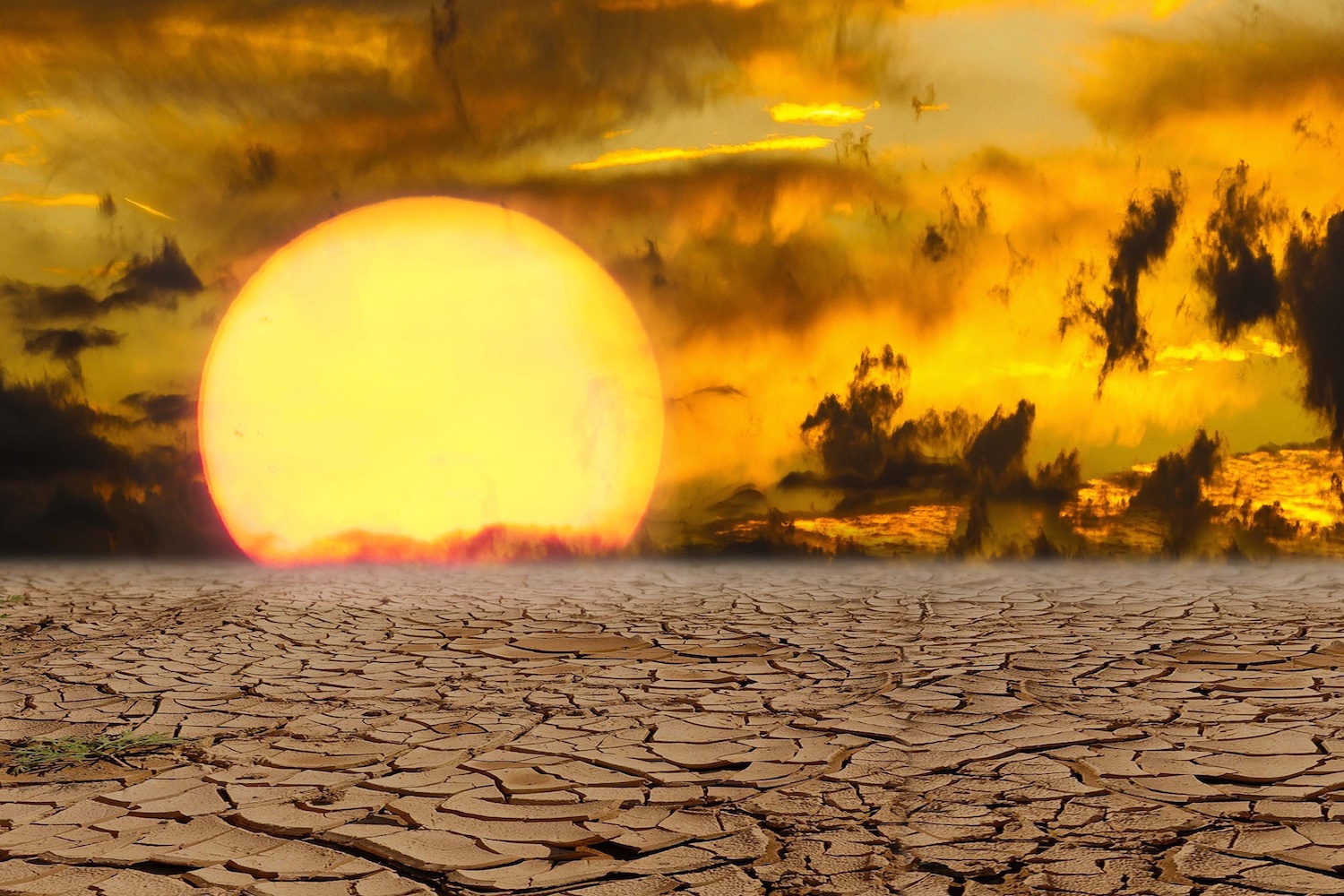
Warming rivers threaten dolphins and disrupt the cycles on which communities depend. Image by GC/Pixabay.
AI: a Double-Edged Sword for Travel Agents
Journey to the Great Forests and National Parks of the Americas |
HEMISPHERE ------------------------------------------934[TRAVEL+NATURE] | |||
Heatstorms: When the Entire Planet Becomes an Undeniable ThreatA New Methodology Reveals How Prolonged Heat Events Are Transforming Health, Ecosystems and Daily Life Across the Americas.By Estefanía Muriel for Ruta Pantera on 11/4/2026 7:09:19 AM |
||||
| Heat has a quiet way of changing life. First, the streets become deserted during the hottest hours of the day; then, the river recedes, the forest loses moisture, and workdays shorten. On a Texas basketball court, a teenager might collapse under the equipment; in an Amazonian community, excessively hot water can become a deadly threat to dolphins. These are distant scenes, but it is becoming increasingly difficult to consider them isolated incidents.
In October 2026, a Reuters investigation proposed a new way of observing this transformation: heatstorms, phenomena that cover vast regions and persist for weeks or months, connecting crises that we normally analyze separately. These are not storms with clouds, lightning, and wind, but extraordinary expanses of heat that allow us to understand how global warming manifests itself in everyday life. A Heat That No Longer Fits on a City Map The term has a specific definition, although it's important to distinguish it from an official meteorological category. Reuters analyzed hourly temperatures since 1960 in more than a million geographic cells, using data from the European Centre for Medium-Range Weather Forecasts. It defined a heat wave as a period of at least five consecutive days in which maximum temperatures reach the 10% warmest of the local historical range for that date. If the phenomenon covers at least 1% of the Earth's surface, it is called a heat storm. The concept is an analytical tool developed by Reuters with input from around two dozen researchers, not a universal classification adopted by meteorological agencies. The scale reveals the change. The largest wave identified in the 1960s covered about 6% of the planet for 46 days. Storm Vera, recorded between 2023 and 2024, lasted 367 days and, along its path, reached almost 85% of the Earth's surface. The research also detected an uninterrupted succession of storms since July 2008. This doesn't mean that the entire planet was simultaneously experiencing extreme temperatures, but rather that while some storms ended, others continued or emerged in different regions. The study allows for comparisons of decades using a consistent criterion, although it does not eliminate all uncertainties: the threshold is relative to the historical climate of each location and does not, by itself, measure humidity, individual exposure, or the capacity of communities to protect themselves. Its value lies in making visible the geographical dimension of events that, viewed separately, appear less connected. When the Body Stops Finding Relief In Mexicali, Baja California, the extreme heat had deadly consequences for Gilberto Vargas Lara, a 32-year-old farmworker who died in June 2024 after suffering heatstroke while working in the watermelon harvest, reported the newspaper La Jornada. The case highlighted the risks faced by those who perform agricultural work under the sun, with few opportunities to find shelter from the high temperatures. In Colombia, a study by the International Labour Organization also identified agricultural workers among the occupational groups exposed to the highest risks of heat-related mortality. The threat, therefore, is not limited to the fields: it extends to delivery drivers, construction workers, and others whose livelihoods depend on being outdoors. In April 2024, in Chicoasén, Chiapas, high temperatures affected students at the Emiliano Zapata Elementary School, where several children experienced health problems during a day with temperatures exceeding 40°C (104°F). According to the Mexican news outlet N+, the situation forced the school to modify some activities to reduce exposure to the heat. This incident reveals a fundamental inequality: the risk depends not only on the temperature but also on the condition of the buildings, ventilation, and the ability to adapt schedules and spaces. For those with access to cool places, water, and transportation, an extreme heat day can be more manageable; for those who study in sweltering classrooms or work under the sun, it can become an emergency. Additionally, tourism and the local economy depend on weather conditions that can no longer be taken for granted. Heat can reduce safe hours for excursions, increase energy costs for hotels and restaurants, damage crops, and hinder access to remote destinations. In Bolivia, during October 2023, heat storms coincided with a worrying drop in the level of Lake Titicaca. In the Brazilian Amazon, extreme drought disrupted navigation and complicated the transport of food, medicine, and patients. These impacts are not identical, but they reveal how the heat crisis affects both the landscapes that attract visitors and the networks that sustain their inhabitants. Reuters +1 |
||||
|
The Jungle Feels the Heat Too
In 2023, Lake Tefé in the Brazilian Amazon experienced the death of just over 200 river dolphins in less than two months. A study published in Scientific Reports documented that the drop in water level, solar radiation, and extreme temperatures contributed to the lake's warming, which reached values close to 40°C in some areas. The drought also disrupted tree flowering and reduced subsequent fruit production, affecting both the fauna and the communities that depend on the river's cycles. The event was associated with a combination of factors; it should not be attributed solely to a single heat storm. The consequences don't always follow a straight line either. Warming can intensify droughts and wildfires, alter flowering cycles, and disrupt the availability of water and food. In other regions of the world, temperature anomalies can interact with atmospheric circulation and contribute to episodes of extreme cold. These connections require specific analysis: not every unusual weather event is a direct result of a heat storm, but the climate system operates through relationships that transcend borders and seasons. Adaptation Cannot Be a Privilege Some institutions are already taking action. In Texas, the University Interscholastic League made wet-bulb globe temperature (WBGT) measurement a requirement for outdoor athletic and band activities starting in the 2026-2027 school year. This indicator incorporates temperature, humidity, wind, and solar radiation to guide modifications to physical activity. It's a concrete step, but sports protocols alone don't solve the problem of exposure for those who work outdoors, live in poorly ventilated housing, or can't afford air conditioning. Adaptation requires more than just weather alerts. Schools need cool spaces; tourist destinations, protocols to protect visitors and workers; cities, shade, water, and safe transportation; and healthcare systems, the capacity to anticipate emergencies. It also requires distinguishing between the responsibilities of those who generate emissions, the obligations of institutions, and the actual resources of communities. When protecting oneself from the heat depends on income, adaptation reproduces the inequalities that existed before the temperature rose. One Hemisphere, Many Forms of Vulnerability From North American cities to the Andes, the Caribbean, and the river communities of the Amazon, heat reveals an interdependence that political borders obscure. Ecosystems sustain economies, cultures, and ways of traveling; when their cycles are disrupted, not only does the landscape change, but so do available food, access routes, livelihoods, and community practices. Understanding heat as a continental-scale phenomenon allows us to connect these consequences without erasing the differences between territories. The term “heat storm” does not replace climate research, nor does it explain every disaster on its own. Its usefulness lies in showing that seemingly distant events can be part of a larger transformation. For the Americas, the question is no longer just how much the temperature will rise, but who will be able to adapt, which ecosystems and communities will be most exposed, and how the cost of protecting life will be distributed. Heat does not affect everyone equally; a serious hemispheric response must begin by recognizing this. |
||||
 Add this article to your favorites
[FOR MEMBERS ONLY] Copy this link to send this article to a friend: [FOR MEMBERS ONLY] |
||||
|
|
||||
|---|---|---|---|---|
| |
|
|
|
|
×
|
||||
|
References: Tamman, M., Welsh, B., McKenzie, P., Szymanski, C., Delgerjargal, D., Corey-Boulet, R., Horwitz, J., & Faus, J. (2026). Giant “heat storms” are scorching the Earth. This is the story of the biggest one on record. Reuters. https://www.reuters.com/investigates/special-report/climate-heatstorms-science/ Reuters. (2026). Heat storms: Key takeaways from the investigation. https://www.reuters.com/investigates/special-report/climate-heatstorms-takeaways/ European Center for Medium-Range Weather Forecasts. (sf). ERA5 hourly data on single levels from 1940 to present. Copernicus Climate Change Service. https://cds.climate.copernicus.eu/datasets/reanalysis-era5-single-levels?tab=overview US Environmental Protection Agency. (sf). Extreme heat. https://www.epa.gov/climatechange-science/extreme-heat World Health Organization. (sf). Heatwaves and health: Guidance on warning-system development. https://www.who.int/docs/default-source/climate-change/heat-waves-and-health---guidance-on-warning-system-development.pdf?sfvrsn=e4813084_2 Food and Agriculture Organization of the United Nations, & World Meteorological Organization. (2026). Extreme heat and agriculture: FAO–WMO joint report. https://doi.org/10.4060/cd9394en Unprecedented social-ecological impacts of the 2023 extreme drought in the central Amazon. (2025). Scientific Reports. https://www.nature.com/articles/s41598-025-25125-x National Library of Medicine. (2025). PubMedCentral article PMC12639143. PubMedCentral. https://pmc.ncbi.nlm.nih.gov/articles/PMC12639143/ University Interscholastic League. (2026). 2026–2027 Heat Stress & Athletic Participation Required Plan. https://www.uiltexas.org/health/info/heat-stress-and-athletic-participation Ortiz, I. (2026, October 20). The planet is registering more and more giant “heat storms”, according to a new analysis. TV Azteca News. https://www.tvazteca.com/aztecanoticias/tormentas-calor-gigantes-se-multiplican-en-el-mundo-que-esta-pasando-el-clima/ European Center for Medium-Range Weather Forecasts. (sf). European Center for Medium-Range Weather Forecasts (ECMWF). https://www.ecmwf.int/ China Global Television Network (CGTN). (2023, October 17). [Article title to be verified]. CGTN Spanish. https://espanol.cgtn.com/2023/10/17/ARTI1777287194160592 Heras, A. (2024, June 16). Baja California Human Rights Commission investigates death of farmworker. La Jornada. https://www.jornada.com.mx/2024/06/16/estados/022n4est International Labor Organization. (2026, August 17). High temperatures linked to increased mortality among workers in Colombia, ILO study finds. https://www.ilo.org/resource/news/high-temperatures-linked-increased-mortality-among-workers-colombia-ilo N+ Editorial Staff. (April 23, 2024). Students in Chiapas experience health problems due to temperatures exceeding 40 degrees Celsius. N+. https://www.nmas.com.mx/salud/alumnos-en-chiapas-presentan-problemas-salud-por-temperaturas-superiores-a-40-grados/ Inter-American Development Bank. (2025). Heatproof Education in Latin America and the Caribbean. https://publications.iadb.org/publications/spanish/document/Educacion-a-prueba-de-calor-en-America-Latina-y-el-Caribe.pdf Reuters. (2023, October 2). Mass death of Amazon River dolphins linked to severe drought and heat. Agronegocios. https://www.agronegocios.co/clima/se-encontraron-los-cadaveres-de-mas-de-200-delfines-de-rio-flotando-en-el-lago-tefe-3934919 |
||||
Please leave a comment about this article: 934 |
|
| Enter your email address: |
Your email will not be displayed. |
| Your nickname: | |
| Your comment: | |
| Was this article helpful to you? | |
|
|
|
Articles about exciting travel experiences in our hemisphere.

Cape Froward, Chile




Welcome to the World’s Largest New Year’s Celebration
For those traveling from North, Central, or South America, New Year's Eve in Rio offers a rich narrative about how a city can transform a universal holiday into a unique celebration, rooted in local traditions and open to the world.


















|
Experiences Finder
(Search our catalog of Experiences here.) |
|---|