|
Pan American Experiences
|
------- |

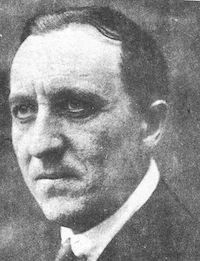
Ramiro de Maeztu, 1925. Source: Revista Mujer / Wikimedia Commons, CC BY 4.0.
|
HEMISPHERE ------------------------------------------896[TRAVEL+CULTURE] | |||
The Lost Art of Living TogetherRamiro de Maeztu, Authority, Liberty and the Question of What Holds a Society TogetherBy Heydi Bernal for Ruta Pantera on 11/13/2026 7:09:19 AM |
||||
| What makes a civilization strong? Its government, its wealth, the freedom of its citizens, or the work of ordinary people who keep it running? In 1916, as the First World War shattered Europe, Spanish intellectual Ramiro de Maeztu raised a question that went far beyond the battlefield: what if the very foundations of modern society were part of the problem? In Authority, Liberty and Function in the Light of the War, Maeztu argued that two powerful ideas, authority and liberty, had become insufficient to organize collective life. His alternative was a third principle: function. A society, he believed, should not be understood only through those who govern or those who demand freedom, but also through the responsibilities and contributions of everyone who makes it possible. When Power Was Not Enough The Great War revealed a disturbing contradiction. European nations possessed extraordinary industrial capacity, scientific knowledge and developed political institutions, yet they were using those achievements to sustain unprecedented destruction. For Maeztu, this exposed a crisis deeper than military rivalry. Authority could impose order, but it could also become oppressive. Governments could direct entire populations without necessarily serving their interests. The existence of powerful institutions did not guarantee a healthy society. Liberty presented another challenge. Individual freedom was essential, but Maeztu questioned whether a society built exclusively around personal interests could maintain the bonds required for collective survival. People were not isolated individuals: they depended on one another, often in ways they barely noticed. The Forgotten Principle Maeztu's most interesting proposal was to place function at the center of social organization. Think about what makes an ordinary community work. Farmers produce food, teachers transmit knowledge, builders create spaces, artisans preserve skills and countless workers connect activities that would otherwise remain separate. Their contributions are different, but each forms part of a larger structure. Maeztu wanted society to recognize these functions rather than concentrate its attention exclusively on political authority or individual rights. Inspired partly by the historical tradition of guilds and the British guild socialism of his time, he explored a system in which professional associations could assume responsibilities and enjoy greater autonomy. His underlying argument was that freedom and authority needed a meaningful social purpose. Neither should exist detached from the responsibilities that make collective life possible. A Society Is More Than Its Leaders There is something particularly interesting about this idea: civilizations are usually remembered through their kings, presidents, wars and great monuments, while the people who sustain everyday life remain largely invisible. Yet no civilization can survive without food production, craftsmanship, education, transportation, care and cooperation. Its achievements depend on thousands of interconnected activities, many of which receive little recognition. Maeztu's approach invites us to look at society from a less familiar perspective. Instead of asking only who holds power, we can also ask who contributes, who assumes responsibility and whether the institutions around us actually serve the functions for which they exist. |
||||
|
The Questions His Proposal Leaves Behind Maeztu's vision was not without contradictions. Organizing society around functions raises difficult questions: who decides which functions matter? Who represents people within these associations? And what happens when collective interests conflict with individual freedom? His later political development also moved toward increasingly conservative, traditionalist and Catholic positions. His 1916 book belongs to an earlier stage of his intellectual journey and should be read within that historical context. Nevertheless, its central tension remains recognizable. Modern societies still struggle to balance institutional power, individual freedom and collective responsibility. Perhaps the most valuable question Maeztu leaves us is not whether authority or liberty should prevail. It is whether we have forgotten that a society is ultimately built through the contributions, relationships and responsibilities of the people who inhabit it. A civilization does not exist only in its institutions or its declarations of freedom. It exists in what its people do for one another, every day. |
||||
 Add this article to your favorites
[FOR MEMBERS ONLY] Copy this link to send this article to a friend: [FOR MEMBERS ONLY] |
||||

|
|
||||
|---|---|---|---|---|
| |
|
|
|
|
×
|
||||
|
References: Maeztu, R. de. (1916). Authority, Liberty and Function in the Light of the War. George Allen & Unwin. Jiménez Torres, D. (2015). Las múltiples caras de un intelectual: Ramiro de Maeztu ante la Gran Guerra. Tradición católica y modernidad funcional en Ramiro de Maeztu (2017). |
||||
Please leave a comment about this article: 896 |
|
| Enter your email address: |
Your email will not be displayed. |
| Your nickname: | |
| Your comment: | |
| Was this article helpful to you? | |
|
|
|
Articles about exciting travel experiences in our hemisphere.

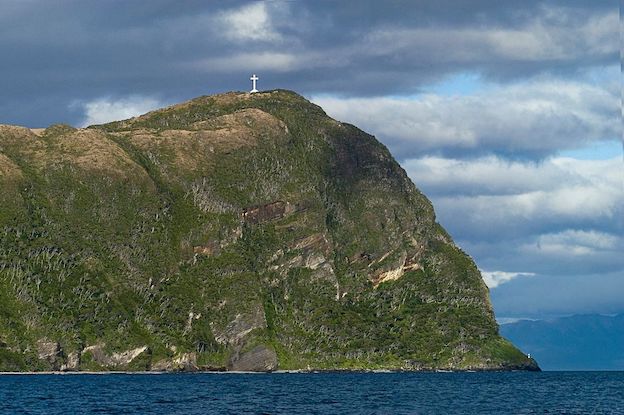
ADVENTURE
Cape Froward, Chile



BEACH & SUN

Welcome to the World’s Largest New Year’s Celebration
For those traveling from North, Central, or South America, New Year's Eve in Rio offers a rich narrative about how a city can transform a universal holiday into a unique celebration, rooted in local traditions and open to the world.
















|
Experiences Finder
(Search our catalog of Experiences here.) |
|---|