|
Pan American Experiences
|
------- |

Hemisphere Related Articles:
Citizen Weapons and Personal Safety in the Americas
Pedal the Pan-American Circuit: Mountain Bike Competitions Across the Americas
Monarch Butterflies: The Migration That Turns a Forest Into a Sea of Wings |
HEMISPHERE ------------------------------------------895[COLUMN] | |||
Latin America Reassesses Its Relationship With Washington After Trump’s Electoral DefeatDemocratic Control of Congress Raises New Questions Across the Hemisphere.By Heydi Bernal for Ruta Pantera on 11/13/2026 7:09:19 AM |
||||
| Latin America is reassessing its relationship with Washington after Democrats captured both chambers of the United States Congress in the November 3 midterm elections, ending Republican control of the legislature and creating new constraints on President Donald Trump’s domestic agenda. The result carries implications far beyond American politics, particularly for governments whose economic, diplomatic and security interests are closely tied to the United States. Argentina’s financial dependence on American support, Mexico’s trade negotiations, Brazil’s diplomatic positioning and Venezuela’s uncertain political future all intersect with decisions Congress can influence. Yet reactions across the region have been far from uniform, reflecting different national interests and expectations about Washington’s next moves. Argentina’s Alliance With Trump Faces Greater Scrutiny Argentina faces one of the most immediate challenges. President Javier Milei has cultivated a close relationship with Trump, whose administration extended a $20 billion currency swap arrangement in 2025 to support Argentina’s economic strategy. Democratic control of Congress could intensify scrutiny of that assistance, including its financial conditions, economic justification and political implications. Although the election does not automatically threaten existing arrangements, it complicates Milei’s efforts to maintain American backing as Argentina approaches its 2027 electoral cycle. The central question is whether Buenos Aires can preserve its close alignment with the White House while securing support from a Congress controlled by the opposition. Mexico and Brazil Protect Their Strategic Interests Mexico’s President Claudia Sheinbaum adopted a cautious response, welcoming victories by Mexican-American political figures while emphasizing that the congressional results would not immediately change bilateral relations. Trade negotiations remain particularly important as the United States-Mexico-Canada Agreement (USMCA) undergoes its six-year review, involving strategic issues such as energy, digital commerce and regional trade. In Brazil, federal deputy Erika Hilton celebrated Republican defeats and connected the results to the political prospects of conservative figures associated with the Bolsonaro family. However, analysts have cautioned against interpreting the American election as evidence of an equivalent ideological shift across Latin America. For Mexico and Brazil, the immediate priority is understanding how the new congressional balance could affect trade, migration, security cooperation and diplomatic relations. |
||||
|
Venezuela: Oil, Sanctions and Congressional Oversight Venezuela presents a particularly sensitive challenge. Washington’s relationship with Caracas involves petroleum revenues, sanctions, political negotiations and democratic governance. Democratic leadership in Congress could bring greater scrutiny to the administration’s management of Venezuelan oil revenues and its arrangements with Venezuelan authorities. For the opposition, increased oversight could create opportunities to demand transparency and accountability. Conversely, conservative commentators fear that a Democratic-controlled Congress could weaken American support for movements opposing authoritarian governments. Whether this translates into a substantive policy shift or simply greater scrutiny remains uncertain. A Wider Political Debate Across the Hemisphere The electoral outcome also generated debate among political figures and commentators in Colombia, Chile and other countries. A November 4 analysis by the Digital Democracy Institute of the Americas examined more than 1,000 Spanish-language social media posts collected during the election period. Three themes emerged: celebrations of Democratic victories, criticism of Trump’s response to the Republican losses, and debate over the implications for Latin American politics. In Colombia, former senator Claudia López described the results as a major setback for Trump and his political movement. In Chile, congressman Ignacio Achurra interpreted the victories as evidence that the advance of conservative and far-right movements is not inevitable. Other commentators expressed concern that Democratic control could affect Washington’s support for conservative political allies in the region. Venezuelan discussions, meanwhile, focused on whether the new congressional balance might alter American pressure on Caracas. These findings reflect conversations among active social media users, not a representative survey of Latin American public opinion. Congressional Power Does Not Guarantee a Foreign Policy Shift Democratic control of both chambers gives the party greater influence over legislation, government spending, investigations and oversight of the executive branch. Immigration enforcement, deportations, military operations in the Caribbean and eastern Pacific, sanctions and Venezuelan oil policy could all face increased scrutiny. Nevertheless, the president retains substantial authority over diplomacy, military operations and executive decisions. Congress can investigate, restrict funding and challenge policies, but it cannot independently replace the administration’s foreign policy agenda. There is also a less obvious possibility: facing greater domestic opposition, Trump could seek to reinforce his political influence through more visible initiatives abroad. A more confrontational approach toward the Western Hemisphere cannot be ruled out. The Hemisphere Watches What Washington Does Next The election has exposed different political calculations across Latin America. Governments aligned with Trump must consider the consequences of a less favorable Congress, while those facing pressure from Washington may see opportunities for greater diplomatic flexibility. But the hemisphere is not a single political bloc. Argentina’s financial needs, Mexico’s trade priorities, Brazil’s diplomatic interests and Venezuela’s political crisis demand distinct responses. The significance of the results lies not simply in the defeat of Trump’s party, but in the new institutional balance governing decisions that affect the entire hemisphere. The next test will be whether Democrats use their congressional authority to reshape American engagement with Latin America or whether the administration manages to preserve its priorities despite stronger legislative opposition. For governments and political movements across the Americas, Washington’s next decisions will matter considerably more than the celebrations surrounding its electoral results. |
||||
 Add this article to your favorites
[FOR MEMBERS ONLY] Copy this link to send this article to a friend: [FOR MEMBERS ONLY] |
||||
|
|
||||
|---|---|---|---|---|
| |
|
|
|
|
×
|
||||
|
References: Associated Press. (2026, November 4). Democrats win the US House and Senate as voters deliver a strong rebuke to Trump and Republicans. AP News. https://apnews.com/article/f126e12e05b579a327b98481c0ae22262. Digital Democracy Institute of the Americas. (2026, November 4). 2026 U.S. midterms: A snapshot of Spanish-language online conversations during the second half of Election Day. https://ddia.org/en/2026_USMidterms_24hours3. Congressional Research Service. (2025, December 30). U.S. financial support to Argentina (R48780). https://www.everycrsreport.com/reports/R48780.html4. Morland, S., & Graham, D. (2025, October 20). Argentina’s central bank says it signed $20 billion currency swap deal with US. Reuters. https://www.investing.com/news/economic-indicators/argentinas-central-bank-says-it-signed-20-billion-currency-swap-deal-with-us-42975365. Solmaz, F. Z. (2026, November 4). Factbox: How will Democrats and Republicans share power in US Congress after midterms? Anadolu Agency. https://www.aa.com.tr/en/features/factbox-how-will-democrats-and-republicans-share-power-in-us-congress-after-midterms/4111692 |
||||
Please leave a comment about this article: 895 |
|
| Enter your email address: |
Your email will not be displayed. |
| Your nickname: | |
| Your comment: | |
| Was this article helpful to you? | |
|
|
|
Articles about exciting travel experiences in our hemisphere.

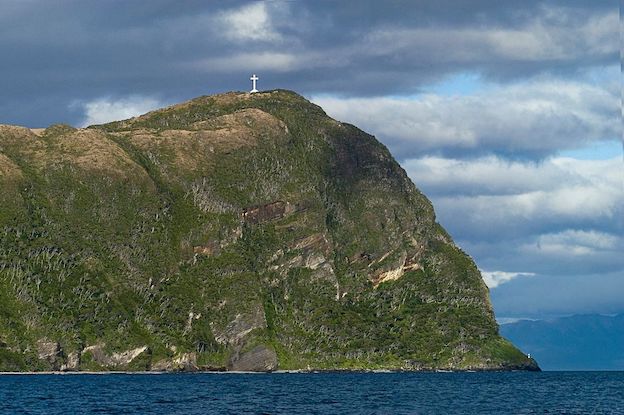
Cape Froward, Chile



Welcome to the World’s Largest New Year’s Celebration
For those traveling from North, Central, or South America, New Year's Eve in Rio offers a rich narrative about how a city can transform a universal holiday into a unique celebration, rooted in local traditions and open to the world.



















|
Experiences Finder
(Search our catalog of Experiences here.) |
|---|