|
Pan American Experiences
|
------- |

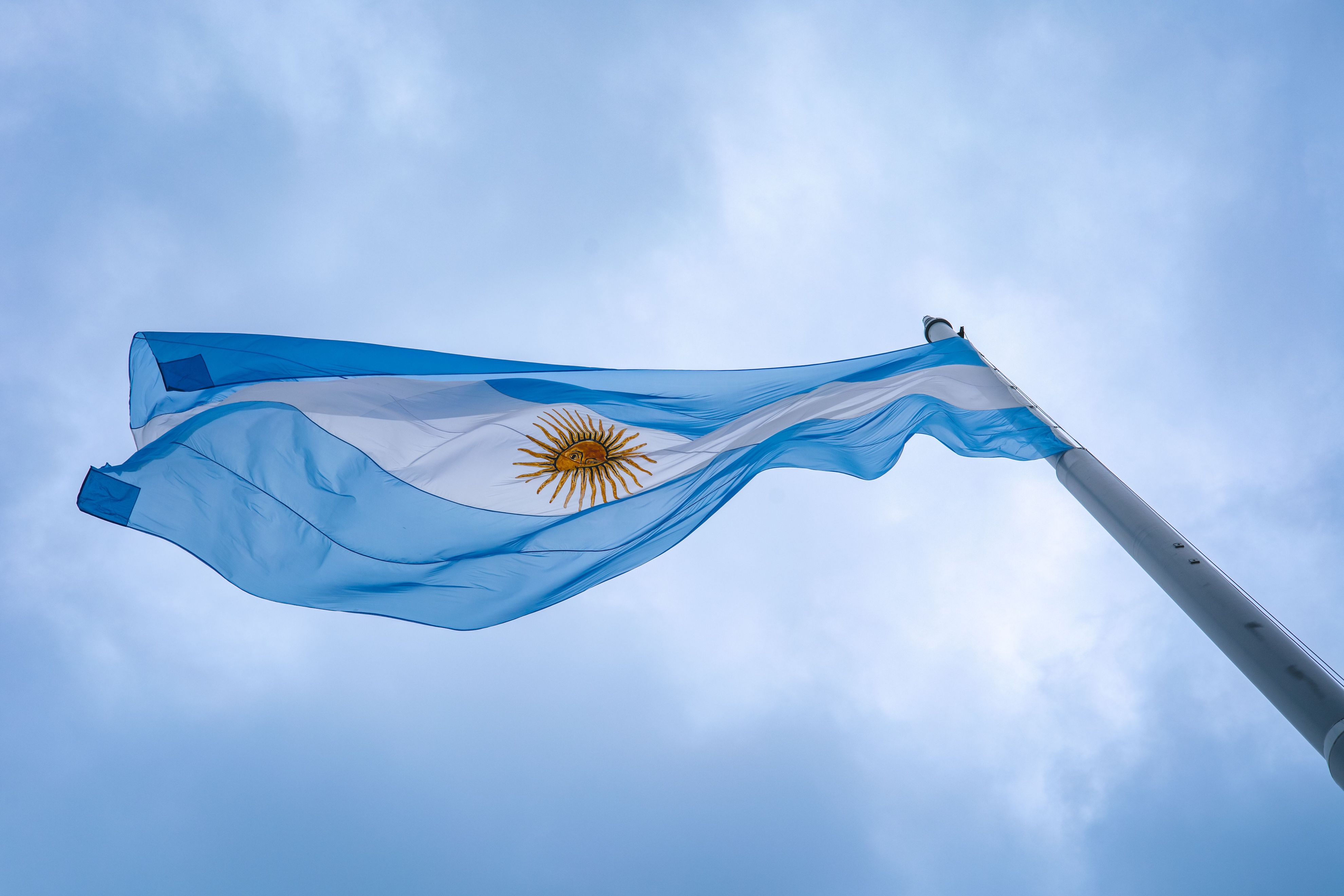
The swap eased Argentina's financial pressure, but left open the debate about its terms and political cost. Photo by Rafael Rodrigues/Pexels.
An Archaeological Journey Through the Ancient Maya Citadel of Tikal
|
HEMISPHERE ------------------------------------------892[BUSINESS FEATURE] | |||
Argentina and the United States: The Price of Financial BackingThe Democratic Victory in the U.S. Congress Raises Questions About Trump’s Support and Argentina’s Economic Autonomy.By Estefanía Muriel for Ruta Pantera on 11/13/2026 7:09:19 AM |
||||
| In Latin America, we know this scenario well: a country needs dollars, the markets exert pressure, and suddenly, a powerful partner appears, willing to offer support. Aid can alleviate a crisis, but it also raises questions that go far beyond reserves: who sets the conditions? What interests does it protect, and how long does its commitment last? The relationship between Javier Milei and Donald Trump now faces a new test: the US midterm elections of November 3rd altered the political balance in Washington and reopened the debate about the strength of the commitments made by the Republican administration to Buenos Aires.
The US support package for 2025 included a swap line of up to $20 billion, announced as the Argentine government faced currency tensions and a crucial legislative election. According to Reuters, Treasury Secretary Scott Bessent defended the operation, stating that the United States had made money. He also acknowledged that the assistance was intended to stabilize an ally during an election period. This explanation fueled criticism from lawmakers who questioned the use of US public funds to support a foreign government. Now, with a new Democratic majority in Congress, the agreement is once again under more intense political scrutiny. The first point is important: Argentina used approximately $2.5 billion and repaid it in December 2025; the Central Bank announced the cancellation, and Bessent confirmed the repayment in January 2026. However, the closing of that disbursement did not necessarily mean the termination of the entire credit line. Reuters reported that, in February, Elizabeth Warren formally asked the Treasury to cancel the $20 billion mechanism, noting that the funds appeared to remain available. The difference between repaying what was used and extinguishing the commitment now takes on another dimension: can Trump politically maintain that support in the face of a Congress with greater oversight and scrutiny capabilities? The Swap: Economic Stabilization and Political Cost Was it a stabilization tool or an electoral intervention? The two dimensions can coexist. The instrument provided liquidity at a time of pressure on the peso, but its announcement before the Argentine elections and Trump's statements about the importance of the outcome raised questions about the boundary between financial cooperation and political influence. The Congressional Research Service also noted concerns from US lawmakers about the potential benefit to private investors and the lack of transparency regarding the full terms of the operation. The Democratic victory in the November 3 elections may give new impetus to these questions and to demands for explanations about the use of US resources. The discussion doesn't end with the repayment. If the line of credit remains available, who decides when it's no longer needed? The U.S. Treasury, the Argentine Central Bank, or a negotiation between the two governments? A change in Congress doesn't automatically cancel the Executive's decisions, but it can alter the political climate, intensify investigations, and increase the cost of maintaining certain commitments. For Argentina, the risk lies in confusing the continuity of a presidential relationship with the guarantee of a permanent U.S. policy. Sustainable financial assistance requires clear rules, oversight, and transparency regarding costs, timelines, and conditions. A Trade Agreement That Still Requires Internal Decisions The relationship also extends to trade. The framework agreement announced by the White House in November 2025 envisions market openings, agricultural access, cooperation on critical minerals, and Argentine commitments on intellectual property. This is not a cost-free exchange: it can create export opportunities, but also increase competition for local industrial sectors and spark debates on pharmaceuticals, patents, and regulatory capacity. The White House and the Office of the U.S. Trade Representative outlined the general commitments; their implementation requires completing the corresponding internal procedures. In this context, the new legislative balance in Washington introduces an additional variable for the political future of the agreement. Therefore, it's not enough to ask how much Argentina could export. We must also ask who wins, who faces new pressures, and what room for maneuver Congress retains to debate the balance between investment, domestic production, and access to medicines. A Democratic victory doesn't necessarily imply the rejection of the trade agreement, but it does serve as a reminder that agreements with the United States are subject to institutions, sectoral interests, and political disputes that transcend the relationship between Trump and Milei. A lasting trade alliance shouldn't depend solely on the proximity of the two presidents. |
||||
|
YPF: Politics Does Not Replace the Courts
The litigation over the nationalization of YPF reveals another dimension of this relationship. In March 2026, the Second Circuit Court of Appeals overturned the lower court's judgment for approximately $16.1 billion. The plaintiffs then requested that the Supreme Court review the ruling. On October 30, Missouri and other states filed a brief in support of this review. However, an amicus curiae brief does not determine the outcome; it provides arguments, and the Court must still decide whether to accept the case. Argentina and YPF have until December 2 to respond. The timing of this brief coinciding with the U.S. elections makes it especially important to distinguish between the positions of state actors and official Washington policy. Nor should these presentations be interpreted as a unanimous position of the U.S. federal government. State attorneys general operate within their own jurisdictions and legal frameworks; the federal executive branch is a separate institution. This distinction matters: a diplomatic alliance does not eliminate individual interests nor guarantee that all U.S. actors will defend the same position. For Argentina, this case demonstrates that Trump's political support does not equate to controlling judicial decisions or the positions of all sectors of the U.S. system. When Washington Changes, What Happens to Argentina? The Democratic victory in the US Congress on November 3rd serves as a warning to the Milei administration: while Trump's support may remain, Argentina's political leverage no longer depends solely on the president's will. A Congress with an opposition majority can demand explanations, investigate decisions, and question the use of public resources to support a foreign government. This does not mean that the currency swap, the trade agreement, or the bilateral relationship will automatically disappear. It means that Argentina will have to navigate a more complex US landscape, where the affinity between two presidents is no longer enough to guarantee continuity and institutional support. Dependence doesn't always manifest as debt or a written condition; it also appears when a country's economic decisions are subject to the political will of another. Argentina needs investment, foreign currency, and markets, but it must also prepare for power shifts in the countries that support it. The lesson for Latin America is clear: diversifying partners, strengthening institutions, and negotiating transparent agreements are not gestures of distancing, but rather ways to protect the future. Because an alliance demonstrates its true strength when it can withstand electoral changes, political differences, and the evolving priorities of those in power. |
||||
 Add this article to your favorites
[FOR MEMBERS ONLY] Copy this link to send this article to a friend: [FOR MEMBERS ONLY] |
||||
|
|
||||
|---|---|---|---|---|
| |
|
|
|
|
×
|
||||
|
References: Bianchi, W. (2026, January 9). Argentina has repaid US for currency swap deal . Reuters. https://www.reuters.com/world/americas/argentina-has-repaid-us-currency-swap-deal-2026-01-09/ Clarín. (n.d.). Argentina-US relationship after Trump's defeat: swap, trade agreement, patents, meat and YPF [Title taken from the URL]. https://www.clarin.com/economia/relacion-argentina-eeuu-derrota-trump-swap-atrabajo-comercial-patentes-carne-ypf-mira_0_Niwh7oqHLh.html Congressional Research Service. (2025, December 30). US financial support to Argentina (CRS Report No. R48780). https://www.everycrsreport.com/reports/R48780.html Petersen Energía Inversora SAU v. Argentine Republic , No. 23-7370 (2d Cir. 2026). https://law.justia.com/cases/federal/appellate-courts/ca2/23-23/23-23-2026-03-27.html Reuters. (2025, November 11). US profited from Argentina currency swap deal, Treasury chief Bessent says . Investing.com. https://www.investing.com/news/stock-market-news/us-profited-from-argentina-currency-swap-deal-treasury-chief-bessent-says-4349430 Sewell, TA, & Sánchez, LT (2025, October 21). Rep. Sewell, Sánchez lead 54 Democrats demanding answers on $20 billion Argentina bailout [Press release]. US Congresswoman Terri Sewell. https://sewell.house.gov/2025/10/reps-sewell-s-nchez-lead-54-democrats-demanding-answers-on-20-billion-argentina-bailout Shalal, A. (2026, February 5). Top Democrat on Senate committee asks Treasury to end $20 billion swap line to Argentina . Reuters. https://www.reuters.com/world/americas/top-democrat-senate-committee-asks-treasury-end-20-billion-swap-line-argentina-2026-02-05/ Supreme Court of the United States. (2026). Petersen Energia Inversora, SAU, et al. v. Argentine Republic, et al. (Docket No. 26-442). https://www.supremecourt.gov/docket/docketfiles/html/public/26-442.html White House. (2025, November 13). Joint statement on framework for a United States–Argentina agreement on reciprocal trade and investment . https://www.whitehouse.gov/briefings-statements/2025/11/joint-statement-on-framework-for-a-united-states-argentina-agreement-on-reciprocal-trade-and-investment/ |
||||
Please leave a comment about this article: 892 |
|
| Enter your email address: |
Your email will not be displayed. |
| Your nickname: | |
| Your comment: | |
| Was this article helpful to you? | |
|
|
|
Articles about exciting travel experiences in our hemisphere.


Cape Froward, Chile



Welcome to the World’s Largest New Year’s Celebration
For those traveling from North, Central, or South America, New Year's Eve in Rio offers a rich narrative about how a city can transform a universal holiday into a unique celebration, rooted in local traditions and open to the world.



















|
Experiences Finder
(Search our catalog of Experiences here.) |
|---|