|
Pan American Experiences
|
------- |

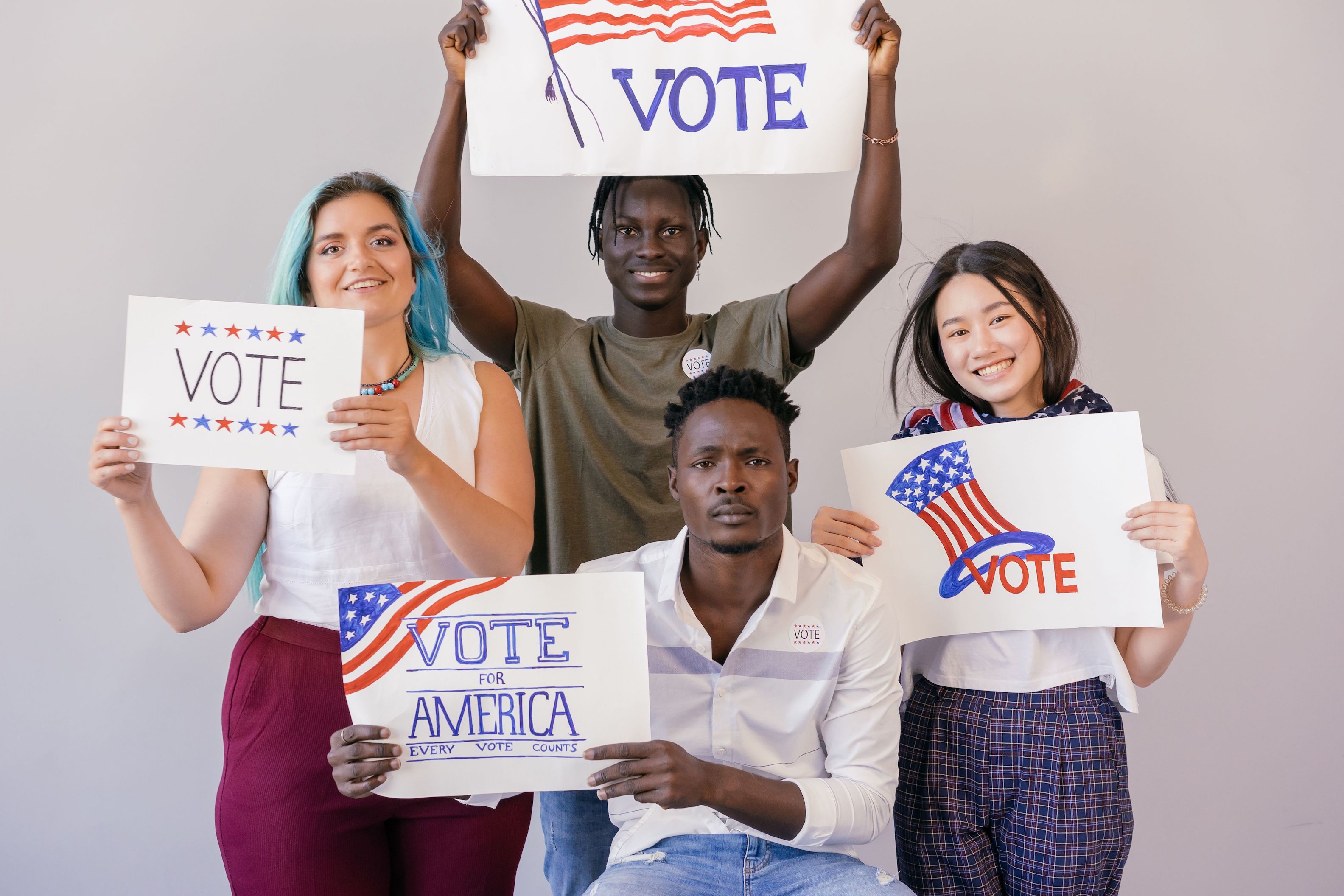
Generation Z is transforming the forms of political mobilization and redefining the electoral role of young people in America. Photo by Mikhail Nilov/Pexels.
Harpy Eagles: New Findings on One of the Americas’ Greatest Predators |
HEMISPHERE ------------------------------------------889[BUSINESS FEATURE] | |||
The Electoral Power of Young People: The United States and Latin AmericaGeneration Z’s Mobilization Is Reshaping Electoral Strategies in Latin America.By Estefanía Muriel for Ruta Pantera on 11/13/2026 7:09:19 AM |
||||
| Can a generation that for years was considered politically distant become a force capable of changing governments and parliamentary majorities? The United States offers an important indication. According to CIRCLE, in the midterm elections of November 3, 2026, young people aged 18 to 29 overwhelmingly supported Democratic candidates, with a 35-point lead over Republicans. The result confirms that their participation can have concrete electoral consequences.
This is not a single youth organization, but rather a generational movement that combines university activism, civic organizations, digital communities, and groups concerned with the economy, employment, climate change, and social rights. Its growth also reflects the growing disengagement of many young people from traditional institutions. Social media has become a space for organizing debates, disseminating information, and coordinating collective action. For Latin America, where millions of young people face difficulties in employment, education, housing, and social mobility, the U.S. experience raises a strategic question. Colombia, Brazil, Mexico, Chile, and Argentina have large youth electorates, but their electoral systems, levels of participation, and social movements differ. The challenge lies in determining whether this social energy can be transformed into political representation, negotiating power, and public policy decisions with lasting economic effects. United States: Generation Z and the Changing Electoral Vote The American phenomenon has its roots in mobilizations against gun violence, protests for racial justice, climate activism, and college voter registration drives. Organizations like CIRCLE, affiliated with Tufts University, and NextGen America have worked on civic education and mobilizing young voters. They don't represent a common political direction, but they demonstrate how networks of organizations can transform generational concerns into electoral participation. The figures illustrate the magnitude of the change. According to CIRCLE's analysis, youth turnout reached 27% in the 2026 midterm elections, the second-highest figure in the last thirty years, surpassed only by 2018. In states with closer races, the figure climbed to 30%. This contrasts sharply with the 2010 and 2014 elections, when turnout hovered around 20%. Voting behavior also changed compared to 2024. In 2026, 66% of young people voted for Democratic candidates for the House of Representatives, compared to 31% who supported Republicans. However, young people represented approximately 11% of the total electorate. This demonstrates a significant influence in certain races, but it also establishes a limit: youth mobilization needs to be combined with other voter segments to shift national majorities (CIRCLE, 2026b). Latin America: Five Countries, Different Forms of Youth Participation In Colombia, the student mobilizations and the 2021 National Strike demonstrated the organizational capacity of the younger generations. However, protest does not automatically translate into electoral participation. The National Registry has age-based statistics that allow for the study of who votes and where, while its historical results show a national presidential turnout of 58.2% in the second round of the 2022 election. The challenge is to connect that social mobilization with sustained institutional participation. Brazil presents an interesting sign of voter participation. In 2024, the Superior Electoral Court registered more than 1.8 million 16- and 17-year-olds eligible to vote, a 78% increase compared to the 2020 municipal elections. Furthermore, the 18- to 24-year-old age group represented approximately 18.3 million voters. Digital registration and voter education campaigns contributed to expanding youth participation on the electoral roll. Mexico and Chile reflect two different realities. In Mexico, the National Electoral Institute found that, in the 2024 elections, less than half of young people between the ages of 20 and 29 voted. In contrast, voter turnout among 18-year-olds was 61.53%. Chile presented higher figures: A report by IdeaPaís, based on data from the Chilean Electoral Service (Servel), indicates that 91.4% of 18- and 19-year-olds voted, as well as 89.8% of those between 20 and 29. These figures correspond to a mandatory voting system and demonstrate how mandatory voting can contribute to increasing youth electoral participation. |
||||
|
Social Networks, Emerging Movements, and Political Opportunities
Argentina incorporates young people as young as 16 into the electorate. Official data from the Political and Electoral Observatory shows that voter turnout among 16- and 17-year-olds in general elections fell from 66.9% in 2023 to 50.7% in 2025. This difference demonstrates that having the right to vote does not guarantee consistent mobilization. It also necessitates examining how economic conditions, party platforms, and institutional trust influence the decisions of younger generations. In all five countries, different forms of youth activism are emerging: student movements, feminist collectives, environmental organizations, Indigenous activism, and digital communities. Social media facilitates mobilization and allows local demands to reach national audiences. However, their capacity for mobilization has limits: digital visibility does not necessarily represent all young people and may be concentrated in urban areas with greater connectivity. Academic research identifies precisely this combination of digital innovation and unequal participation (Shoshan, 2026). There is still no evidence of a unified Latin American movement equivalent to the US electoral mobilization. What does exist is a plurality of organizations and demands that can influence elections, parties, and public policies. For businesses, understanding these transformations is also important: decisions about education, employment, innovation, transportation, and housing directly affect the generations that will make up the workforce and consumer markets of the future. The American experience demonstrates that youth power depends on more than just the size of a generation: it requires organization, participation, and the ability to translate demands into representation. In Latin America, mandatory voting in some countries, digital campaigns, and social organizations offer different conditions for this process. The decisive indicator will not be how many young people protest or publish political messages, but how many manage to intervene consistently in the institutions and decisions that determine their future. |
||||
 Add this article to your favorites
[FOR MEMBERS ONLY] Copy this link to send this article to a friend: [FOR MEMBERS ONLY] |
||||
|
|
||||
|---|---|---|---|---|
| |
|
|
|
|
×
|
||||
|
References: Center for Information & Research on Civic Learning and Engagement (CIRCLE). (2026). 2026 youth voter turnout: Second-highest in the last 30 years. TuftsUniversity. https://circle.tufts.edu/latest-research/2026-youth-voter-turnout-second-highest-last-30-years Center for Information & Research on Civic Learning and Engagement (CIRCLE). (2026). 2026 election: Historic +35 youth vote for Democrats. TuftsUniversity. https://circle.tufts.edu/2026-election#historic-+35-youth-vote-for-democrats Idea País. (2025). How much do young people participate in politics? Public policy note. https://docs.ideapais.cl/publicaciones/apuntes-de-politica-publica/cuanto-participan-los-jovenes-en-politica-apunte-de-politica-publica-ideapais.pdf?utm_source=chatgpt.com National Electoral Institute (INE). (2025, December 3). Stenographic version of the event: Dissemination of the Sample Study of Citizen Participation, FIL Guadalajara 2025. https://centralelectoral.ine.mx/2025/12/03/version-estenografica-del-evento-difusion-del-estudio-muestral-de-participacion-ciudadana-fil-guadalajara-2025/ National Electoral Institute (INE). (December 9, 2024). In the 2023-2024 Electoral Program, the attendance at the polls of people over 60 years of age is emphasized. https://centralelectoral.ine.mx/2024/12/09/en-el-pec-2023-2024-se-acentua-la-asistencia-a-las-urnas-de-personas-mayores-de-60-anos/ Ministry of the Interior of the Argentine Republic. (2026). Youth vote: Electoral participation in 2023 and 2025. https://www.argentina.gob.ar/sites/default/files/2026/02/voto_joven_-_participacion_2023_2025_1.pdf National Civil Registry. (n.d.). Electoral Statistics. https://estadisticaselectorales.registraduria.gov.co/ Chilean Electoral Service (SERVEL). (n.d.). Elections and electoral participation. https://www.servel.cl/elecciones-participacion-electoral/ Shoshan, N. (2026). Youth and shifting political landscapes in Latin America. In The social underpinnings of political discontent in Latin America. Cambridge University Press. https://www.cambridge.org/core/books/social-underpinnings-of-political-discontent-in-latin-america/19AD9A077260AD34089A91988284E9FA Superior Eleitoral Court (TSE). (2024, September). There are 11 days left: More than 20 thousand young people will be able to go to the polls in the 2024 elections. https://www.tse.jus.br/comunicacao/noticias/2024/Setembro/faltam-11-dias-mais-de-20-milhoes-de-jovens-poderao-ir-as-urnas-nas-eleicoes-2024 |
||||
Please leave a comment about this article: 889 |
|
| Enter your email address: |
Your email will not be displayed. |
| Your nickname: | |
| Your comment: | |
| Was this article helpful to you? | |
|
|
|
Articles about exciting travel experiences in our hemisphere.


Cape Froward, Chile


Welcome to the World’s Largest New Year’s Celebration
For those traveling from North, Central, or South America, New Year's Eve in Rio offers a rich narrative about how a city can transform a universal holiday into a unique celebration, rooted in local traditions and open to the world.
















|
Experiences Finder
(Search our catalog of Experiences here.) |
|---|