|
Pan American Experiences
|
------- |

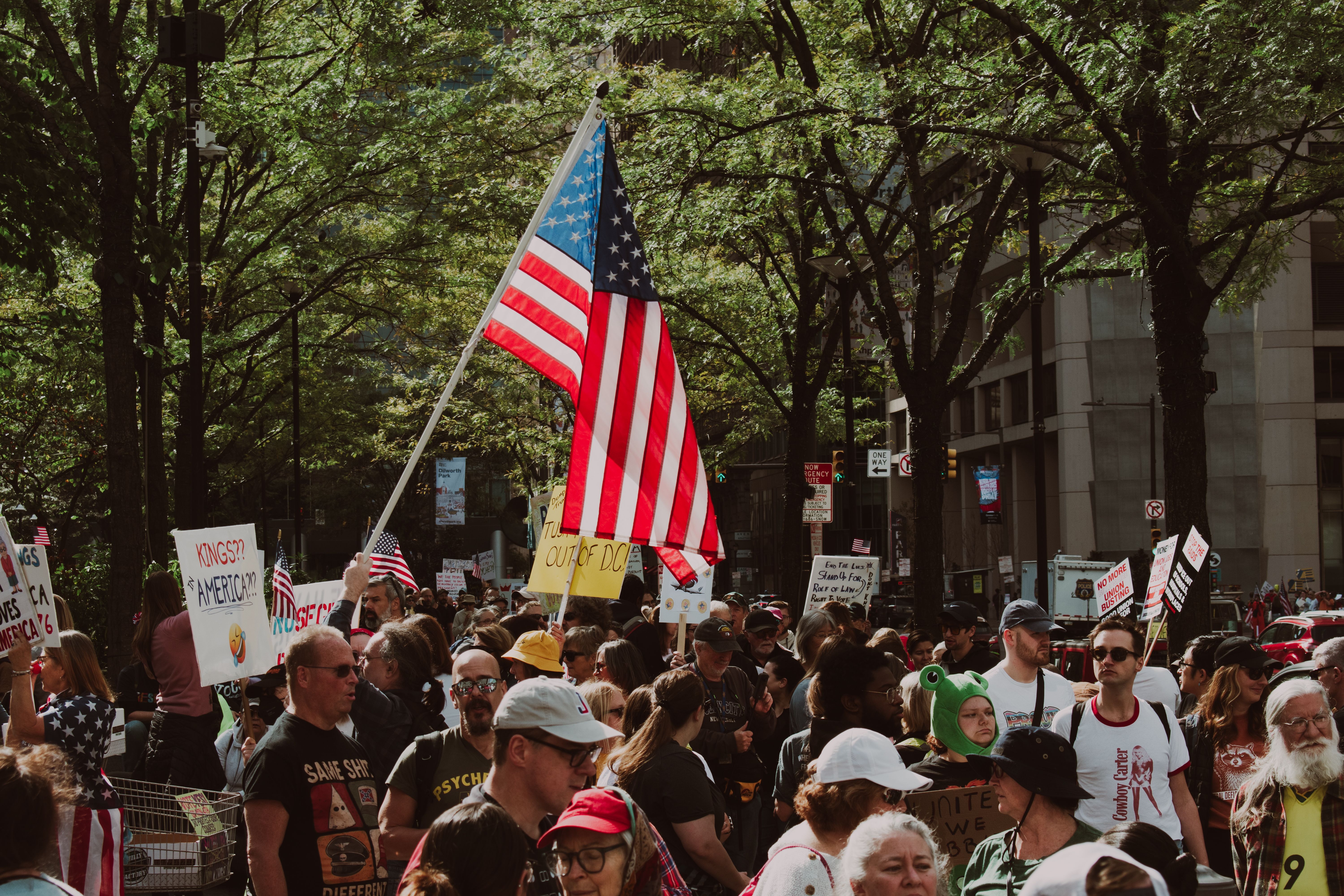
The American culture war crosses borders and transforms the Latin American political debate on diversity, human rights, and democracy. Photo by Christopher Santiago/Pexels.
Game On at Sea: The Sports You Can Play Aboard Cruise Ships
Conscious Tourism Is the Next Frontier
Harpy Eagles: New Findings on One of the Americas’ Greatest Predators |
HEMISPHERE ------------------------------------------878[BUSINESS FEATURE] | |||
The Anti-Woke Movement: From Washington to Latin AmericaHow the United States' Culture Wars Transformed Political Discourse Throughout Latin America.By Estefanía Muriel for Ruta Pantera on 11/19/2026 5:20:20 AM |
||||
| In recent years, a cultural dispute that gained particular visibility in the United States began to resonate in Latin America. Under the label "anti-woke ," various political movements challenged policies of diversity, equity, and inclusion, feminism, LGBTQ+ rights, racial justice, and the social transformations associated with progressivism. What initially seemed like a debate about values ended up also becoming a tool of electoral competition.
During Donald Trump's presidency, particularly his second term beginning in January 2015, this confrontation took on an institutional dimension. The rhetoric against diversity policies ceased to be merely a campaign slogan and translated into government decisions. However, US influence alone does not explain the growth of the Latin American radical right, which has its own history, organizations, and conflicts. The relevant question for the hemisphere is how these narratives circulated among countries, which elements were adapted to local realities, and to what extent they contributed to deepening polarization. The US midterm elections of November 3, 2026, also introduce a new variable: does the shift in Washington's political balance also represent a setback for anti-woke discourse, or have its cultural effects already acquired an independent dynamic? The Rise of the Anti-Woke Movement in the United States The term "woke ," originally associated with awareness of racial and social injustices, evolved into a central reference point in American cultural disputes. Its detractors began using it to challenge progressive policies, portraying them as ideological impositions on education, institutions, businesses, and family life. In this process, the debate shifted from focusing solely on the content of public policies to defining opposing political identities. The Trump administration turned that opposition into explicit government policy. On January 20, 2025, the president signed an executive order to eliminate federal diversity, equity, and inclusion (DEI) programs. The measure mandated the review and termination of offices, initiatives, and requirements related to those policies across federal agencies. The White House presented the decision as a defense of individual equality and merit; critics warned of the consequences for anti-discrimination policies and the representation of historically marginalized groups. The political impact of this strategy lay in its ability to transform complex issues into easily recognizable antagonisms: tradition versus progressivism, individual liberty versus supposed cultural impositions, and citizenship versus ideological elites. Not all voters who question certain inclusion policies share extremist positions. However, when the discussion replaces arguments with labels that delegitimize entire groups, the risk increases that social differences will become permanent political conflicts. Latin America: The Adaptation of the United States' Culture Wars The circulation of these ideas to Latin America was not an automatic transfer. The region already had conservative movements, religious organizations, and debates surrounding abortion, sex education, reproductive rights, and diversity. What occurred was a convergence between these structures and an international repertoire of discourses that found new spaces for dissemination. An analysis by the Carnegie Endowment for International Peace identifies precisely the articulation between Catholic organizations, evangelical networks linked to the United States, and conservative political sectors in campaigns against gender policies. Argentina and Brazil offer a glimpse into how this confrontation took on local characteristics. Political communication studies identify different ways in which the so-called culture war was used by the governments and movements associated with Javier Milei and Jair Bolsonaro. In Argentina, the rejection of progressivism was combined with discourses against so-called gender ideology; in Brazil, Bolsonarism articulated conservative positions, religious mobilization, and digital activism. These similarities do not mean that both projects are identical or that they respond to a common foreign directive. Social media, messaging channels, and international political gatherings facilitated the circulation of slogans, symbols, and strategies. Gabriel Vommaro's research on the Latin American radical right describes how these actors leverage digital environments to disseminate messages, organize communities, and construct a confrontation with progressivism. In 2026, a study on CPAC conferences and their digital networks also documented their role as a transnational infrastructure for the culture war in the Americas. The fear of losing traditional values, outrage, and the identification of adversaries can function as mobilization mechanisms, although their electoral impact must be verified in each country. |
||||
|
After the Midterm Elections: Is the Anti-Woke Wave Losing Steam?
The US midterm elections of November 3, 2016, altered the institutional landscape. Democrats gained control of both houses of Congress, reversing Republican majorities. The Associated Press linked the outcome to discontent over the cost of living, the war with Iran, and government performance, among other factors. Therefore, it would be incorrect to interpret the result solely as a rejection of anti-woke rhetoric: voters cast their ballots considering a multitude of economic, institutional, and political concerns. The new legislative balance may increase executive oversight, open investigations, and make it more difficult to pass certain presidential initiatives. However, it does not automatically mean the dismantling of policies already implemented, nor does it demonstrate that American society has abandoned anti-woke positions. It also does not allow us to anticipate that Latin American movements that adopted similar rhetoric will modify their agendas. International networks, local organizations, and digital communities can maintain their activity regardless of the election results in Washington. For tourism businesses, this scenario also warrants attention. The international reputation of destinations depends, among other factors, on safety, respect for human rights, inclusion, and the perception of social stability. Cultural conflicts can affect the image of countries and cities, relationships with certain source markets, and the confidence of travelers, workers, and investors. Understanding these transformations does not mean turning tourism into a partisan issue, but rather recognizing that democratic coexistence and respect for diversity are integral to the environment in which economic activity takes place. |
||||
 Add this article to your favorites
[FOR MEMBERS ONLY] Copy this link to send this article to a friend: [FOR MEMBERS ONLY] |
||||
|
|
||||
|---|---|---|---|---|
| |
|
|
|
|
×
|
||||
|
References: Associated Press. (2026, November). Democrats win the US House and Senate as voters deliver a strong response to Trump and Republicans. APNews. https://apnews.com/article/midterm-election-house-senate-democrats-republicans-trump-f126e12e05b579a327b98481c0ae2226 Associated Press. (2025). How “woke” went from an expression in Black culture to a conservative criticism. APNews. https://apnews.com/article/woke-wokeness-trump-dei-94ccabbc0af185b494c273238d3bb50c Associated Press. (2026, November). Democrats win the US House and Senate as voters deliver a strong response to Trump and Republicans. APNews. https://apnews.com/article/congress-democratic-blue-wave-midterms-house-senate-9c5c4c5283f58b1ae0786e2f410c21a0 Carnegie Endowment for International Peace. (2025, June). The new global struggle over gender, rights, and family values. https://carnegieendowment.org/research/2025/06/the-new-global-struggle-over-gender-rights-and-family-values?lang=en Diversity.com. (sf). Why is DEI under attack? Understanding the current backlash. https://diversity.com/post/why-is-dei-under-attack-understanding-the-current-backlash Kitzberger, P., & Schuliaquer, I. (2025). Radical Right, Media, Networks and Platforms: A State of the Art. Uruguayan Journal of Political Science, 34. https://www.scielo.edu.uy/scielo.php?pid=S1688-499X2025000101609&script=sci_arttext&tlng=es Lucca, JB, Iglesias, E., & Castro Rojas, S. (2025). The radical right and the electoral discourse of Donald Trump, Jair Bolsonaro, and Javier Milei. Uruguayan Journal of Political Science, 34. https://www.scielo.edu.uy/scielo.php?pid=S1688-499X2025000101615&script=sci_arttext&tlng=es Saidel, M. L. (2025). “Gender ideology” as a strategic enemy of the radical right in South America: The cases of Bolsonaro and Milei. Global Society, 39(4), 512–530. https://doi.org/10.1080/13600826.2024.2442990 The White House. (2025, January 20). Ending radical and wasteful government DEI programs and preferencing. https://www.whitehouse.gov/presidential-actions/2025/01/ending-radical-and-wasteful-government-dei-programs-and-preferencing/ The White House. (2025, January 22). Fact sheet: President Donald J. Trump protects civil rights and merit-based opportunity by ending illegal DEI. https://www.whitehouse.gov/fact-sheets/2025/01/fact-sheet-president-donald-j-trump-protects-civil-rights-and-merit-based-opportunity-by-ending-illegal-dei/ Vommaro, G. (2025). Breaking the rules: Interactions of the radical right with the media and digital mobilization in Latin America. Uruguayan Journal of Political Science, 34. https://www.scielo.edu.uy/scielo.php?pid=S1688-499X2025000101615&script=sci_arttext&tlng=es Walker, B. L. (2026). “We don't talk about Bruno,” DEI, or CRT in Florida: Anti-“WOKE” and anti-DEI legislation in K-12 and higher education. Urban Education. https://journals.sagepub.com/doi/pdf/10.1177/00420859261445892 Rae, A. (2025, March 12). Where DEI went wrong and what must happen next. Forbes. https://www.forbes.com/sites/aparnarae/2025/03/12/where-dei-went-wrong-and-what-must-happen-next/ Pontifical Catholic University of Peru. (n.d.). Conexión: Journal of Communication. https://revistas.pucp.edu.pe/index.php/conexion/en/article/view/34576 |
||||
Please leave a comment about this article: 878 |
|
| Enter your email address: |
Your email will not be displayed. |
| Your nickname: | |
| Your comment: | |
| Was this article helpful to you? | |
|
|
|
Articles about exciting travel experiences in our hemisphere.


Cape Froward, Chile



Welcome to the World’s Largest New Year’s Celebration
For those traveling from North, Central, or South America, New Year's Eve in Rio offers a rich narrative about how a city can transform a universal holiday into a unique celebration, rooted in local traditions and open to the world.


















|
Experiences Finder
(Search our catalog of Experiences here.) |
|---|