|
Pan American Experiences
|
------- |

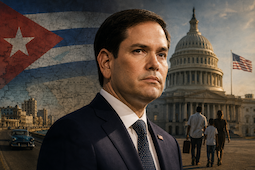
Marco Rubio is portrayed between the tensions of Washington and Havana, reflecting the complex blend of identity, power, and memory that has defined his political rise in the United States. Image created with artificial intelligence by ChatGPT.
|
HEMISPHERE ------------------------------------------863[BUSINESS FEATURE] | |||
Who Is Marco Rubio, Really?America's Top Diplomat Carries Cuba in His Soul. A Portrait of Identity, Contradiction, and Power.By Heydi Bernal for Ruta Pantera on 6/8/2026 5:20:20 AM |
||||
| There is a paradox at the heart of American foreign policy today: the man pushing hardest to topple the Cuban regime has never set foot on the island. Marco Antonio Rubio was born on May 28, 1971, in Miami, Florida, the son of immigrants who crossed the Florida Straits in 1956 — three years before Fidel Castro came to power — simply looking for a better life. And yet his entire political career has orbited around that island he only knows through stories: his grandfather's memories, the inherited nostalgia of an exile that, technically, never was. Today, as Donald Trump's Secretary of State — the first Hispanic ever to hold that office in American history — Rubio has turned that family memory into state policy. On May 20, 2026, as the world's media covered the historic Department of Justice indictment of former Cuban President Raúl Castro for the 1996 shootdown of two Brothers to the Rescue humanitarian aircraft, Rubio's name was everywhere. Not merely as a witness to history — as its architect. The Origin: A Story That Rewrote Itself The Rubio narrative begins, like so many American stories, with immigrants. Mario Rubio and Oria García arrived in Miami in 1956. His father worked as a banquet bartender; his mother split time between hotel maid and factory worker. A story of quiet, dignified effort — perfectly American. But when Rubio entered politics, he embellished that story. For years, his Senate website stated that his parents had fled Cuba after Castro's 1959 revolution. In 2011, the Washington Post revealed that naturalization documents told a different story: the Rubios had arrived before Castro, as ordinary economic immigrants, not political exiles. Rubio's response was revealing. He acknowledged the factual error but defended the emotional truth. His parents, he explained, had tried to return to Cuba in 1961 and decided against it because of communism. "Anyone who cannot return to their country for political reasons is an exile," he told reporters. It was a personal definition, loaded with feeling, that collided with the historical record. But in Cuban-American Miami, where the exile identity is almost religious, the argument resonated. And Rubio pressed on. The Rise: From Little Havana to the State Department Rubio's career is, in many ways, the textbook story of the second-generation American politician. He grew up in Miami — that city that is simultaneously the capital of the Cuban exile and the laboratory of Latino identity in the United States. He studied at the University of Florida and earned his law degree from the University of Miami. During his student years he worked for Ileana Ros-Lehtinen, the first Cuban-American woman elected to Congress, learning the political trade at the feet of the exile pioneers. In 2010, riding the Tea Party wave, he won Florida's Senate seat with a message blending economic conservatism, Catholic faith, and the epic of the self-made immigrant. He instantly became the great hope of the Republican Party's modernizing wing: young, bilingual, telegenic, Latino. In 2013 he became the first politician to deliver the Republican response to the State of the Union Address in both English and Spanish. But politics is cruel to hope. His 2016 presidential bid collapsed in the mud of the Republican primaries, crushed by Donald Trump. Rubio called him "Diminutive Donald." Trump called him "Little Marco." Rubio lost his own state. He returned to the Senate as a defeated candidate, spending years repositioning himself — migrating from the moderate Republican establishment toward the conservative populism Trump had unleashed. The paradox of Rubio: he began as the antidote to Trumpism and ended up as its most loyal architect in foreign policy. |
||||
|
The Power: More Than Secretary of State When Trump nominated him Secretary of State in November 2024, Rubio was confirmed by the Senate with a historic vote of 99 to 0. A unanimity that, in today's polarized Washington, feels almost supernatural. In April 2025, Trump added the role of acting National Security Advisor. Rubio became, in practice, the most powerful man in American diplomacy and foreign security. His imprint has been immediate and deep. He played a central role in the capture of Venezuelan President Nicolás Maduro in January 2026, in an operation CNN described as the product of his strategic vision for Latin America. Trump declared that Rubio would help "run" Venezuela through the resulting upheaval. The childhood prophecy of the boy who dreamed of liberating Cuba was beginning to come true — on Venezuelan soil. And then came Cuba. In February 2026, Axios revealed that Rubio had been holding secret talks with Raúl Guillermo Rodríguez Castro — grandson of former President Raúl Castro — on the sidelines of the CARICOM summit in Saint Kitts and Nevis. Conversations that bypassed official channels, seeking a negotiated transition. Rubio neither confirmed nor denied it: "I won't comment on any conversations we've had," he told reporters. The Week That Shook Cuba — May 2026 On May 20, 2026, the Department of Justice unsealed a formal indictment of Raúl Castro for ordering the 1996 shootdown of two unarmed Brothers to the Rescue aircraft over international waters, killing three American citizens and one U.S. resident. The ceremony was held at Miami's Freedom Tower — the very symbol of the Cuban exile community. Rubio addressed the Cuban people directly, declaring that their leaders had "plundered billions of dollars" while the island goes without electricity, fuel, and food. Trump, for his part, pointed to Rubio's family ties: "We have a lot of expertise in Cuba. They've been looking for this moment for 65 years." The Identity: The Exile He Never Lived but That Defines Him Who is Marco Rubio, really? The question resists a simple answer. He is a first-generation American, born in Miami, raised between two cultures. He is a conservative lawyer who built a political career on inherited pain. He is a cold strategist who deploys that emotional heritage with an effectiveness his critics call calculation and his supporters call calling. He is also a man who has rewritten his own story when it suited him — who called himself a son of exile when his papers said otherwise, who attacked Trump in 2016 with wit and acid and ended up as one of his most loyal lieutenants, who negotiates in secret with the grandson of the man who is the embodiment of evil in his own family mythology. The contradictions do not weaken him. They appear to be the fuel of his ambition. In his 2012 memoir, Rubio wrote that as a boy he imagined himself leading an army of exiles to liberate Cuba and become president of a free island. Half a century later, that Miami child commands not soldiers but sanctions, indictments, and secret conversations on Caribbean islands. The childhood fantasy has become geopolitics. The most powerful man in American diplomacy is, at his core, a Cuban who was never in Cuba. And that absence, paradoxically, is the force that drives him. What Comes Next: 2028? Analysts in Washington and Miami agree: Rubio does not see himself as a supporting actor. According to Politico, he is already studying another presidential run in 2028. If the Cuban regime falls on his watch as Secretary of State — if the bet on regime change in Havana pays off — Rubio will have fulfilled his grandfather's dream and his own. And he will have built, simultaneously, the most powerful personal story in 21st-century American politics: the grandson of the exile who finally freed the island. If he fails, the narrative inverts. And Rubio, who has bet so heavily on the power of stories, knows that better than anyone. |
||||
 Add this article to your favorites
[FOR MEMBERS ONLY]
Add this article to your favorites
[FOR MEMBERS ONLY]
Copy this link to send this article to a friend: [FOR MEMBERS ONLY] |
||||
|
|
||||
|---|---|---|---|---|
| |
|
|
|
|
×
|
||||
|
References: Rubio, M. (2012). An American Son: A Memoir. Sentinel. Roig-Franzia, M. (2011, October 20). Marco Rubio’s compelling family story embellishes facts, documents show. The Washington Post. Pexton, P. B. (2011, October 28). The story behind the Marco Rubio story. The Washington Post. Swartz, A. (2016, January 11). What Marco Rubio really means when he says his parents were exiles, not immigrants. Mic. Myers, S. (2011, October 25). Political narrative watch: Were Marco Rubio’s parents immigrants or political exiles? Poynter. Caputo, M. (2026, February 18). Exclusive: Rubio's secret squeeze on Raul Castro's Cuba. Axios. Caputo, M. (2026, April 17). Scoop: Inside the historic U.S.-Cuba negotiations in Havana. Axios. Reuters. (2026, May 20). US offers new relationship to Cuba in Rubio message. Reuters. El País. (2026, May 21). La imputación a Raúl Castro arrincona al castrismo y expone que Trump está dispuesto a todo en Cuba. El País. South China Morning Post. (2025, April 10). Who are US Secretary of State Marco Rubio’s parents? Mario and Oriales Rubio moved to Miami from Cuba in 1956. South China Morning Post. |
||||
Please leave a comment about this article: 863 |
|
| Enter your email address: |
Your email will not be displayed. |
| Your nickname: | |
| Your comment: | |
| Was this article helpful to you? | |
|
|
|
Articles about exciting travel experiences in our hemisphere.

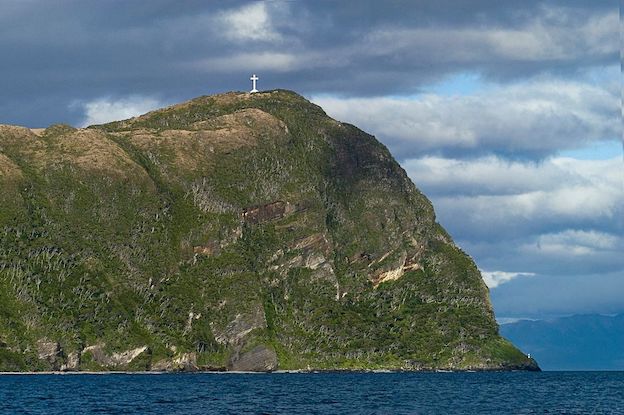
Cape Froward, Chile

Welcome to the World’s Largest New Year’s Celebration
For those traveling from North, Central, or South America, New Year's Eve in Rio offers a rich narrative about how a city can transform a universal holiday into a unique celebration, rooted in local traditions and open to the world.





|
Experiences Finder
(Search our catalog of Experiences here.) |
|---|