|
Pan American Experiences
|
------- |

Colombia Related Articles:
Tejo in Bogotá, Colombia — Traditional Colombian sport full of skill and fun
Where the Jungle Beckons and Oblivion Ends
Petro's Final Independence Day Speech and Colombia's Political Crossroads
|
COLOMBIA ------------------------------------------854[FEATURE] | |||
The Classics that Sweeten the Colombian DecemberEssential Treats and How To Prepare them for Your Own CelebrationsBy Jazmin Agudelo for Ruta Pantera on 12/29/2025 10:16:57 AM |
||||
| In Colombia, December smells like cinnamon, melted panela, and the hot oil where buñuelos are fried. Sweets are not an accessory: they are the mandatory ending to every meal, the gift you take to a neighbor, the treat left out all night on the 24th so no one goes to bed with a craving for sugar. Every region has its essentials, every grandmother her trick, but everyone agrees on one thing: at Christmas, sweets are not rationed — they’re shared.
Sweet Royalty the Will Reign Forever Natilla is the absolute queen. It’s prepared in giant pots that barely fit on the stove: 4 liters of whole milk, 1 kilo of grated panela or sugar, 250 g of cornstarch dissolved in cold milk, two large sticks of cinnamon, and a spoonful of butter at the end to make it shine. The secret is stirring nonstop with a wooden spoon for almost an hour, until the mixture coats the spoon and you can see the bottom of the pot. It’s poured hot into a large mold or individual cups, dusted with ground cinnamon, and left to set at room temperature. In Valle del Cauca it’s made firmer and cut into diamonds; in Antioquia it’s preferred creamy and served warm with freshly fried buñuelos. Buñuelos are natilla’s inseparable companion. The dough calls for 500 g of cassava starch, 300 g of well-salted costeño cheese, 1 egg, 100 ml of milk, 1 teaspoon of baking powder, and sometimes a tablespoon of sugar to balance the flavors. The dough is kneaded until smooth and shiny, shaped into balls the size of a large walnut, and fried in oil that’s not too hot so they expand and become hollow inside. Once golden, they’re drained on paper and eaten hot — crispy on the outside, airy on the inside. The first buñuelo of the season is always broken in half to check if it “sang” (came out hollow); if it sings, the year will be prosperous. Manjar blanco, that silky white delicacy from Valle del Cauca, requires monk-like patience. Four liters of whole milk are cooked with 1 kilo of sugar and a teaspoon of ground raw rice. It is cooked over very low heat for three or four hours, stirred constantly until it takes on a light beige color and the texture of thick pastry cream. A pinch of baking soda prevents curdling. It’s poured into molds, left to cool, and served in small squares dusted with cinnamon. In older homes it’s still made in copper cauldrons that give it a flavor impossible to replicate in steel pots. Artisanal arequipe is another labor of slow love. Four liters of cow’s milk, 1 kilo of sugar, and half a teaspoon of baking soda are mixed in a heavy pot. It cooks over low heat for three hours or more, stirred constantly with a wooden spoon until it becomes caramel-colored and pulls away from the bottom of the pot. It’s bottled hot, and once cool, it becomes so dense it can be sliced with a knife. With leftover arequipe, many grandmothers make panelitas: they mix the dulce with powdered sugar until firm, shape small squares, and let them dry overnight. Obleas with everything are the street pleasure every Colombiano guiltily indulges in. Two thin, crispy wheat wafers are filled with arequipe, grated cheese, blackberry jam, heavy cream, and — if you’re lucky — shredded coconut or colorful sprinkles. They are assembled in seconds and eaten right on the street, folding the oblea so nothing spills. In Cali’s Fair and Medellín’s parks, vendors sell them until dawn. |
||||
|
In Antioquia and the old Caldas region, postre de natas is non-negotiable. Fresh milk is boiled and the thick layer that forms on top is carefully collected; the process is repeated until a good amount is gathered. The cream is beaten with egg yolks and sugar and cooked in a bain-marie until thick. It’s served cold with raisins soaked in rum and cinnamon. In Boyacá they call it cortada and serve it in deep bowls with crumbled buñuelos on top.
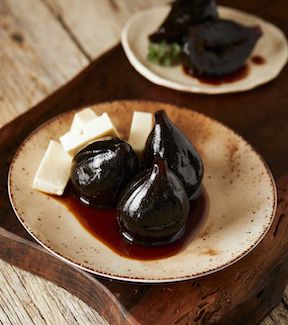
Gelatina de pata, a traditional sweet from Nariño and Cauca, may sound strange but wins hearts quickly. Cow’s feet are cleaned and cooked for six hours until the broth is rich in collagen. It’s strained, sweetened with panela, infused with cinnamon and cloves, and left to set in molds. The next day it’s cut into transparent, trembling cubes that melt in your mouth. Brevas caladas with arequipe are a Christmas luxury. Fresh brevas are cut in a cross, soaked in water with ash or baking soda so they keep their shape, and slowly cooked in a panela syrup with cloves until shiny and tender. They’re served cold with a generous spoonful of arequipe in the center. In Valle, they’re paired with fresh cheese to balance the sweetness. These sweets turn any Colombian December into an endless feast of flavors. They’re prepared in industrial quantities because someone always shows up at the house, because children always ask for seconds, and because, at Christmas, sweets don’t make you gain weight—they feed the soul. |
||||
 Add this article to your favorites
[FOR MEMBERS ONLY]
Add this article to your favorites
[FOR MEMBERS ONLY]
Copy this link to send this article to a friend: [FOR MEMBERS ONLY] |
||||
|
|
||||
|---|---|---|---|---|
| |
|
|
|
|
×
|
||||
|
References: Referencias García, M. (2022). La mesa colombiana: sabores y rituales de las fiestas decembrinas. Editorial Planeta. Patiño, V. M. (2019). Historia de la cultura material en la América equinoccial: alimentación y alimentos. Instituto Caro y Cuervo. Restrepo, E. (2021). Recetario popular del Pacífico colombiano. Gobernación del Valle del Cauca. Zapata, A., & Mejía, S. (2023). Gastronomía y memoria afectiva en Antioquia. Universidad de Antioquia. Aguilera, P. (2020). Dulcería tradicional colombiana: técnicas y territorio. Universidad Nacional de Colombia. Ministerio de Cultura de Colombia (2024). Patrimonio cultural inmaterial: dulces navideños de Colombia. |
||||
Please leave a comment about this article: 854 |
|
| Enter your email address: |
Your email will not be displayed. |
| Your nickname: | |
| Your comment: | |
| Was this article helpful to you? | |
|
|
|
Articles about exciting travel experiences in our hemisphere.


Cape Froward, Chile



Welcome to the World’s Largest New Year’s Celebration
For those traveling from North, Central, or South America, New Year's Eve in Rio offers a rich narrative about how a city can transform a universal holiday into a unique celebration, rooted in local traditions and open to the world.









|
Experiences Finder
(Search our catalog of Experiences here.) |
|---|