|
Pan American experiences
|
------- |

Guatemala |
GUATEMALA ------------------------------------------557[FEATURE] | |||
The Paradox of a Place called CayaláHow Private Districts Are Shaping Public Space Design Across the AmericasBy Jazmin Agudelo for Ruta Pantera on 10/22/2025 10:22:37 AM |
||||
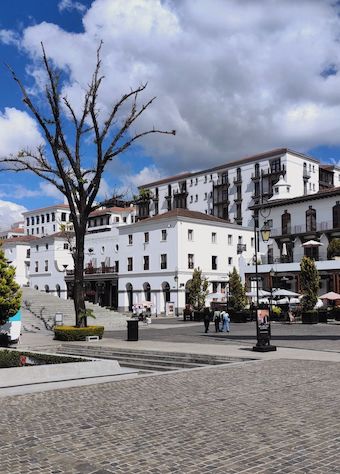
| In the bustling chaos of Guatemala City, a gleaming enclave rises like a mirage from the urban sprawl: Ciudad Cayalá. This privately developed district, with its white lime-washed walls, red-tiled roofs, and cobblestone plazas, evokes the charm of colonial Antigua while promising a modern utopia of safety and order. Yet, beneath its picturesque facade lies a profound paradox—one that questions the very nature of public space in rapidly urbanizing societies. As private developments like Cayalá proliferate across the Americas, they are reshaping urban design, blending innovation with exclusion, and challenging traditional notions of communal life. | ||||
| Ciudad Cayalá, located on the outskirts of Guatemala City, represents a bold experiment in urban planning. Conceived in the early 2000s by local architects Pedro Godoy and María Sánchez of Estudio Urbano, in collaboration with Luxembourgish theorist Léon Krier, the project draws heavily on New Urbanism principles. This philosophy, championed by the Congress for the New Urbanism, emphasizes mixed-use developments, walkability, and human-scale design to counteract the fragmentation of postwar suburban sprawl (Congress for the New Urbanism, 2024). Cayalá's master plan integrates residential, commercial, and civic spaces within a compact, pedestrian-friendly layout, featuring arcades, courtyards, and open plazas that echo Guatemala's architectural heritage, including UNESCO-listed Antigua (Carrasco, 2025). The paradox emerges in Cayalá's dual identity: it functions as a public space but is privately managed. Visitors stroll freely through its plazas and boulevards, enjoying amenities like markets, cafes, and a central church, yet access is subtly controlled through security measures and economic barriers. This setup addresses Guatemala City's chronic issues—crime, traffic congestion, and decaying infrastructure—by creating a "safe haven" where social interactions flourish. As Steuteville (2021) notes in his analysis of the "Cayalá effect," the district's small urban blocks and shared spaces promote daily encounters among residents, workers, and visitors, fostering a sense of community absent in much of the surrounding city. Weekends see throngs gathering at the Plaza Mayor, transforming it into a vibrant civic hub. However, this private orchestration of public life raises ethical questions. By privatizing what appears communal, Cayalá exacerbates social divisions in a country where over half the population lives in poverty. Entry is not explicitly gated, but the district's upscale shops and residences cater to the affluent, effectively excluding lower-income Guatemalans. Critics argue it perpetuates a "theme park" illusion of urban harmony, detached from the gritty realities of Guatemala City (Carrasco, 2025). Moreover, its success has inspired municipal plans to replicate the model in troubled neighborhoods, potentially shifting urban governance toward private interests (Steuteville, 2021). In essence, Cayalá shapes public space design by demonstrating how private investment can revive traditional forms, yet it risks commodifying accessibility, turning public realms into exclusive commodities. | ||||
|
|
||||
|---|---|---|---|---|
| |
|
|
|
|
×
|
||||
Please leave a comment about this article: 557 |
|
| Enter your email address: |
Your email will not be displayed. |
| Your nickname: | |
| Your comment: | |
| Was this article helpful to you? | |
|
|
|
Articles about exciting travel experiences in our hemisphere.


BEACH & SUN

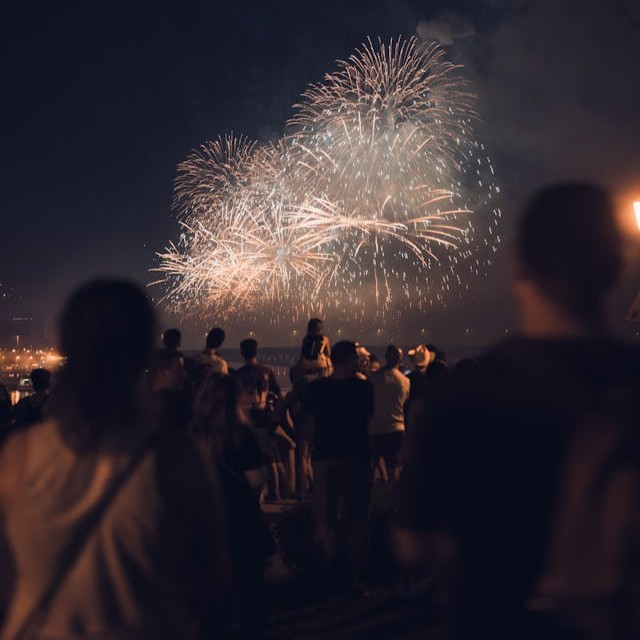
Welcome to the World’s Largest New Year’s Celebration
For those traveling from North, Central, or South America, New Year's Eve in Rio offers a rich narrative about how a city can transform a universal holiday into a unique celebration, rooted in local traditions and open to the world.


|
Experiences Finder
(Search our catalog of articles here.) |
|---|