|
Pan American Experiences
|
------- |

|
------------------------------------------396[FEATURE] | |||
Community Management in the Amazon Achieves Unprecedented ConservationBy Estefanía Muriel for Ruta Pantera on 10/14/2025 1:25:36 PM |
||||
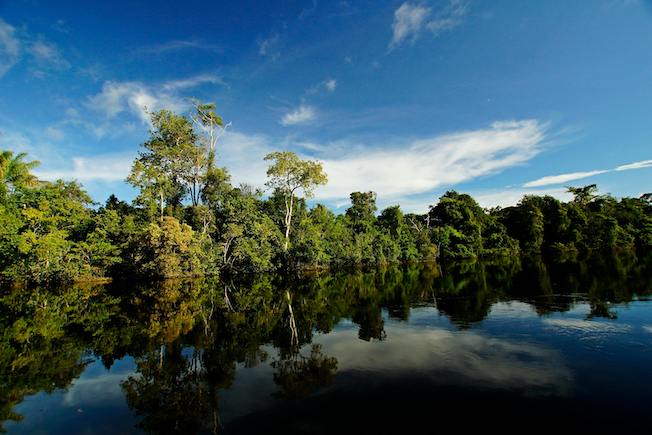
| In the heart of the Brazilian Amazon, something extraordinary is happening. A recent study published in Nature Sustainability reveals that local communities are achieving an impressive level of environmental protection, combining livelihoods, biodiversity, and social justice in ways many thought impossible. A new path to protecting giant ecosystems Strictly protected areas in tropical zones often face severe limitations: limited staff, limited financial resources, and political barriers. ( Phys.org ) Given this reality, researchers propose that Effective Area-Based Conservation Measures (OECMs) can make a difference. ( Phys.org ) The study focused on community-based management of fisheries resources along a 1,200-kilometer stretch of the Juruá River in the Amazon, Brazil. There, local communities care for lakes, floodplain forests, and linked terra firma forests—ecosystems that form a vital network for species such as arapaima, giant otters, manatees, and river turtles. ( Phys.org ) Surprising data: scale, efficiency and benefits One of the most striking findings: each community controls areas that protect a total area nearly 86 times larger than the surface area of the oxbow lakes during the dry season, where the arapaima, the region's emblematic species, lives. ( Phys.org ) These additional zones include the flooded forest and the upland forest, which, while not always directly protected, are monitored and cared for. In the state of Amazonas, 15 million hectares are already protected under this community model. ( Phys.org ) Moreover, the comparative cost is surprisingly low. As one of the authors, Carlos Peres, puts it: “The conservation dividends of community protection are unprecedented and are implemented at a negligible financial cost compared to traditional protection mechanisms” (Peres, 2025, para. X). ( Phys.org ) It's not just pure conservation: there are social benefits too. Communities harvest a sustainable arapaima fishery, which provides direct income. At the same time, non-target species benefit from less external harassment, which favors biodiversity recovery. ( Phys.org ) | ||||
| Voices and faces behind the management This model is not just technical; it's deeply human. Volunteer guards, fishermen, and riverside residents are present year-round—not as passive beneficiaries but as managers, inspectors, and protectors. They cover the costs of fuel, supplies, and surveillance, often without pay. It's work rooted in everyday life and local culture. ( Phys.org ) The ethics of this model resonate with environmental justice: community and nature are not separate entities, but rather part of the same ecosystem of relationships. As one of the researchers says, “By explicitly including local people in conservation practices, we can both increase the effectiveness of conservation outcomes and improve local well-being” (Rodrigues, 2025, para. X). ( Phys.org ) Conditions, threats and what's missing Although the results are encouraging, not everything is resolved. The model currently relies on volunteer labor and uncompensated expenses. If these communities do not receive institutional support, stable funding (for example, through schemes like Payments for Environmental Services), or clear legal recognition, their ability to sustain what they have achieved could be compromised. ( Phys.org ) There are also external threats: commercial fishing encroachment, illegal logging, deforestation, and legal or political changes that weaken community rights. The community model offers a valuable buffer, but it doesn't immunize against all pressures. Lessons for tourism and sustainability? For travel agencies and tourism stakeholders, these findings have important implications. They open up the possibility of: ● Design experiences that recognize and strengthen the role of local communities as guardians of the territory. ● Consume products (fish, handicrafts, ecotourism services) linked to community conservation models, generating direct benefits for those who live there. ● Raise awareness about these models as real alternatives to extractive or environmentally unsound tourism. This phenomenon in the Amazon is not a fairy tale: it's an urgent call to rethink how we conserve nature. It's not enough to establish national parks; we need to empower those who inhabit the forests, those who know, feel, and protect every tree, every fish, every river. Are we willing to recognize that the most effective environmental protection can come from below, from communities, and not just from the state? If we want to conserve the Amazon—and with it, our planet—a community-based approach is not only desirable: it's essential. | ||||
|
|
||||
|---|---|---|---|---|
| |
|
|
|
|
×
|
||||
Please leave a comment about this article: 396 |
|
| Enter your email address: |
Your email will not be displayed. |
| Your nickname: | |
| Your comment: | |
| Was this article helpful to you? | |
|
|
|
Articles about exciting travel experiences in our hemisphere.




BEACH & SUN

Welcome to the World’s Largest New Year’s Celebration
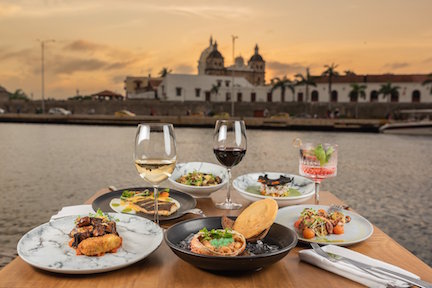
For those traveling from North, Central, or South America, New Year's Eve in Rio offers a rich narrative about how a city can transform a universal holiday into a unique celebration, rooted in local traditions and open to the world.




SPIRITUAL
New Year's Celebrations and Sacred Places in Latin America
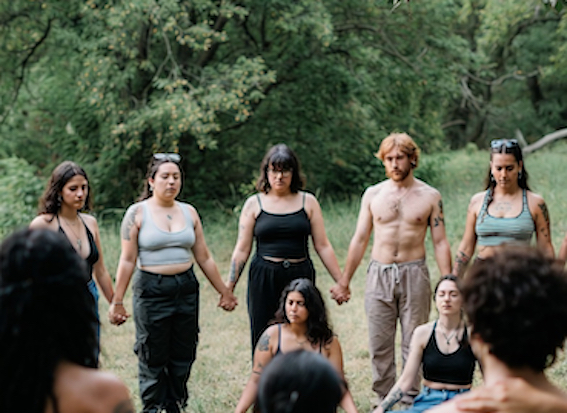
Spirituality in December and January in Latin America is not a static or uniform phenomenon; it is a living experience of tradition, diversity, and profound human emotion.








|
Experiences Finder
(Search our catalog of articles here.) |
|---|