|
Pan American Experiences
|
------- |

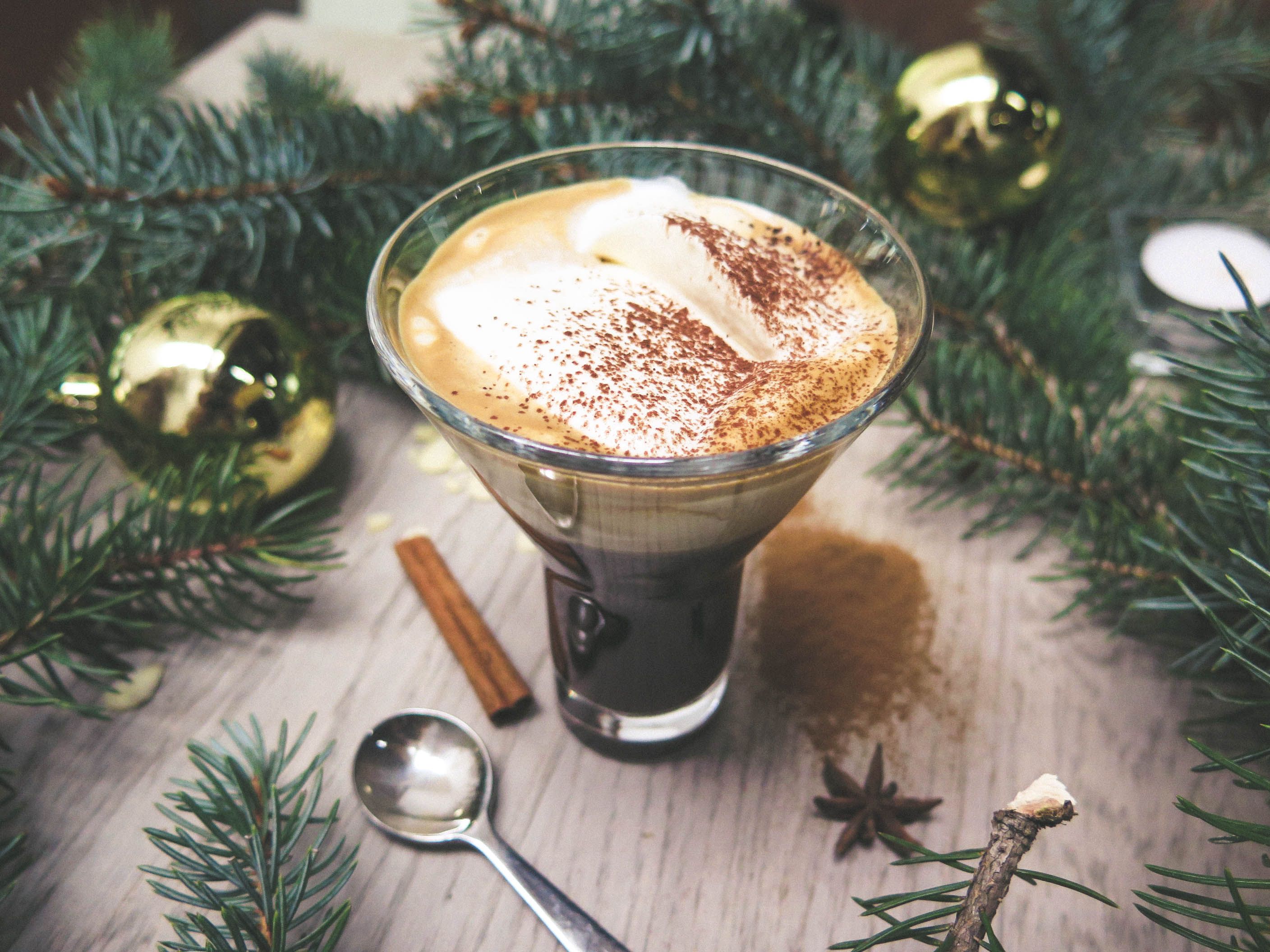
Chile’s traditional cola de mono blends coffee, milk, spices and aguardiente into one of the country's most recognizable Christmas drinks. Image Credit: David Bares – Pexels.
|
HEMISPHERE ------------------------------------------1415[TRAVEL+CULTURE] | |||
The Drinks That Make ChristmasA Holiday Journey Across the AmericasBy Jazmin Agudelo for Ruta Pantera on 11/25/2026 10:40:30 AM |
||||
| There are certain flavors that seem to arrive with Christmas, carrying memories long before the first glass is poured. The scent of nutmeg, the warmth of cinnamon, the richness of cream, the sweetness of fruit simmering on the stove: across the Americas, these ingredients become part of the season’s familiar language. In some homes, the celebration begins with a chilled, golden drink passed around the living room. In others, it begins with a pot of fruit and spices slowly bubbling in the kitchen. The recipes differ, sometimes dramatically, but the impulse is remarkably similar. Christmas drinks are not simply refreshments. They are rituals of hospitality, expressions of local identity, and reminders that the most enduring traditions are often the ones we can taste.
The American Classic and Its Caribbean Cousins In the United States, Christmas has a flavor that is difficult to separate from eggnog. Its creamy richness, delicate sweetness, and unmistakable dusting of nutmeg have made it a fixture of holiday gatherings. The drink's ancestry reaches back to European milk-and-egg beverages, including posset, which was sometimes prepared with wine or ale. Across the Atlantic, the recipe evolved alongside the ingredients and spirits available in colonial America. Eggs, dairy, sugar, and distilled liquor helped transform it into the festive drink now associated with winter celebrations. Yet the most interesting part of eggnog may be what happens after the cream and eggs have been combined: the choice of spirit, which can turn a familiar recipe into something entirely different. Bourbon gives eggnog a distinctly American character, bringing notes of vanilla, caramel, and toasted oak. Brandy lends a softer fruitiness, while aged rum introduces the deep sweetness of molasses. Some recipes combine spirits, allowing their flavors to mingle beneath the richness of the dairy. Nutmeg remains the traditional finishing touch, although cinnamon and vanilla often find their way into the mixture. In Canada, eggnog shares much of the same seasonal prominence, appearing in grocery stores, family kitchens, and holiday celebrations. The drink has become a familiar feature of North American Christmas, but its story does not end at the border. Farther south, a different set of ingredients gives the creamy holiday tradition a distinctly tropical expression. In Puerto Rico, that expression is coquito, a drink whose name means “little coconut.” Coconut milk, cream of coconut, spices, and rum create a beverage that is both rich and unmistakably Caribbean. Some family recipes include condensed or evaporated milk; others rely more heavily on coconut, allowing its flavor to take center stage. Unlike traditional eggnog, coquito does not require eggs, although modern variations sometimes include them. It is often prepared ahead of time, chilled, and stored in bottles, ready to be shared at gatherings or given as a homemade gift. The ritual of making coquito can be as meaningful as drinking it, with recipes passed between generations and small adjustments becoming matters of family pride. Venezuela has its own answer to the holiday season's creamy drinks: ponche crema. Made with milk, eggs, sugar, and rum, it is smooth, sweet, and often served in small glasses after a meal or during a gathering. Its flavor recalls custard, softened by the warmth of the spirit. Commercial versions are widely available, but homemade preparations remain part of the country's December traditions. In Chile, meanwhile, the holiday table often includes cola de mono, a drink whose name translates as “monkey's tail.” Coffee, milk, sugar, cinnamon, and cloves form its aromatic base, while aguardiente or another spirit gives it warmth. Served cold, it accompanies Christmas celebrations and traditional foods such as pan de Pascua, the country's spiced fruitcake. Where coquito tastes of coconut and the Caribbean, cola de mono carries the comforting bitterness of coffee and the fragrance of winter spices. Mexico's rompope offers another variation on the theme, with a history commonly associated with convent kitchens and the city of Puebla. Its ingredients milk, egg yolks, sugar, cinnamon, and vanilla create a rich, custard-like drink that may be finished with rum or another spirit. Like many recipes that travel through generations, rompope has developed countless household variations. It is enjoyed during Christmas and other celebrations, served on its own, poured over ice, or incorporated into desserts. Its appeal lies partly in its versatility, but also in the way it connects the festive table to a broader Mexican tradition of sweets and dairy-based preparations. Across the region, these drinks reveal how a familiar idea a sweet, celebratory beverage can acquire a different identity in every kitchen. Warm Punches, Mountain Spirits, and the Flavors of Place Not every Christmas drink is creamy or served cold. In Mexico and parts of Central America, ponche de frutas fills the kitchen with the fragrance of simmering fruit, cinnamon, and cloves. Recipes vary from one region to another, but guava, tejocote, apples, prunes, and sugarcane are among the ingredients commonly used. Some preparations include hibiscus, while others are sweetened with piloncillo. The punch may be served without alcohol or strengthened with rum or aguardiente. During Mexico's Las Posadas celebrations, it is often shared alongside tamales, buñuelos, and other seasonal foods. Its appeal is not dependent on a particular spirit; the fruit itself is the heart of the drink, and the pot becomes a gathering point for family and neighbors. In the Andes, the season's drinks take on a different character. Canelazo, popular in Colombia and Ecuador, combines aguardiente, panela, water, and cinnamon in a warming preparation particularly suited to cool mountain evenings. The sweetness of unrefined sugar balances the liquor's anise notes, while cinnamon gives the drink its distinctive aroma. It is associated with festivals and celebrations throughout the region, rather than Christmas alone, but its presence during December reflects the way seasonal traditions borrow from the broader calendar of communal gatherings. A cup of canelazo offers a different kind of comfort from eggnog: less creamy, more direct, and closely tied to the landscapes and ingredients of the highlands. Brazil's quentão brings another spirit into the conversation: cachaça, the sugarcane liquor that has become one of the country's defining ingredients. Traditionally prepared with ginger, cinnamon, cloves, and sugar, quentão is served hot and is especially associated with Festa Junina, the midyear festivities held during Brazil's cooler months. It is also enjoyed at other celebrations, and its combination of spice and spirit makes it a useful comparison in a story about holiday drinks. Unlike the dairy-based beverages of North America and the Caribbean, quentão is sharp, fragrant, and warming. Its flavor reflects Brazil's long relationship with sugarcane, while its preparation demonstrates how a local spirit can become inseparable from a particular kind of celebration. |
||||
|
These drinks are shaped by histories that extend well beyond the holiday season. European traditions of milk punches, spiced wines, and festive spirits crossed the Atlantic and changed as they encountered Indigenous ingredients, African culinary knowledge, and the agricultural realities of the Americas. Coconut, coffee, sugarcane, fruit, and spices became more than ingredients; they became part of the cultural vocabulary of celebration. The result is not a single Christmas drinking tradition, but a collection of regional expressions that share a common purpose. Each drink tells us something about what a community grows, what it produces, what it remembers, and what it chooses to serve when people come together.
The modern holiday table is also changing. Nonalcoholic versions of many traditional drinks allow more people to participate in these rituals without sacrificing their flavor or cultural significance. Eggnog can be prepared without spirits, coquito can be made alcohol-free, and ponche de frutas is naturally adaptable to guests of different ages. For travelers, these alternatives offer a way to experience local customs without assuming that alcohol is essential to the celebration. They also reveal how traditions remain alive: not by remaining untouched, but by making room for new preferences and new generations. The drinks that define Christmas across the Americas are not merely recipes to collect or cocktails to compare. They are invitations into the intimate geography of celebration: the family kitchen, the crowded living room, the neighborhood gathering, the table where a familiar bottle appears every December. Eggnog, coquito, ponche crema, cola de mono, rompope, ponche de frutas, canelazo, and quentão each offer a different taste of the hemisphere, shaped by history and made personal through repetition. For travelers, following these flavors is a way to discover the Americas through their rituals of hospitality. For those who prepare them year after year, the first sip is often something simpler: a familiar reminder that Christmas has arrived. |
||||
 Add this article to your favorites
[FOR MEMBERS ONLY] Copy this link to send this article to a friend: [FOR MEMBERS ONLY] |
||||
|
|
||||
|---|---|---|---|---|
| |
|
|
|
|
×
|
||||
|
References: 1. Centro de Documentación de Bienes Patrimoniales. (2024). *Preparaciones navideñas y de Año Nuevo*. Servicio Nacional del Patrimonio Cultural de Chile. https://www.cdbp.gob.cl/noticias/preparaciones-navidenas-y-de-ano-nuevo 2. Dirección General del Servicio de Información Agroalimentaria y Pesquera. (2020, 23 de diciembre). *Receta: Ponche de frutas navideño*. Gobierno de México. https://www.gob.mx/agricultura%7Cdgsiap/es/articulos/receta-ponche-de-frutas-navideno 3. Fundación Bigott. (n.d.). *Ponche crema*. https://fundacionbigott.org/ponche-crema/ 4. National Library of Medicine. (2022, 22 de diciembre). *Eggnog in history, health, and hospitality*. https://circulatingnow.nlm.nih.gov/2022/12/22/eggnog-in-history-health-and-hospitality/ 5. Smithsonian Center for Folklife and Cultural Heritage. (2022). *Our family guide to a Puerto Rican Christmas feast*. https://folklife.si.edu/magazine/foodways-holidays-puerto-rican-christmas 6. Smithsonian Center for Folklife and Cultural Heritage. (2023). *Music and foodways of Las Posadas in Pico Rivera: Pozole rojo, ponche navideño, and empanadas dulces*. https://folklife.si.edu/magazine/foodways-holidays-las-posadas 7. Smithsonian Magazine. (2019). *Nine delicious holiday drinks from around the world*. https://www.smithsonianmag.com/travel/nine-delicious-holiday-drinks-around-world-180973832/ 8. White, T. (2023, diciembre). *The uniquely American history of eggnog, everyone's favorite—or least favorite—holiday quaff*. Smithsonian Magazine. https://www.smithsonianmag.com/arts-culture/american-history-eggnog-least-favorite-drink-180983236/ 9. Asociación Nacional de Ciudades Mexicanas del Patrimonio Mundial. (2024). *Guía de mezcales y bebidas tradicionales de las ciudades mexicanas Patrimonio Mundial*. https://www.ciudadespatrimonio.mx/docs/GuiaBebidasMezcales/Guia_de_Mezcales_y_Bebidas_Tradicionales_de_las_Ciudades_Mexicanas_Patrimonio_Mundial.pdf |
||||
Please leave a comment about this article: 1415 |
|
| Enter your email address: |
Your email will not be displayed. |
| Your nickname: | |
| Your comment: | |
| Was this article helpful to you? | |
|
|
|
Articles about exciting travel experiences in our hemisphere.


Cape Froward, Chile


Welcome to the World’s Largest New Year’s Celebration
For those traveling from North, Central, or South America, New Year's Eve in Rio offers a rich narrative about how a city can transform a universal holiday into a unique celebration, rooted in local traditions and open to the world.











|
Experiences Finder
(Search our catalog of Experiences here.) |
|---|