|
Pan American Experiences
|
------- |

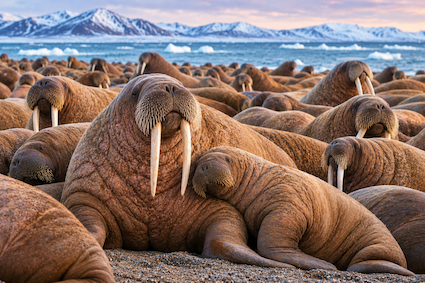
A large gathering of Pacific walruses rests along the Alaskan coastline, highlighting the importance of protecting their Arctic habitat as sea ice continues to disappear. Source: AI-generated image, created specifically for this article.
Latino Vote in the US: The Battle for Power in 2026
Medellín, Bogotá, Cartagena and Santa Marta: The Colombian Race for Digital Nomadism
|
HEMISPHERE ------------------------------------------1406[TRAVEL+NATURE] | |||
Meet the Walrus: The Arctic Giant With a Story to TellDiscover the Pacific walrus and why protecting its Arctic home matters.By Marbel Montoya for Ruta Pantera on 11/23/2026 7:03:16 AM |
||||
| If the thought of spending the holidays surrounded by relatives has you dreaming of a quiet escape, consider making a new friend: the Pacific walrus. It is enormous, whiskered, remarkably social, and probably not someone you would want to squeeze onto your living-room sofa. But this unusual Arctic giant has a story worth listening to—one involving disappearing sea ice, extraordinary migrations, and a race to protect its habitat. A recent report by CNN describes an astonishing gathering near Point Lay, a remote village in northwestern Alaska, where more than 200,000 Pacific walruses come ashore every fall. Their bodies cover the barrier islands along the Chukchi Sea, creating one of the largest wildlife gatherings in North America. It is an extraordinary natural spectacle, but behind the impressive numbers is a troubling story about climate change and the shrinking habitat these animals depend on. Meet the Pacific Walrus The Pacific walrus (Odobenus rosmarus divergens) is one of the most recognizable marine mammals in the Arctic. Its massive body, thick folds of skin, long ivory tusks, and distinctive whiskers make it difficult to mistake for any other animal. Both males and females have tusks, which can grow to impressive lengths. They use them for defense, competition, and helping pull their heavy bodies out of the water and onto ice. Their sensitive whiskers, meanwhile, help them locate food on the ocean floor. Walruses are highly social animals. They gather in groups, communicate through a variety of sounds, and spend considerable time resting close together. Their diet consists mainly of bottom-dwelling invertebrates, particularly clams and other shellfish, which they locate by searching the seafloor with their whiskers. Despite their imposing appearance, walruses are not simply Arctic giants lounging around. They are specially adapted to a demanding environment, and their survival depends on access to healthy marine ecosystems. Why Are Thousands Gathering on Alaska's Shores? For generations, Pacific walruses relied on floating sea ice as a place to rest between feeding trips. The ice provided convenient platforms above shallow waters where they could reach food on the ocean floor. Females also used it as a place to rest with their young. But the Arctic is warming rapidly, and the sea ice has become increasingly unreliable. During late summer, it can retreat beyond the shallow continental shelf, leaving walruses without convenient resting platforms near their feeding grounds. As a result, females and their calves increasingly come ashore. The gathering near Point Lay began in 2007, initially involving a few thousand animals. Today, more than 200,000 walruses use this stretch of coastline, making it the largest Pacific walrus haulout in North America, according to The Conservation Fund. The sight is extraordinary: thousands upon thousands of enormous animals crowded together along the shoreline. Yet this behavior is not necessarily a sign that everything is fine. Land can provide temporary refuge, but it cannot fully replace the sea ice habitat these animals are losing. A Giant Animal With a Surprisingly Fragile Situation A walrus can weigh as much as two tons, but even an animal of that size is vulnerable when thousands gather in a confined space. One of the greatest dangers is a stampede. Walruses are easily startled, and a sudden disturbance can send hundreds or thousands of animals rushing toward the water. Smaller walruses, especially calves, can become trapped beneath the adults and be crushed. Aircraft flying too low, passing ships, and people approaching too closely can trigger these dangerous reactions. Even wildlife tourism, when poorly managed, can put the animals at risk. The danger became widely known after the 2019 Netflix documentary Our Planet showed walruses falling from high cliffs in Russia as they attempted to escape crowded beaches. The images were disturbing, but they also revealed how the loss of sea ice can create dangerous conditions for wildlife. The lesson is important: observing nature should never come at the expense of the animals being observed. A New Refuge for an Arctic Giant There is encouraging news. On November 18, 2026, The Conservation Fund announced a conservation agreement protecting 47,473 acres of land near Point Lay, including the barrier islands used by the walruses. The agreement was reached with the Cully Corporation, an Alaska Native village corporation that owns the land. The protected area is intended to prevent fragmentation and development, including coal and gravel extraction, while reducing disturbances to the animals. The arrangement also recognizes that conservation must support the people who have lived alongside these animals for generations. The Inupiaq community has a longstanding cultural and subsistence relationship with walruses, and the agreement is designed to protect traditional access and help strengthen local economic security. This is an important example of conservation built through cooperation with Indigenous landowners rather than imposed without their participation. Protecting wildlife and respecting the people who depend on the same landscape should be part of the same effort. |
||||
|
Why Walruses Matter to the Arctic Walruses are more than an impressive wildlife attraction. They are part of a complex Arctic marine ecosystem. By feeding on clams and other organisms on the seafloor, they influence the movement of nutrients and the structure of benthic communities. Their movements also connect different parts of the Arctic environment, from the Bering Sea to the Chukchi Sea. Changes in their habitat can therefore reveal much about the wider transformations taking place in the region. Their story is also closely connected to the lives of Arctic Indigenous communities. For generations, walruses have provided food, materials, and cultural meaning. Protecting them means recognizing both their ecological importance and their place in human history. Make Friends With Nature, Not Just Your Relatives This holiday season, perhaps the best escape from crowded family gatherings is a reminder that the natural world has its own extraordinary communities. The Pacific walrus may not be available for a friendly visit, and Point Lay is certainly not a casual weekend destination, but learning about these animals is a way to reconnect with the planet beyond our everyday routines. The more we understand the walrus, the clearer its challenge becomes. These animals are adapting to a changing Arctic, but adaptation has limits. Protecting their resting grounds, respecting Indigenous stewardship, reducing disturbance, and addressing the climate crisis are all part of giving them a future. So, when the family conversation becomes a little too loud, think of the walrus: a two-ton Arctic neighbor with a very crowded social life and a habitat worth defending. Sometimes the best company is found in the wild—and the best gift we can give it is room to thrive. |
||||
 Add this article to your favorites
[FOR MEMBERS ONLY] Copy this link to send this article to a friend: [FOR MEMBERS ONLY] |
||||
|
|
||||
|---|---|---|---|---|
| |
|
|
|
|
×
|
||||
|
References: CNN. (2026, November 18). 200,000 walruses are forced ashore in Alaska as sea ice melts. Now there’s a plan to protect them. CNN. https://www.cnn.com/2026/11/18/climate/pacific-walrus-alaska-point-lay-haulout-sea-ice The Conservation Fund. (2026, November 18). The Conservation Fund permanently protects critical Pacific walrus habitat. https://www.conservationfund.org/our-impact/press-room/the-conservation-fund-permanently-protects-critical-pacific-walrus-habitat/ |
||||
Please leave a comment about this article: 1406 |
|
| Enter your email address: |
Your email will not be displayed. |
| Your nickname: | |
| Your comment: | |
| Was this article helpful to you? | |
|
|
|
Articles about exciting travel experiences in our hemisphere.
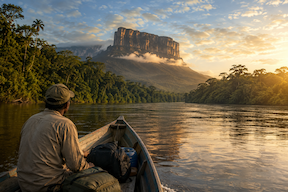
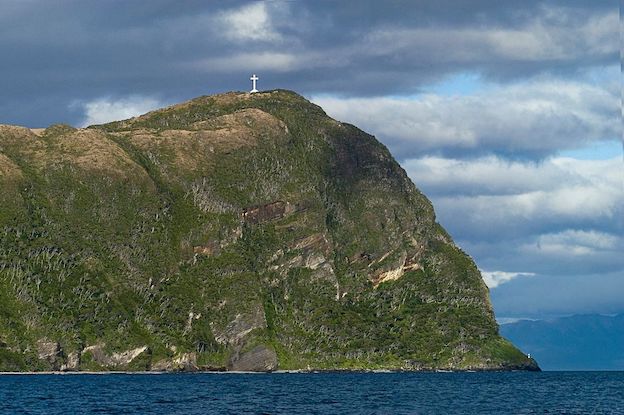
Cape Froward, Chile




Welcome to the World’s Largest New Year’s Celebration
For those traveling from North, Central, or South America, New Year's Eve in Rio offers a rich narrative about how a city can transform a universal holiday into a unique celebration, rooted in local traditions and open to the world.











|
Experiences Finder
(Search our catalog of Experiences here.) |
|---|