|
Pan American Experiences
|
------- |

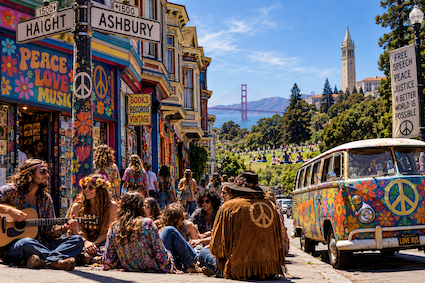
Haight-Ashbury remains the symbolic heart of San Francisco's Summer of Love, where colorful Victorian streets, historic music landmarks, and the enduring spirit of the 1967 counterculture continue to attract visitors from around the world.
Explore Caves With Ancient Petroglyphs
|
HEMISPHERE ------------------------------------------1403[TRAVEL PLANNING] | |||
Walk Through the Summer of Love: A Journey Across San Francisco's Hippie RevolutionBy Marbel Montoya for Ruta Pantera on 11/23/2026 7:03:16 AM |
||||
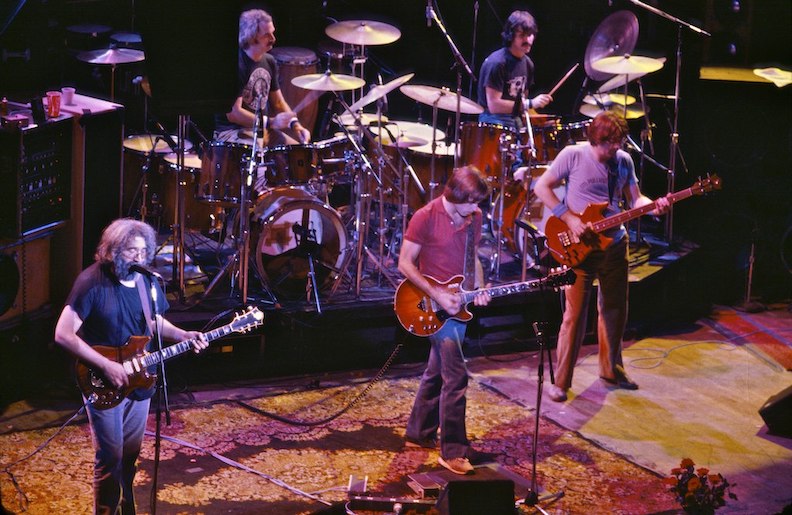
| The music arrives before the history does. A guitarist plays beneath the trees of Golden Gate Park while colorful Victorian houses overlook streets where thousands of young people once believed they could change the world through peace, music, art, and social revolution. More than half a century after the Summer of Love transformed San Francisco into the symbolic capital of the counterculture movement, many of the places that witnessed those extraordinary months still exist. Some have barely changed. Others now hide their remarkable stories behind ordinary storefronts and quiet neighborhoods. Together, they create one of America's most fascinating historical walking tours. Haight-Ashbury: Where the Summer of Love Began Every journey begins at the famous intersection of Haight Street and Ashbury Street. During the summer of 1967, nearly 100,000 young people traveled to San Francisco searching for a different way of life. They rejected war, celebrated artistic freedom, experimented with new forms of music, and imagined communities built around peace, equality, and creativity. Today, the neighborhood still preserves much of that atmosphere. Colorful Victorian homes, independent bookstores, vintage clothing shops, record stores, murals, and cafés continue to celebrate the spirit of the era. Walking these blocks feels like stepping into one of the most influential cultural movements of the twentieth century. The Grateful Dead House: 710 Ashbury Street Just a short walk from the famous intersection stands one of the neighborhood's most iconic addresses: 710 Ashbury Street. Between 1966 and 1968, this Victorian house served as the home of the Grateful Dead during the height of their rise to international fame. Inside these walls, band members rehearsed, wrote songs, welcomed fellow musicians, and hosted legendary gatherings that became part of rock history. Although the residence remains privately owned, fans from around the world continue visiting the sidewalk outside to photograph one of the most recognizable landmarks of psychedelic music. Janis Joplin's San Francisco Home Only a few minutes away, another Victorian house tells the story of Janis Joplin. During the late 1960s, Joplin lived at 122 Lyon Street after becoming one of the defining voices of the counterculture movement. Although she achieved international fame through performances at Monterey Pop and Woodstock, San Francisco remained deeply connected to her artistic identity. Standing outside her former residence, visitors can imagine the city during an era when musicians, poets, painters, and activists crossed paths almost daily while creating what would become one of rock music's most influential periods. Jimi Hendrix and the Psychedelic Scene Although Jimi Hendrix never established a permanent home in San Francisco, the city played a crucial role in his career. Hendrix performed repeatedly at legendary venues including the Fillmore Auditorium and Winterland Ballroom, where audiences experienced some of his most celebrated concerts. These stages helped define the psychedelic rock movement, bringing together artists whose music reshaped popular culture throughout the late 1960s. While the original venues have changed over time, plaques, historical markers, and nearby streets preserve the memory of performances that remain legendary among music fans. The Fillmore: The Cathedral of Psychedelic Rock No exploration of the Summer of Love would be complete without visiting the Fillmore Auditorium. Promoter Bill Graham transformed this venue into one of the world's most important concert halls, presenting performances by Jefferson Airplane, Santana, Janis Joplin, The Grateful Dead, The Doors, Cream, Led Zeppelin, Pink Floyd, and countless others. Even today, the Fillmore continues operating as a concert venue while preserving original concert posters, historical photographs, and the traditions that made it a pilgrimage site for generations of music lovers. Golden Gate Park and the Human Be-In On January 14, 1967—months before the Summer of Love officially began—Golden Gate Park hosted the Human Be-In. More than 20,000 people gathered around Hippie Hill to celebrate peace, music, spirituality, and freedom of expression. Timothy Leary encouraged participants to "Turn On, Tune In, Drop Out," while Allen Ginsberg, Jerry Garcia, and numerous musicians participated in what became one of the defining moments of the counterculture movement. Today, Hippie Hill remains a gathering place where locals continue playing music beneath the eucalyptus trees on sunny afternoons. Coffeehouses, Bookstores, and the Counterculture Beyond the famous landmarks, Haight Street still contains businesses that preserve the neighborhood's artistic spirit. Independent cafés display psychedelic artwork, bookstores continue selling Beat Generation literature alongside underground comics, and vintage shops celebrate the colorful fashion of the Flower Power era. Walking from café to café reveals how the neighborhood continues balancing tourism with a genuine local community that values creativity and independent culture. Robert Crumb and Underground Comics No exploration of San Francisco's artistic revolution would be complete without mentioning Robert Crumb. Although much of his work was published throughout California, San Francisco became one of the principal homes of the underground comix movement that flourished alongside the hippie generation. Crumb's provocative illustrations challenged social conventions and helped define an entirely new form of graphic storytelling. Visitors interested in this history often explore independent bookstores, comic shops, galleries, and exhibitions that occasionally feature original underground artwork connected to the city's vibrant publishing scene. |
||||
|
UC Berkeley: The Birthplace of Student Protest Crossing the bay into Berkeley expands the story beyond music. During the 1960s, the University of California, Berkeley became the center of the Free Speech Movement and one of the most influential campuses in modern American history. Student demonstrations against censorship, racial discrimination, and the Vietnam War transformed the university into a symbol of civic activism. Today, visitors can walk through Sproul Plaza, where thousands of students gathered to defend free speech and inspire protest movements across the United States. Oakland and the Legacy of Angela Davis Just across the Bay Bridge, Oakland adds another essential chapter to the journey. Angela Davis, scholar, activist, and one of America's most influential voices for racial justice and prison reform, developed much of her public life in Oakland and the surrounding Bay Area. While her work extended far beyond the Summer of Love, it reflected another dimension of the social transformations unfolding throughout Northern California during the late 1960s and early 1970s. Visiting Oakland places the counterculture movement within a broader landscape of civil rights, political activism, and community organizing that reshaped American society. The Summer Never Completely Ended Walking these neighborhoods today reveals something remarkable. The Summer of Love survives not because time stopped, but because its influence continues echoing through music, public art, bookstores, independent businesses, neighborhood festivals, and conversations about peace, equality, creativity, and freedom. San Francisco is no longer the city it was in 1967, yet fragments of that extraordinary cultural moment remain visible for anyone willing to slow down and look closely. The colorful Victorians still stand. Music still drifts through Golden Gate Park. The Grateful Dead house still welcomes silent admirers. Berkeley continues encouraging debate. Oakland continues producing powerful voices for justice. Together, they remind visitors that the Summer of Love was never simply about flowers or fashion. It was about imagining a different future—and leaving behind places where that imagination can still be felt today. |
||||
 Add this article to your favorites
[FOR MEMBERS ONLY] Copy this link to send this article to a friend: [FOR MEMBERS ONLY] |
||||
|
|
||||
|---|---|---|---|---|
| |
|
|
|
|
×
|
||||
|
References: 1. National Park Service. (2025). San Francisco Maritime National Historical Park – Summer of Love and Counterculture Resources. https://www.nps.gov/safr/ 2. California State Parks. (2025). Haight-Ashbury Historic District and California Cultural Heritage. https://www.parks.ca.gov 3. The Fillmore. (2025). The History of The Fillmore San Francisco. https://www.thefillmore.com/history 4. University of California, Berkeley. (2025). The Free Speech Movement Archive. https://fsm.berkeley.edu |
||||
Please leave a comment about this article: 1403 |
|
| Enter your email address: |
Your email will not be displayed. |
| Your nickname: | |
| Your comment: | |
| Was this article helpful to you? | |
|
|
|
Articles about exciting travel experiences in our hemisphere.

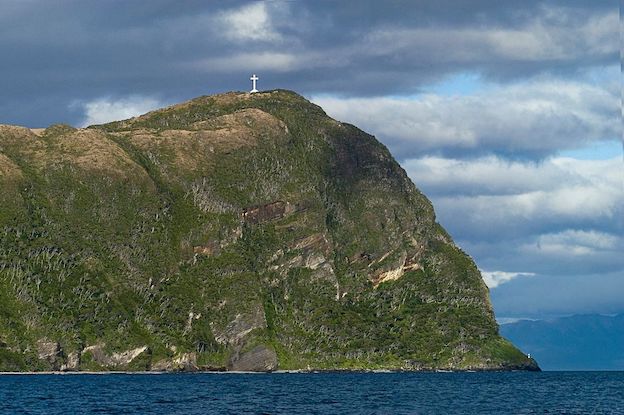
Cape Froward, Chile
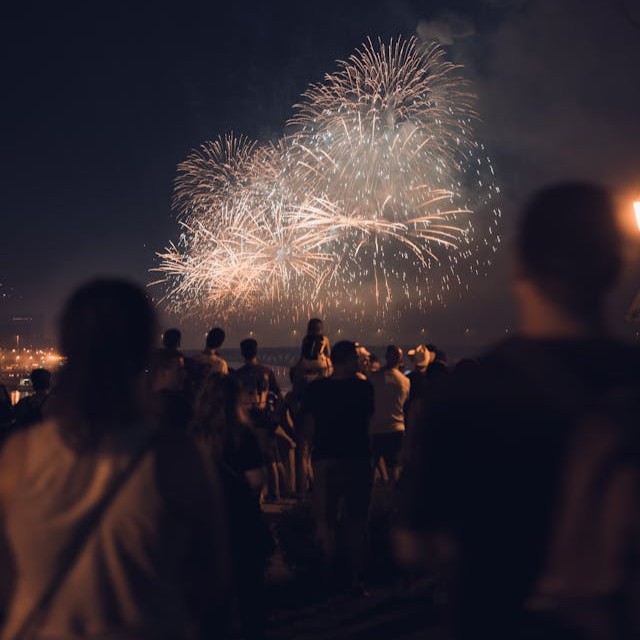

Welcome to the World’s Largest New Year’s Celebration
For those traveling from North, Central, or South America, New Year's Eve in Rio offers a rich narrative about how a city can transform a universal holiday into a unique celebration, rooted in local traditions and open to the world.






|
Experiences Finder
(Search our catalog of Experiences here.) |
|---|