|
Pan American Experiences
|
------- |

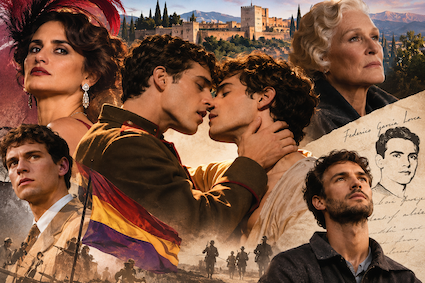
La Bola Negra revisits Spain’s hidden queer history through love, repression, and memory, connecting generations of LGBTQ+ lives against the backdrop of Federico García Lorca’s legacy and the Spanish Civil War.
The Expedition That Photographed the Amazon Before Anyone Knew What Was There
Visit Traditional Coffee Plantations
The Manosphere Hits Manopause… Which Will Make Travel and Daily Life More Fun for Us All
|
HEMISPHERE ------------------------------------------1399[TRAVEL+CULTURE] | |||
La Bola Negra: The Gay Epic That Refuses to Stay QuietLorca, Forbidden Love, and Spain’s Fight for Queer MemoryBy Marbel Montoya for Ruta Pantera on 11/20/2026 12:02:34 PM |
||||
| Some films entertain us, some challenge us, and a rare few attempt to change the way a country remembers itself. La Bola Negra, the ambitious Spanish drama from Javier Calvo and Javier Ambrossi, known professionally as Los Javis, is attempting all three. It is a film about homosexual desire, historical persecution, family secrets, and the stories that disappear when society decides certain lives are not worth remembering. Inspired by an unfinished work by Federico García Lorca, it reaches across generations to connect the repression of queer people in early twentieth-century Spain with the unresolved questions of identity and inheritance in the present.
The film has already become a major cultural event. It competed for the Palme d’Or at the 2026 Cannes Film Festival, where its directors received the Best Director award, shared with Paweł Pawlikowski for Fatherland. It has attracted enormous audiences in Spain and generated a debate that goes beyond conventional film criticism. Yet the reactions have not been universally enthusiastic. Some critics have celebrated its visual imagination and emotional ambition; others have found it excessive, uneven, and too determined to explain its own message. Both responses deserve consideration. The Story Behind the Story: An Unfinished Work by Federico García Lorca To understand La Bola Negra, it helps to begin with the literary mystery that inspired it. Federico García Lorca, the celebrated Andalusian poet and playwright, began writing a work titled La Bola Negra in 1936. Only four pages of the manuscript survived. Those pages introduce a homosexual young man who is rejected by an exclusive social club in Granada. The title refers to the black ball used in a secret ballot to exclude someone from membership. It becomes a powerful metaphor for social rejection: a person is denied acceptance not because of what he has done, but because of who he is. Lorca never completed the work. In August 1936, during the opening weeks of the Spanish Civil War, he was murdered by forces aligned with the military uprising. His sexuality, political associations, and cultural influence formed part of the historical context surrounding his persecution. His body has never been recovered. Los Javis take those four surviving pages as a point of departure rather than attempting a conventional adaptation. They combine Lorca's unfinished text with the themes and historical material of La Piedra Oscura, a play by Alberto Conejero inspired by Rafael Rodríguez Rapún, one of Lorca's closest companions and a member of his theatrical company, La Barraca. Conejero also collaborates on the film's screenplay. The result is an imagined cinematic expansion of a fragment of literary history. It is not a biography of Lorca, nor a documentary reconstruction of his private life. It is a fictional exploration of what might have happened to the people whose stories were interrupted, concealed, or erased. Three Generations, Three Stories of Queer Identity The screenplay moves between three periods: 1932, 1937, and 2017. Each has its own protagonist, atmosphere, and relationship with homosexuality, but all three are connected through the legacy of Lorca and the consequences of historical repression. Granada, 1932: The Black Ball The first narrative follows Carlos, a young gay man who seeks acceptance into an exclusive men's club. His rejection echoes the premise of Lorca's unfinished play. The story introduces a society in which homosexuality is not simply misunderstood but actively excluded from respectable public life. This section establishes the film's central metaphor. The black ball is not merely a vote; it represents the power of institutions and communities to decide who belongs and who must remain outside. Spain, 1937: Love During the Civil War The second narrative is perhaps the film's emotional center. It follows Sebastián, a soldier serving in the Nationalist army, and Rafael, a Republican prisoner. Their relationship develops in the middle of a conflict that divides the country politically and destroys lives personally. Rafael is based on the historical figure Rafael Rodríguez Rapún, who was associated with Lorca and La Barraca. The film imagines an intimate relationship between two men positioned on opposite sides of the war, using their connection to explore the collision of desire, ideology, violence, and survival. This is where the film takes its greatest emotional risks. The romance is not presented as an escape from history. It exists inside a system of imprisonment, political division, and fear. The relationship becomes a reminder that queer lives continued even in circumstances designed to destroy them. Madrid, 2017: The Inheritance of Silence The contemporary narrative follows Alberto, a playwright and historian investigating traces of Spain's repressed queer past. His research leads him into his own family history, revealing a connection to the earlier generations. This part of the screenplay asks an important question: what happens when descendants inherit a history that their families never discussed? The past is not simply something that happened to other people. It can survive in photographs, documents, family relationships, silences, and the unexplained behavior of those who came before us. The three narratives are ambitious, sometimes deliberately theatrical, and not always equally successful. But their structure gives the film a larger purpose: connecting private identity with public history. The Performances: A Cast That Takes Big Risks The film brings together established performers, emerging actors, and personalities from music and contemporary Spanish culture. Its casting is one of its most interesting decisions. Guitarricadelafuente as Sebastián The musician Álvaro Lafuente, known professionally as Guitarricadelafuente, makes a particularly notable acting appearance. His character, Sebastián, is a soldier whose emotional life conflicts with the military and political identity he is expected to perform. His casting introduces a certain vulnerability to the role. Critics have disagreed about the success of the film's more stylized passages, but several have singled out his screen presence as one of its discoveries. Miguel Bernardeau as Rafael Rodríguez Rapún Bernardeau plays Rafael, the Republican prisoner whose relationship with Sebastián becomes the film's most consequential romantic storyline. He brings anger, sadness, and emotional tension to a character whose historical inspiration makes the role particularly sensitive. His performance helps connect the fictional romance with the real history of Lorca's circle. Milo Quifes as Carlos Quifes plays the young man at the center of the 1932 story. His role carries the original premise of Lorca's unfinished text: the experience of being excluded from a world that claims to represent social respectability. Carlos González and Lola Dueñas In the contemporary storyline, Carlos González plays Alberto, while Lola Dueñas portrays his mother. Their relationship provides some of the film's most intimate and emotionally recognizable moments. Rather than relying entirely on historical tragedy, their scenes explore the difficult process of confronting family secrets and inherited shame. Penélope Cruz Cruz has a relatively brief but memorable appearance as Nené Romero, a cabaret performer. Her performance is one of the film's major attractions. In a remarkable sequence, her character entertains Nationalist soldiers through the language of performance, theatricality, and gender expression. The scene offers a striking contrast between the rigid ideology of the military environment and the freedom represented by artistic performance. Several critics have identified it as one of the film's strongest moments. Glenn Close Close plays Isabelle, an American academic specializing in Lorca. Her character helps connect the Spanish historical narrative with the international interest in the poet's life and work. Her presence also gives the production an international dimension, although her role is not as central as the principal Spanish characters. The Script: A Brilliant Idea That Sometimes Gets Lost in Its Own Ambition The screenplay is simultaneously the film's greatest strength and one of its most controversial elements. Its central idea is powerful: take a fragment of a forgotten queer literary work, connect it to a real historical relationship, and use both to investigate the present. It is an imaginative approach to historical storytelling, particularly because the film does not pretend that the surviving four pages of Lorca's manuscript contain an entire missing masterpiece. However, the ambition sometimes becomes a problem. The film runs approximately 159 minutes, and its three narratives do not always maintain the same dramatic momentum. Some transitions feel more symbolic than necessary, while certain dreamlike passages appear to extend scenes that have already communicated their emotional meaning. The critical response reflects this division. Sight and Sound praised the film's operatic construction and its ability to honor queer history through melodrama. The Hollywood Reporter described it as a vivid and moving epic. But other reviewers found the storytelling overextended and the symbolism too heavily emphasized. Espinof, for example, criticized its length, uneven structure, and tendency to move between storylines without a sufficiently clear focus. There is a legitimate question here: does a film about historical repression need to explain every emotional and political connection to its audience? At times, La Bola Negra appears reluctant to trust its strongest images and performances to speak for themselves. |
||||
|
Yet its excesses are also part of its personality. This is not an austere historical drama. Los Javis favor theatrical imagery, heightened emotions, sensuality, music, and visual extravagance. Their approach may frustrate viewers who prefer restraint, but it also gives the film a distinctive identity.
The Historical Question: What Does Spain Remember About Its Queer Past? The film's importance cannot be separated from the history it revisits. Lorca was not simply a famous artist who happened to be gay. He was a major cultural figure murdered during a period of political violence in which homosexuality, political dissent, and artistic independence could all become sources of danger. His unfinished work provides an entry point into a larger history of queer lives that were frequently hidden from official accounts. The Spanish Civil War and the dictatorship that followed created decades of repression. Homosexual people experienced discrimination, policing, imprisonment, social exclusion, and the pressure to conceal their identities. The historical record is incomplete partly because many people had powerful reasons not to leave evidence of their private lives. La Bola Negra attempts to restore some of that emotional and cultural presence. It does not claim that one film can reconstruct every missing story. Instead, it uses fictional characters to explore what the historical record cannot fully tell us. This approach is valuable, but it also requires care. The film is a work of fiction inspired by real people and events, not a substitute for historical research. Its imagined relationship between Sebastián and Rafael should not be mistaken for a documented account of their private lives. That distinction matters. Historical memory becomes stronger when art encourages audiences to investigate the past, rather than treating cinematic invention as historical fact. The LGBT Impact: Visibility Is Not the Same as Historical Justice For the LGBTQ+ community, La Bola Negra arrives at an interesting moment. Queer representation has become more visible in international cinema and television, but visibility alone does not resolve the absence of historical recognition. Many queer stories from earlier generations were never recorded, published, or preserved. Others were reduced to stereotypes or presented through the perspective of people who did not share the experiences being represented. A film that places queer characters at the center of Spain's cultural and political history challenges that tradition. The film also creates an opportunity for younger audiences to encounter Lorca and his historical context through cinema. Arturo Valls, commenting on its success in an interview with Espinof, described the phenomenon as something that is inspiring people to create and write. He emphasized that younger audiences were going to cinemas and discovering the issues the film raises. That reaction may be one of its most meaningful cultural achievements: a film can become important not only because of what appears on screen, but because of the conversations and creative work it inspires afterward. There is another important dimension: the film connects queer identity with class, political conflict, family, and national history. It does not isolate homosexuality as a separate social issue. It places it inside the larger struggle over who is allowed to belong, whose love is recognized, and whose life is remembered. However, the film's historical framing has also prompted questions. Historians interviewed by Ara welcomed its ability to bring queer memory to a mass audience but warned that focusing on personal trauma can sometimes blur the political causes of repression. That is a serious point. The suffering of queer people during the Civil War cannot be understood separately from the institutions, political forces, and ideologies that produced it. The strongest legacy of La Bola Negra would therefore be to encourage more films, books, research, and public conversations—not to become the final word on Spain's queer history. The Reviews: A Film That Divides Without Being Easily Dismissed The reaction to La Bola Negra has been mixed in tone, although much of the professional criticism has recognized its artistic ambition. At Cannes, the film received substantial international attention. The Hollywood Reporter praised its emotional scale and visual imagination, while The New York Times described it as an exciting gay epic. The Guardian also responded positively to its production and narrative construction. Other publications were more reserved, criticizing its excessive length, uneven pacing, and theatrical flourishes. In Spain, Carlos Boyero's review for El País acknowledged the directors' visual talent and the film's capacity to move audiences, while questioning some of its excesses. He nevertheless concluded that it possessed something genuinely affecting. Other Spanish critics were less forgiving, arguing that the screenplay loses focus and that the final sections become unnecessarily elaborate. It is also worth separating professional criticism from audience reactions. Online ratings and comments can be influenced by political disagreements, expectations, fandom, or deliberate review campaigns. They are useful evidence of public debate, but they do not independently establish the film's artistic quality. The fairest conclusion is that La Bola Negra is neither universally acclaimed nor a critical failure. It is a divisive, highly ambitious film whose strongest qualities are widely recognizable, even among reviewers who question its execution. Beyond the Cinema: A Cultural Journey Through Lorca's Spain For travelers, the film offers an invitation to explore the places and institutions connected to its historical and literary world. This is where La Bola Negra becomes particularly relevant to Travel + Culture. Granada: The World of Federico García Lorca Begin in Granada, Lorca's birthplace and the setting that inspired much of his literary imagination. Visit the Huerta de San Vicente, the former family summer home that is now a museum, and explore the city's historic neighborhoods, theaters, and cultural institutions. The city's relationship with Lorca is also connected to the history of his murder and the unresolved search for his remains. Visitors can learn more about the poet through the Federico García Lorca Centre and cultural programs dedicated to his work. Madrid: Literature, Theater, and Contemporary Queer Culture Madrid provides another perspective on the film's contemporary storyline. The city has a vibrant theater and literary scene, as well as LGBTQ+ cultural institutions and historic neighborhoods. The Chueca district is an important center of queer public life, while the city's theaters and cultural spaces regularly present work addressing identity, memory, and social change. Santander: Civil War Memory The film's 1937 storyline connects with the history of the Spanish Civil War in northern Spain. Santander and the surrounding Cantabrian region offer opportunities to explore the conflict through museums, memorials, and historical sites. Travelers should distinguish between locations used in the film and places directly connected to the historical events that inspired it. The Wider Journey: Spain's Historical Memory A broader trip can include museums and memorial sites dedicated to the Civil War, the dictatorship, and the recovery of historical memory. These places provide important context for understanding the political and social environment in which Lorca and his contemporaries lived. The journey is not simply about visiting film locations. It is about understanding how literature, art, politics, and personal identity become intertwined in a country's cultural memory. Is This the Most Important Gay Film of the Century? Calling La Bola Negra the most important gay film of the century would be premature. Cinema history is full of landmark LGBTQ+ works, from Brokeback Mountain and Moonlight to Portrait of a Lady on Fire and Tangerine. Each changed the conversation in different ways, and their significance cannot be measured by a single standard. But La Bola Negra deserves to be considered in a different category: the historical queer epic. Its subject is not only the experience of being gay, but the disappearance of queer people from official history and the effort to recover their place within it. Its Cannes recognition, international attention, and strong audience response in Spain suggest that it has reached beyond a specialized LGBTQ+ audience. Arturo Valls's observation that the film is encouraging people to create and investigate its themes is especially relevant. A cultural event is not always defined by critical unanimity; sometimes it is defined by the questions it makes impossible to ignore. The film has weaknesses. It is long, occasionally overwrought, and not every narrative strand is equally convincing. Its artistic ambition sometimes exceeds its control. But its central subject is too important to dismiss because of those flaws. Perhaps its greatest achievement is that it gives a cinematic voice to lives that history often forced into silence. It reminds audiences that queer history is not separate from national history, that love existed even under conditions of extreme repression, and that the stories of those who were excluded deserve to be told. La Bola Negra may not be the definitive gay film of the century. It may, however, become one of the films future generations return to when asking how Spain began to look more honestly at its queer past. |
||||
 Add this article to your favorites
[FOR MEMBERS ONLY] Copy this link to send this article to a friend: [FOR MEMBERS ONLY] |
||||

|
|
||||
|---|---|---|---|---|
| |
|
|
|
|
×
|
||||
|
References: Festival de Cannes: https://www.festival-cannes.com/ Sight and Sound / BFI review: https://www.bfi.org.uk/sight-and-sound/reviews/la-bola-negra-operatic-journey-through-spains-queer-histories Federico García Lorca Centre, Granada: https://www.centrofedericogarcialorca.es/ Huerta de San Vicente: https://www.huertadesanvicente.com/ Espacio Memoria y Derechos Humanos: https://www.espaciomemoria.ar/ |
||||
Please leave a comment about this article: 1399 |
|
| Enter your email address: |
Your email will not be displayed. |
| Your nickname: | |
| Your comment: | |
| Was this article helpful to you? | |
|
|
|
Articles about exciting travel experiences in our hemisphere.

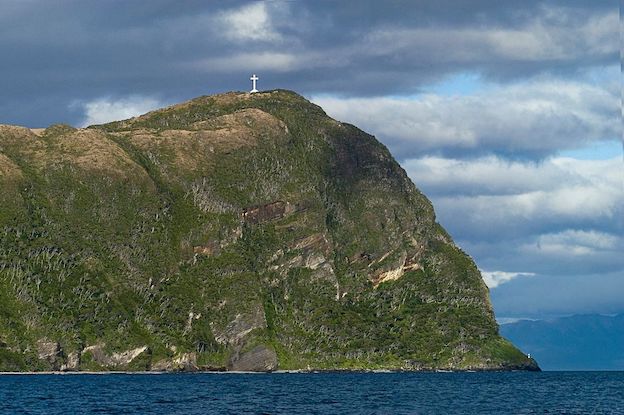
Cape Froward, Chile




Welcome to the World’s Largest New Year’s Celebration
For those traveling from North, Central, or South America, New Year's Eve in Rio offers a rich narrative about how a city can transform a universal holiday into a unique celebration, rooted in local traditions and open to the world.















|
Experiences Finder
(Search our catalog of Experiences here.) |
|---|