|
Pan American Experiences
|
------- |

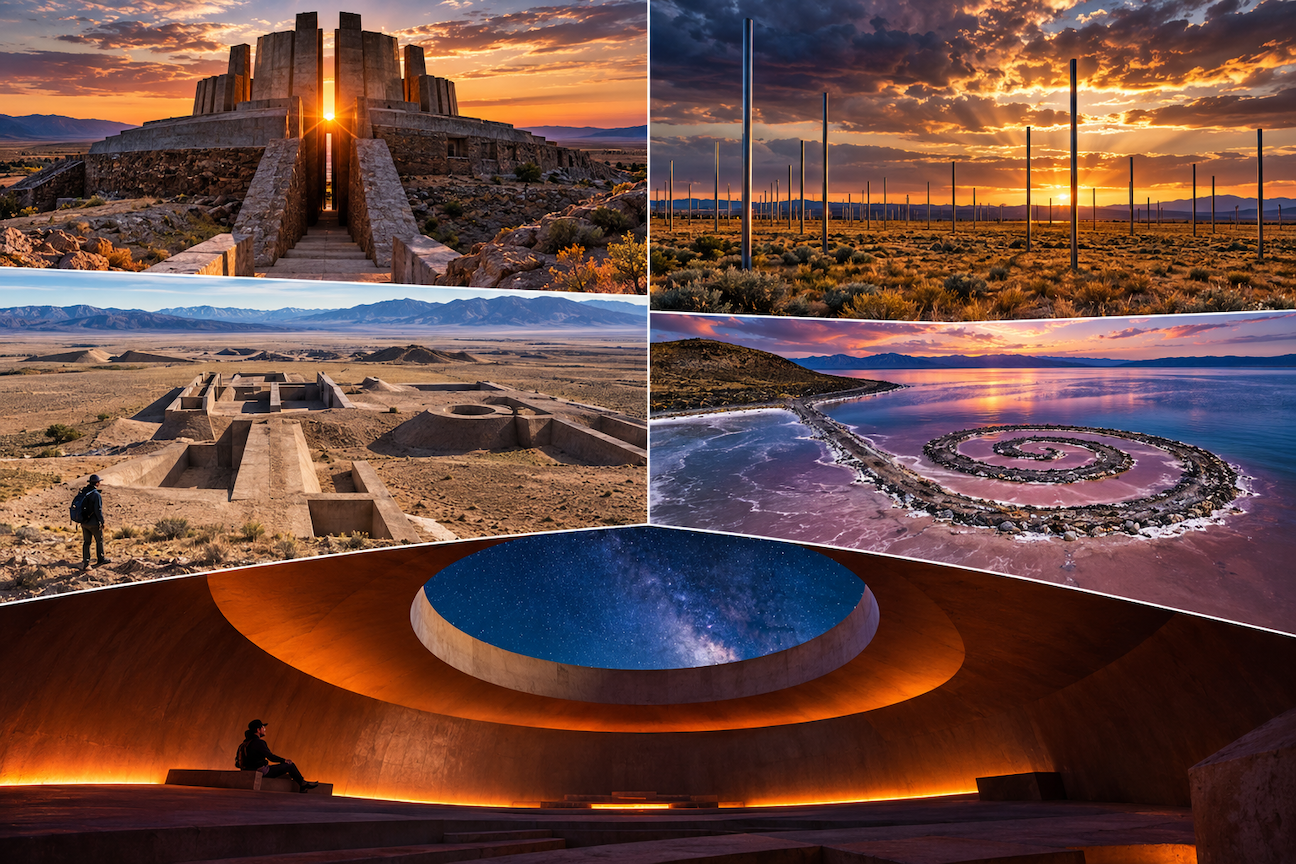
A journey through the monumental landscapes of Land Art, where artists transformed deserts, salt lakes, stone, light, and the night sky into immersive works that can only be truly experienced by being there.
When Mourning Turns into Rhythm
2025 -- the Year of the Naked Dress
The Changing Landscape of Security in the Pan-American Hemisphere. |
HEMISPHERE ------------------------------------------1377[TRAVEL PLANNING] | |||
Commune With the Monumental Masterworks of the Great Land Artists — Where and How to Visit Their Works Across the HemisphereExperience the Extraordinary Landscape Artworks That Transformed Deserts, Mountains, Lakes, and Skies Into Immersive Works of ArtBy Marbel Montoya for Ruta Pantera on 10/5/2026 5:48:36 PM |
||||
| Land art changed the way we think about visiting a work of art. Instead of entering a museum and standing in front of a painting or sculpture, visitors travel into the landscape itself, sometimes for hours or even days, to encounter works that can be measured in acres, miles, geological formations, or celestial cycles. In the American West, artists such as Walter De Maria, Michael Heizer, Robert Smithson, James Turrell, and Charles Ross created works that cannot be separated from the places where they were built.
These monumental works are not traditional tourist attractions. They require patience, preparation, and sometimes a willingness to travel deep into remote landscapes. The reward is an experience in which art becomes inseparable from sunlight, weather, geology, distance, darkness, and the movement of the Earth. A journey through these works can begin in New Mexico, continue through Nevada and Utah, and eventually lead into the Painted Desert of Arizona. Together, they form an extraordinary road trip through some of the most ambitious experiments in American art. What Is Land Art? Land art emerged as an important movement in the United States during the late 1960s and 1970s, when artists increasingly questioned the traditional gallery and museum system. Instead of making objects that could be transported from one exhibition to another, artists began creating works directly in the landscape. The landscape was no longer simply a background. It became the material, the subject, and sometimes even the mechanism of the artwork. A land-art journey therefore requires a different attitude from conventional sightseeing. The visitor is not simply arriving at a monument, taking a photograph, and leaving. In many cases, the experience depends on walking, waiting, observing changes in light, watching weather move across the landscape, or seeing the same work at different times of day. Star Axis — Charles Ross, New Mexico One of the most extraordinary destinations on this journey is also one of the least accessible. Charles Ross's Star Axis has been under construction for decades in the New Mexico desert. Ross conceived Star Axis in 1971 and began construction in 1976 after searching for a location where the earth and sky could meet dramatically. The resulting earthwork combines granite, sandstone, bronze, stainless steel, and earth into an enormous architectural structure designed around the geometry and movement of the stars. Ross describes it as both an earthwork and a naked-eye observatory. The central Star Tunnel is aligned precisely with Earth's axis and frames Polaris, the North Star. As visitors move upward through the structure, different openings reveal different apparent orbits of Polaris associated with Earth's approximately 26,000-year cycle of precession. Other chambers are designed around the equinoxes, the movement of the sun, and the rotation of the Earth. The project is now nearing completion. Ross's studio says that he is completing the work with a crew of local stonemasons after more than five decades of construction. When completed, the structure will be approximately eleven stories high and roughly a fifth of a mile across. How to Visit: Star Axis is currently not open to the public. Travelers should not attempt to visit the private site without authorization. The best way to follow the project is through Charles Ross Studio and the official Star Axis organization while construction continues. That limitation actually makes Star Axis an unusual destination for the future. Travelers may eventually be able to experience one of the most ambitious land-art projects in the hemisphere at the moment it transitions from a half-century construction project into a finished artwork. The Lightning Field — Walter De Maria, New Mexico From Star Axis, the journey continues west toward one of the defining works of American Land Art. Walter De Maria's The Lightning Field was completed in 1977 in the high desert of western New Mexico. The installation consists of 400 polished stainless-steel poles arranged across a grid measuring one mile by one kilometer. Each pole averages more than 20 feet in height. The genius of the work is that the landscape is constantly changing around the sculpture. Clouds move across the horizon, sunlight changes the appearance of the poles, storms transform the atmosphere, and sunrise and sunset alter the entire visual field. Despite its name, the experience does not depend upon an actual lightning storm. Dia Art Foundation specifically describes the work as something intended to be experienced over an extended period of time, which is why visitors stay overnight rather than simply stopping for a photograph. How to Visit: For the 2026 season, visits operate from May 1 through October 31 and are available by reservation only. Visitors must stay overnight; day visits and camping are not permitted. Groups can include up to six people, and the listed 2026 rate is US$300 per person per night, with reduced rates for students and visitors under 18. Visitors meet Dia staff in Quemado, New Mexico, and are transported to the remote site. The drive from Albuquerque to Quemado takes approximately three hours, followed by approximately 45 minutes of transportation from the Dia office to the installation. This is perhaps the clearest example of why land art demands a different kind of tourism. The destination is not simply the sculpture. The destination is the experience of spending a night inside the landscape. City — Michael Heizer, Nevada Farther west, in the remote Basin and Range region of Nevada, Michael Heizer created City, an enormous complex of earth, concrete, stone, and architectural forms that has occupied much of the artist's career. The work extends approximately 1.5 miles and sits within an immense landscape that was designated part of Basin and Range National Monument in 2015. The monument now protects approximately 704,000 acres surrounding the artwork. City is deliberately difficult to reach. That isolation is fundamental to the experience. There are no conventional museum facilities at the site, and the artwork exists within private rural property. How to Visit: Access is strictly controlled. For 2026, the visitation season runs from May 5 through November 19, with visits generally scheduled Tuesday through Thursday. Reservations are required, and 2026 reservations are currently sold out. The foundation plans to release 2027 reservations on January 2, 2027. A visit allows approximately three hours to explore the 1.5-mile sculpture, generally on foot. Groups are limited to six visitors aged 16 or older, and visits depend on favorable weather. Entering the property without an arranged visit is prohibited and constitutes trespassing. For travelers, City demonstrates another important characteristic of monumental land art: sometimes the challenge of reaching the work is part of understanding its scale. |
||||
|
Spiral Jetty — Robert Smithson, Utah
The journey then turns toward the Great Salt Lake in Utah, where Robert Smithson created one of the most recognizable works in the history of Land Art. Spiral Jetty was constructed in 1970 at Rozel Point on the northeastern shore of the Great Salt Lake. Smithson and his crew moved approximately 6,000 tons of black basalt rock and earth to create a coil approximately 1,500 feet long and 15 feet wide that extends into the lake. But the artwork is not permanently fixed in appearance. Water levels have repeatedly changed its relationship with the lake. At one point the entire work disappeared beneath the water, only to re-emerge as the Great Salt Lake receded. The result is an artwork whose physical condition is partly determined by the natural environment. How to Visit: Spiral Jetty is accessible to visitors, but it is remote. From Salt Lake City, the drive is approximately two hours, with the final portion involving gravel and dirt roads. Visitors should arrive prepared with a full tank of fuel, water, food, sturdy footwear, sun protection, and emergency supplies because services are extremely limited near the artwork. The artwork is managed by Dia Art Foundation, which asks visitors to leave no trace. Do not remove rocks, damage vegetation, create fires, leave trash, or operate drones on Dia property. The best way to experience Spiral Jetty is to give it time. Walk along the formation, observe the lake, look at the changing colors of the water and rocks, and consider that the artwork is simultaneously a human construction and a record of geological and climatic change. Roden Crater — James Turrell, Arizona The final destination takes the concept of land art into the realm of light and astronomy. James Turrell's Roden Crater occupies a dormant volcanic cinder cone in the Painted Desert of northern Arizona. Turrell acquired the site in 1977 and began transforming the interior of the volcano into a sequence of tunnels, chambers, apertures, and observatories designed to manipulate the perception of sunlight, moonlight, stars, and celestial movement. More than 1.3 million cubic yards of earth were moved during the first major phase of construction. The completed project is planned to contain 24 viewing spaces and six tunnels, turning the volcano into a massive instrument for observing light and time. Turrell's ambition is not simply to place a sculpture inside a landscape. The landscape itself becomes an optical instrument. The sky becomes part of the architecture, and the movement of celestial bodies becomes part of the experience. How to Visit: Roden Crater is currently closed to the public while construction continues. The official project website states that fundraising is underway to complete the work and eventually open it to visitors. Travelers should therefore treat Roden Crater as a future destination rather than attempting to approach the site independently. Planning a Land-Art Journey These works can be combined into a larger American Southwest journey, but they should not be approached like a conventional sightseeing itinerary. Distances are enormous, several sites are extremely remote, and some require reservations months in advance. A practical route could begin in New Mexico with the future possibility of experiencing Star Axis, followed by an overnight visit to The Lightning Field. From there, travelers could continue toward Nevada to experience City when reservations are available, then travel north into Utah for Spiral Jetty before continuing south toward Arizona and the region surrounding Roden Crater. The journey should be measured in days rather than attractions. These are places where rushing defeats the purpose. What to Bring Remote land-art destinations require more preparation than a museum visit. Travelers should carry plenty of drinking water, food, sun protection, layers for changing temperatures, sturdy walking shoes, a charged phone, offline maps, emergency supplies, and enough fuel for long stretches without services. Always check the official access rules before leaving. Private property, weather, road conditions, seasonal closures, and reservation requirements can change the feasibility of a visit. The Experience The most interesting thing about these works is that none of them can be completely understood through photographs. A photograph of The Lightning Field shows metal poles in a desert. It cannot show what happens when the light changes for several hours while you are standing among them. A photograph of Spiral Jetty shows a spiral of rocks. It cannot communicate the strange feeling of standing beside the Great Salt Lake and realizing that the lake itself determines whether the artwork is visible. A photograph of City cannot communicate its enormous isolation, while a photograph of Star Axis cannot reproduce the experience of climbing toward a carefully framed view of Polaris. And Roden Crater ultimately asks visitors to look at something that is always changing: light itself. That is why these artists remain so important to travelers. They transformed the journey into part of the artwork. To experience their work, you have to leave the gallery, cross the desert, drive beyond the familiar roads, wait for the right light, look up at the sky, and allow the landscape to become something more than scenery. For travelers willing to make that journey, the American West offers something extraordinary: not a collection of monuments to photograph, but a series of places where art, geology, astronomy, time, and human imagination become inseparable. |
||||
 Add this article to your favorites
[FOR MEMBERS ONLY]
Add this article to your favorites
[FOR MEMBERS ONLY]
Copy this link to send this article to a friend: [FOR MEMBERS ONLY] |
||||
|
|
||||
|---|---|---|---|---|
| |
|
|
|
|
×
|
||||
|
References: Charles Ross Studio. Star Axis and About Charles Ross. Dia Art Foundation. Walter De Maria, The Lightning Field. Triple Aught Foundation. Michael Heizer, City Dia Art Foundation. Robert Smithson, Spiral Jetty Visit Utah. Spiral Jetty Roden Crater. About Roden Crater. |
||||
Please leave a comment about this article: 1377 |
|
| Enter your email address: |
Your email will not be displayed. |
| Your nickname: | |
| Your comment: | |
| Was this article helpful to you? | |
|
|
|
Articles about exciting travel experiences in our hemisphere.
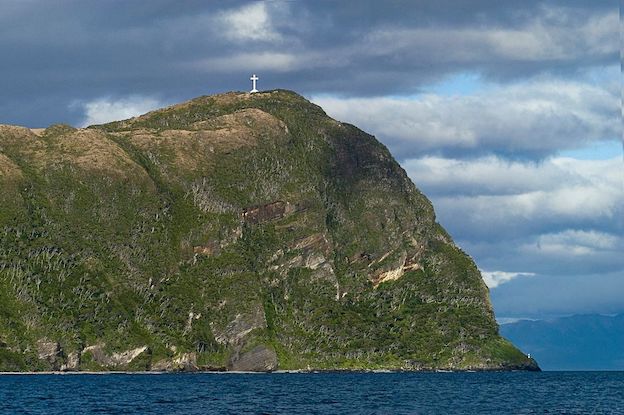
Cape Froward, Chile
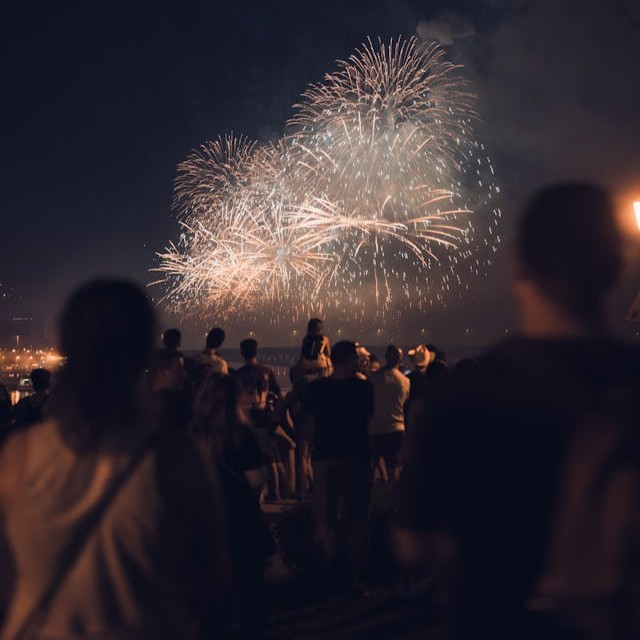

Welcome to the World’s Largest New Year’s Celebration
For those traveling from North, Central, or South America, New Year's Eve in Rio offers a rich narrative about how a city can transform a universal holiday into a unique celebration, rooted in local traditions and open to the world.










|
Experiences Finder
(Search our catalog of Experiences here.) |
|---|