|
Pan American Experiences
|
------- |


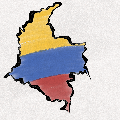
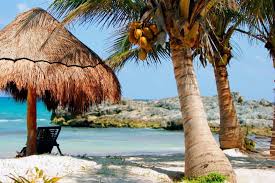
Image created with artificial intelligence by ChatGPT (OpenAI) as a visual aid to illustrate the analysis of the challenges and opportunities facing Colombian tourism in the context of the new presidency.
|
COLOMBIA ------------------------------------------1135[FEATURE] HARD RIGHT TURN | |||
The Impact of Colombia's New Presidency on TourismHow Security and Investment Could Transform this Promising DestinationBy Heydi Bernal for Ruta Pantera on 6/26/2026 9:29:07 AM |
||||
| Colombia is entering a new political era at one of the most decisive moments in its recent history. Over the past two decades, the country has gradually transformed an international image long associated with armed conflict, drug trafficking, and violence into one of Latin America's fastest-growing tourism success stories. That transformation was not the result of a single administration or a single public policy. Rather, it emerged from a combination of improved security, economic openness, infrastructure investment, international promotion, and the efforts of thousands of local communities that found in tourism a sustainable path toward economic development. The election of Abelardo de la Espriella marks a significant shift in Colombia's political and economic direction. His platform emphasizes restoring public security, reestablishing state control over territories affected by illegal armed groups, encouraging private investment, reducing the size of government, and accelerating economic reforms. From an economic perspective, these policies could strengthen Colombia's competitiveness against other tourism destinations across Latin America. Yet the central challenge will not simply be implementing that agenda, but doing so in a country where deep political divisions continue to shape institutional stability and the long-term continuity of public policy. Any assessment of Colombia's tourism future must begin with that political reality. The country enters this new presidential term with an electorate that remains deeply polarized. Recent presidential elections have consistently reflected two competing visions of Colombia's future, divided over the role of government, economic policy, public security, and national development. This is not merely a political perception but a measurable electoral trend. Four of Colombia's six presidential runoff elections have been decided by fewer than one million votes, including one race determined by only 156,586 ballots, one of the narrowest margins in modern Colombian history. More than an electoral statistic, these results reveal a structural characteristic of Colombian democracy: no political movement has succeeded in building an overwhelming national consensus capable of governing without facing substantial opposition. This political fragmentation has consequences that extend well beyond electoral politics. International investors, credit rating agencies, multinational corporations, and tourism developers evaluate not only the ideological orientation of an administration but also its ability to provide institutional stability, regulatory predictability, and long-term legal certainty. Tourism, perhaps more than any other economic sector, depends on those conditions. Major hotel developments, international airports, cruise terminals, and large-scale ecotourism projects require investments whose returns are measured over decades rather than election cycles. As a result, investors pay close attention to whether the policies introduced by one administration are likely to survive future political transitions. Against this backdrop, the central question is not simply whether Colombia will attract more visitors during the next four years. The more fundamental issue is whether the country can consolidate a long-term tourism development model capable of transcending electoral cycles and transforming its extraordinary natural, cultural, and economic advantages into a lasting national strategy. International competitiveness ultimately depends less on the success of a single president than on the strength of institutions capable of providing stability, confidence, and continuity. Colombia's Tourism Transformation: A Remarkable Story of National Reinvention Few industries illustrate Colombia's recent transformation as clearly as tourism. At the beginning of the twenty-first century, the country frequently appeared on lists of destinations considered high-risk by foreign governments, international tour operators, and travel insurers. International headlines about kidnappings, terrorist attacks, and armed conflict largely overshadowed Colombia's extraordinary natural beauty and cultural richness. Two decades later, that reality has changed dramatically. Colombia has emerged as one of Latin America's fastest-growing tourism markets. The country welcomed approximately 2.4 million international visitors in 2010. Before the COVID-19 pandemic, that number had already surpassed 4.5 million, and in subsequent years Colombia reached record levels of more than six million foreign visitors, driven by expanded air connectivity, aggressive international marketing campaigns, and growing global demand for nature-based and authentic cultural experiences. This growth reshaped Colombia's international reputation. Medellín stands as perhaps the most symbolic example of that transformation. Once internationally associated with the violence of the Medellín Cartel during the 1990s, the city reinvented itself as a global reference for urban innovation, social transformation, and experiential tourism. Neighborhoods such as Comuna 13, once among the areas most affected by violence, have become internationally recognized destinations where visitors learn about resilience, community-led revitalization, and world-renowned urban art. Meanwhile, Cartagena strengthened its position as one of the Caribbean's premier historical and cultural destinations. Bogotá continued developing its reputation as a center for gastronomy, arts, and business tourism. Santa Marta expanded its appeal by combining colonial heritage with access to the Sierra Nevada mountains and the Caribbean coast. At the same time, regions that had long remained outside international tourism circuits—including the Pacific Coast, the Eastern Plains, and large portions of the Amazon—began attracting travelers interested in ecotourism, birdwatching, scientific expeditions, and community-based tourism. Perhaps the most significant transformation occurred beyond Colombia's major cities. Communities that had historically been isolated by conflict gradually entered the tourism economy through rural lodges, local gastronomy, specialized guiding services, conservation initiatives, and cultural tourism projects. In many areas, tourism began offering a viable economic alternative to illegal industries that had dominated local economies for decades. For that reason, tourism today represents far more than a recreational activity. It has become an engine of territorial development, employment generation, foreign investment, and regional economic diversification. Its future evolution will depend largely on whether the new administration can preserve the conditions that made this transformation possible while addressing the structural obstacles that continue to limit the sector's full potential. Security: The Variable That Could Redefine Colombia's Tourism Landscape Among the priorities of the new administration, no issue occupies a more central position than public security. The underlying premise is straightforward: without territorial control, the rule of law, and a sustained reduction in criminal activity, attracting long-term investment and strengthening international visitor confidence becomes significantly more difficult. Global experience consistently shows that perceptions of safety remain one of the most influential factors shaping travelers' destination choices. Latin America offers several examples of this relationship. El Salvador has experienced a dramatic transformation in its international image after significantly reducing homicide rates and reestablishing state authority in areas once controlled by criminal gangs. As a result, international investors, airlines, and tourism operators have shown renewed interest in the country. Applying a similar strategy in Colombia, however, presents a far more complex challenge. Colombia's geography is simultaneously one of its greatest tourism assets and one of its greatest governance challenges. With more than 1.14 million square kilometers, three Andean mountain ranges, two coastlines, vast Amazonian rainforests, and extensive border regions that are difficult to monitor, the country's physical landscape has historically complicated the effective presence of government institutions. That challenge is compounded by deeply rooted illegal economies linked to drug trafficking, illegal mining, extortion, and smuggling. In many rural regions, these activities continue to finance armed organizations capable of undermining both security and institutional stability. Consequently, the new administration's challenge extends far beyond reducing crime in Colombia's largest cities. The more demanding objective will be restoring state authority in territories where government presence has historically been limited and where tourism is only beginning to emerge as a sustainable economic alternative. Should the government's security strategy succeed in expanding institutional control while minimizing humanitarian consequences, Colombia could unlock extraordinary tourism opportunities in regions that have remained largely inaccessible to international visitors for decades. Conversely, if military operations against illegal armed groups trigger a temporary escalation of violence, some emerging destinations may face new obstacles before achieving international recognition. Mexico's experience illustrates this risk. Research has shown that major offensives against criminal organizations, while often necessary, can initially fragment criminal networks, producing short-term increases in localized violence before longer-term stability is achieved. For the tourism industry, this distinction is particularly important. International perceptions rarely change as quickly as official crime statistics. Confidence is built gradually but can deteriorate almost overnight. A single high-profile security incident may receive worldwide media coverage and affect travel decisions far beyond the area directly involved. Infrastructure and Investment: Colombia's Longstanding Competitive Challenge Beyond security, Colombia continues to face structural limitations that constrain its ability to compete with the region's leading tourism destinations. The country possesses natural and cultural resources comparable to those of many of the world's premier destinations. Yet much of that potential remains underdeveloped because of longstanding deficiencies in transportation infrastructure, regional connectivity, tourism services, and logistical capacity. Many areas with extraordinary tourism potential remain difficult to access by road or air. Regional air connectivity remains uneven. Numerous airports require modernization or expansion. Outside the country's primary tourism hubs, hotel capacity remains limited, while many municipalities continue to face deficiencies in utilities, digital connectivity, health services, and tourism infrastructure. The incoming administration has proposed a development strategy centered on expanding private investment as a primary engine of economic growth. If investor confidence strengthens, Colombia could witness accelerated development of airports, highways, marinas, cruise terminals, convention centers, hotels, and integrated tourism projects. Infrastructure investment generates benefits that extend well beyond tourism itself. New highways reduce transportation costs for agricultural producers, improve access to education and healthcare, strengthen regional integration, and facilitate broader economic development. From this perspective, tourism stands to become one of the principal beneficiaries of a more competitive national economy. Rapid growth, however, also presents important policy challenges. International experience demonstrates that tourism success cannot be measured solely by visitor numbers. Numerous destinations have suffered the consequences of poorly planned expansion, including environmental degradation, excessive pressure on public infrastructure, rising housing costs for local residents, overtourism, and the gradual erosion of cultural authenticity. Colombia still has the opportunity to avoid many of these pitfalls by combining private investment with strategic territorial planning, environmental safeguards, and sustainable tourism policies. The quality of development may ultimately prove more important than its speed. |
||||
|
Biodiversity: Colombia's Greatest Competitive Advantage If there is one asset that truly distinguishes Colombia within the global tourism marketplace, it is biodiversity. Although the country occupies less than one percent of the Earth's land surface, it contains approximately ten percent of the planet's known biodiversity. Few nations possess such an extraordinary concentration of ecosystems within a relatively compact territory. Colombia ranks first in the world in bird diversity and is home to thousands of plant species, amphibians, reptiles, mammals, butterflies, and marine ecosystems. Its landscapes range from Andean glaciers and tropical rainforests to Caribbean beaches, Pacific mangroves, deserts, wetlands, coral reefs, and vast savannas. This ecological wealth represents far more than an environmental treasure. It constitutes one of Colombia's strongest long-term economic advantages. Nature-based tourism has become one of the fastest-growing segments of the global travel industry. Increasing numbers of travelers seek wildlife observation, hiking, conservation experiences, scientific tourism, photography expeditions, and authentic encounters with local communities. These visitors also tend to stay longer and spend considerably more than traditional mass-market tourists. Birdwatchers, wildlife photographers, and ecotourists often hire specialized guides, stay in locally owned eco-lodges, purchase community-produced goods, and contribute directly to conservation initiatives. For Colombia, this represents an extraordinary economic opportunity. The Amazon rainforest, Chiribiquete National Natural Park, the Sierra Nevada de Santa Marta, the Chocó biogeographic region, the Pacific Coast, and the Eastern Plains possess exceptional potential to become internationally recognized destinations for nature tourism. Yet these same regions also lie at the center of one of the administration's most complex policy dilemmas. The government has expressed interest in expanding extractive industries—including mining, oil exploration, and energy development—as part of its broader economic growth strategy. While such activities could generate substantial fiscal revenues and attract new investment, they also raise concerns about the long-term preservation of ecosystems that constitute Colombia's greatest tourism advantage. This is not a uniquely Colombian dilemma. Many resource-rich countries face difficult choices between immediate revenues from natural resource extraction and the long-term economic value generated through environmental conservation. From a purely economic perspective, the comparison is revealing. A mining operation may generate significant revenue for several decades. A well-preserved ecosystem can sustain tourism, scientific research, and local livelihoods for generations. The debate, therefore, extends beyond competing economic sectors. It reflects two fundamentally different visions of national development and of the role Colombia's natural heritage should play in shaping its future economy. Colombia Between Washington and Europe: Why Foreign Policy Also Matters for Tourism Tourism is among the industries most directly influenced by international politics. Air connectivity, visa policies, foreign investment, travel advisories, bilateral cooperation, and a country's global reputation all shape travelers' decisions and investors' confidence. For that reason, the foreign policy orientation of Colombia's new administration will inevitably influence the future trajectory of its tourism industry. The United States will remain Colombia's most important strategic partner in tourism. Beyond being one of Colombia's largest trading partners, it is also one of the country's principal sources of international visitors. A closer relationship with Washington could encourage additional direct air routes, strengthen security cooperation, attract greater foreign direct investment, and expand tourism promotion efforts across one of the world's largest outbound travel markets. American travelers have also become increasingly interested in destinations that combine authentic cultural experiences, outdoor recreation, gastronomy, biodiversity, and adventure tourism rather than traditional beach vacations alone. Colombia is particularly well positioned to respond to these changing preferences thanks to the extraordinary diversity of experiences it offers within a single destination. Europe, however, approaches tourism from a different perspective. European travelers, institutional investors, and multinational companies increasingly evaluate destinations according to environmental sustainability, climate policies, biodiversity conservation, human rights, and the protection of Indigenous and Afro-descendant communities. These considerations increasingly influence investment decisions, tourism demand, and international destination branding. Over the past decade, Colombia has successfully positioned itself internationally as one of the world's most biodiverse countries and as an emerging leader in nature-based tourism. That reputation has become one of its most valuable competitive assets. If economic growth can be accompanied by strong environmental stewardship, Colombia could further strengthen its position within international tourism markets. Conversely, if large-scale extractive activities generate significant environmental degradation or damage internationally recognized ecosystems, the country could face increasing competition from destinations that have built their tourism industries around sustainability and conservation. Costa Rica offers perhaps the clearest example. Through decades of consistent public policy, it transformed environmental conservation into a central pillar of its national economic strategy. Colombia possesses even greater biodiversity, yet it still faces the challenge of converting that extraordinary natural wealth into a stable, long-term development policy capable of surviving political transitions. Political Stability: An Often Overlooked Competitive Advantage Beyond economic reforms and security policies, the long-term success of the new administration will depend on a less visible but equally important factor: governance. The political polarization that characterizes contemporary Colombia influences far more than electoral outcomes. It also affects the government's capacity to approve legislation, build political consensus, maintain institutional continuity, and implement long-term development strategies. The narrow margins that have defined several recent presidential elections illustrate a country that remains deeply divided over its preferred model of development. This political reality means that every administration must govern in an environment characterized by vigorous opposition, intense public scrutiny, and significant institutional constraints. From the perspective of the tourism industry, governance has direct economic value. Large-scale tourism investments require long-term regulatory stability. International hotel chains, infrastructure funds, airlines, cruise operators, and institutional investors typically evaluate projects with investment horizons extending twenty or even thirty years into the future. Consequently, investors pay close attention not only to a government's economic agenda but also to the country's institutional capacity to provide legal certainty, protect property rights, maintain consistent tax policies, and ensure predictable regulatory frameworks. In this respect, one of the administration's greatest challenges will be demonstrating that its reforms can evolve into enduring state policies rather than remaining initiatives associated solely with a single presidential term. International experience consistently shows that the world's most successful tourism destinations share one important characteristic: despite political alternation, they maintain relatively stable long-term strategies regarding infrastructure, international marketing, air connectivity, environmental conservation, and tourism development. Colombia now faces precisely that challenge. The future competitiveness of its tourism industry will depend less on isolated policy decisions than on the country's ability to build a broad national consensus recognizing tourism as a strategic pillar of long-term economic development. A Historic Opportunity to Redefine Colombia's Tourism Model The incoming administration inherits a tourism industry that is significantly stronger than it was two decades ago. At the same time, it faces a global marketplace that has become increasingly competitive. As international travel continues to recover, countries throughout Latin America are investing heavily in infrastructure, expanding tourism promotion campaigns, improving connectivity, and developing new tourism products to capture growing international demand. Within this environment, Colombia begins from a position of considerable strength. Few countries combine such extraordinary biodiversity, cultural richness, historical heritage, coastlines on two oceans, vibrant metropolitan centers, mountain ranges, rainforests, deserts, savannas, and a strategic geographic location connecting North and South America. Yet these advantages alone cannot guarantee sustained success. Long-term competitiveness will depend on improving transportation infrastructure, strengthening public security, expanding international air connectivity, protecting environmental assets, encouraging private investment, and maintaining a stable institutional framework capable of generating confidence among both domestic and international investors. Equally important will be ensuring that tourism's economic benefits extend beyond traditional destinations. One of Colombia's greatest achievements over the past decade has been integrating rural communities and historically marginalized regions into the national tourism economy. Preserving and expanding that progress will be essential if tourism is to contribute meaningfully to reducing regional inequalities and promoting inclusive economic growth. Conclusion The future of Colombian tourism will not be determined solely by the success or failure of a single presidential administration. Rather, it will be shaped by the interaction of security, economic growth, political stability, environmental sustainability, and institutional strength. President Abelardo de la Espriella's agenda has the potential to create favorable conditions for increased investment, accelerated infrastructure development, and stronger international confidence, particularly if improvements in public security are accompanied by a more competitive economic environment. At the same time, those objectives must be pursued within a country where political polarization remains a defining feature of democratic life and where successive elections have demonstrated an electorate almost evenly divided between competing visions of Colombia's future. For the tourism industry, long-term stability is just as important as short-term economic performance. The world's leading destinations achieve international prominence not only because of their natural attractions or cultural heritage, but because they provide consistency, predictability, and institutional confidence across multiple political administrations. Colombia has already demonstrated its capacity to reinvent its global image. It has evolved from a country internationally associated with conflict into one of the Western Hemisphere's most dynamic and attractive tourism destinations. The new presidency now represents both an opportunity and a critical test of whether that transformation can be consolidated into a lasting national strategy. Ultimately, the defining question for the coming decade will not simply be how many international visitors arrive in Colombia. The more important question is whether the country can build a development model that is sufficiently stable, competitive, sustainable, and inclusive to allow tourism to continue flourishing regardless of political change. If it succeeds, Colombia will not merely expand its tourism industry—it could firmly establish itself as one of the leading tourism powers in the Americas. |
||||
|
|
||||
|---|---|---|---|---|
| |
|
|
|
|
×
|
||||
|
References: World Bank. (2025). World Development Indicators. https://databank.worldbank.org/source/world-development-indicators United Nations World Tourism Organization. (2025). World Tourism Barometer. https://www.unwto.org/world-tourism-barometer World Travel & Tourism Council. (2025). Economic Impact Research. https://wttc.org/research/economic-impact ProColombia. (2025). Tourism Industry. https://procolombia.co/en Ministerio de Comercio, Industria y Turismo. (2025). Turismo en cifras. https://www.mincit.gov.co Departamento Administrativo Nacional de Estadística. (2025). Estadísticas oficiales de Colombia. https://www.dane.gov.co Banco de la República. (2025). Reportes económicos y estadísticas. https://www.banrep.gov.co International Monetary Fund. (2025). World Economic Outlook Database. https://www.imf.org/en/Publications/WEO Organisation for Economic Co-operation and Development. (2023). OECD Tourism Trends and Policies 2024. https://www.oecd.org/cfe/tourism Convention on Biological Diversity. (2024). Global Biodiversity Framework. https://www.cbd.int UNESCO. (2025). World Heritage Centre. https://whc.unesco.org Instituto Humboldt. (2025). Biodiversidad de Colombia. https://www.humboldt.org.co International Air Transport Association. (2025). Air Passenger Market Analysis. https://www.iata.org World Economic Forum. (2024). Travel & Tourism Development Index 2024. https://www.weforum.org/reports/travel-tourism-development-index-2024 Transparency International. (2025). Corruption Perceptions Index. https://www.transparency.org/en/cpi The Heritage Foundation. (2025). Index of Economic Freedom. https://www.heritage.org/index |
||||
Please leave a comment about this article: 1135 |
|
| Enter your email address: |
Your email will not be displayed. |
| Your nickname: | |
| Your comment: | |
| Was this article helpful to you? | |
|
|
|
Articles about exciting travel experiences in our hemisphere.





Welcome to the World’s Largest New Year’s Celebration
For those traveling from North, Central, or South America, New Year's Eve in Rio offers a rich narrative about how a city can transform a universal holiday into a unique celebration, rooted in local traditions and open to the world.



New Year's Celebrations and Sacred Places in Latin America
Spirituality in December and January in Latin America is not a static or uniform phenomenon; it is a living experience of tradition, diversity, and profound human emotion.








|
Experiences Finder
(Search our catalog of articles here.) |
|---|