|
Pan American Experiences
|
------- |

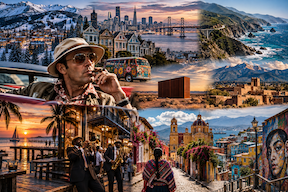
A journey through the Americas’ most unconventional corners, where art, rebellion, literature, and alternative lifestyles have shaped places for those who chose to live beyond the ordinary.
An Adventurous Christmas in Patagonia
A “Trad-Wife” in Latin America
Dive and Snorkel the Coral Reefs of the Bay Islands
in Honduras and Belize |
------------------------------------------1090[TRAVEL PLANNING] | |||
Freak Power Destinations | A Journey Through the Hemisphere’s Unorthodox PlacesFrom Beat San Francisco to artistic Marfa and bohemian Valparaíso, discover places shaped by outsiders and unconventional lives.By Marbel Montoya for Ruta Pantera on 9/23/2026 10:30:37 AM |
||||
| There are places where people go to ski, places where they go to retire, places where they go to see beautiful scenery, and places where they go because they want to become someone slightly different from the person who left home. The last category may be the most interesting. Every generation has had its escape routes: places where writers, artists, musicians, political radicals, dropouts, dreamers, mystics, adventurers and people who did not fit comfortably into conventional society gathered together and created their own little worlds. For one generation it was Paris. For another it was Greenwich Village. Then came San Francisco, Big Sur, Haight-Ashbury, Woodstock, Key West and Aspen. Hunter S. Thompson gave one particularly memorable version of this impulse a name: Freak Power. In 1970, Thompson ran for sheriff of Colorado's Pitkin County, turning a local political campaign into an experiment in countercultural politics. His platform challenged excessive development, police practices and the marginalization of young people, while deliberately using outrageous ideas to attract attention. His campaign included proposals to decriminalize personal drug use, transform downtown streets into pedestrian areas, restrict development and even change Aspen's name to “Fat City.” He ultimately lost the election, but the campaign became one of the defining episodes in Aspen's history. The important thing about Freak Power was not the drugs, the outrageous campaign posters or Thompson's increasingly legendary behavior. It was the idea that outsiders did not necessarily have to leave society. They could take part in it, challenge it and perhaps even change it. That idea makes a fascinating travel concept. Instead of looking for conventional attractions, a traveler could follow a map of places where unconventional people have historically gathered. The journey becomes part literary pilgrimage, part cultural anthropology and part search for the remaining traces of a different way of living. Aspen, Colorado | Where Freak Power Began Aspen is the natural starting point because the story is unusually tangible here. Long before it became synonymous with luxury skiing, Aspen had already attracted artists, intellectuals and cultural experimenters. The arrival of a new generation of ski bums and countercultural outsiders in the 1960s transformed the social atmosphere of the town and produced a conflict between the established tourism economy and people who wanted Aspen to remain a place to live rather than simply a place to invest. Then came Hunter S. Thompson. His campaign for sheriff was not simply a joke. Thompson believed that the counterculture had been pushed outside the political system and that the answer was to seize a piece of that system rather than simply complain about it. The Hotel Jerome's J-Bar served as campaign headquarters, while Thompson and his allies used posters, newspapers and unconventional political theater to turn a local election into a national story. Thompson's campaign eventually became serious politics. He wanted to challenge what he saw as police harassment, uncontrolled development and the growing influence of wealthy real-estate interests. His platform was deliberately provocative, but underneath the spectacle was a genuine argument about who had the right to determine Aspen's future. A Freak Power traveler should therefore experience Aspen as a cultural landscape rather than simply a ski resort. The Hotel Jerome, downtown Aspen, the surrounding Roaring Fork Valley and Woody Creek all belong to the Thompson story. The point is not to recreate Thompson's lifestyle. It is to understand why this particular place became fertile ground for the idea that being an outsider could itself become a form of political power. |
||||
|
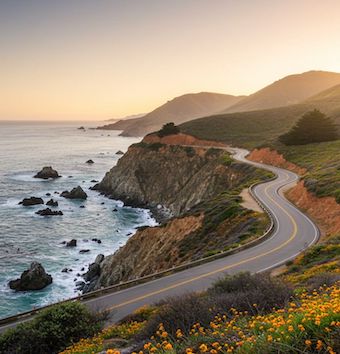
San Francisco, California | Where the Beats Became a Movement If Aspen represents Freak Power in political form, San Francisco represents it in literary and cultural form. North Beach became the center of the Beat Generation during the 1950s, attracting writers, poets, musicians and people searching for an alternative to the conventions of postwar American life. Jack Kerouac was deeply connected to the neighborhood, while Lawrence Ferlinghetti's City Lights became one of the movement's essential institutions. The bookstore and publishing house helped create a literary ecosystem in which experimental writing, progressive politics and alternative lifestyles could coexist. The countercultural story continued into the 1960s, when Haight-Ashbury became internationally associated with the Summer of Love. The neighborhood later became a symbol of the broader transformation taking place in American society, from the antiwar movement and civil rights activism to new forms of music, sexuality, spirituality and political organization. For the traveler, San Francisco offers something Aspen cannot: the opportunity to follow the physical geography of a literary revolution. North Beach, City Lights and Haight-Ashbury connect several generations of outsiders who used the city as a laboratory for different ways of thinking and living. Big Sur, California | The Road Out of Civilization The road south from San Francisco leads toward another essential Beat destination: Big Sur. Its dramatic coastline, forests and isolation attracted writers including Henry Miller and Jack Kerouac and became part of the geography of the Beat imagination. Big Sur represents a different kind of Freak Power. There is no political campaign and no organized movement. There is the escape itself. The mountains, redwoods, cliffs and Pacific Ocean offered physical distance from the pressures of conventional society and provided an environment in which writers could experiment with identity, literature and solitude. That makes Big Sur an important stop because it reveals one of the oldest forms of counterculture: simply leaving the center behind. Taos, New Mexico | The Artist as Outsider Taos offers another version of the same phenomenon. Artists began arriving in the region in large numbers in the early twentieth century, drawn by the landscape, light, Indigenous cultural traditions and isolation of northern New Mexico. The Taos Society of Artists, established in 1915, helped transform the community into an important American art colony. Taos became attractive precisely because it was far from the established cultural centers of New York, Chicago and Los Angeles. That distance mattered. A place can become unconventional simply by being remote enough to allow unconventional people to create their own institutions. In Taos, the landscape, spirituality, art and isolation combined to create an environment in which the outsider could become part of the local identity rather than remain permanently outside it. Marfa, Texas | The Desert as a Blank Canvas Marfa might be the modern descendant of Taos. It is tiny, remote and surrounded by the high desert of West Texas, yet beginning in the 1970s artists including Donald Judd transformed the town into an international center for contemporary art. The National Endowment for the Arts describes Marfa as an international hub of contemporary art and notes the continued attraction of creative people to the town and its landscape. The story is almost absurdly unlikely. A remote ranching community became a destination for artists, architects, musicians and writers. The attraction was not simply the art itself but the possibility of creating something outside the cultural machinery of major cities. Marfa is important to the Freak Power idea because nobody needed to tell these people to be different. They moved somewhere where being different was possible and built a culture around it. Key West, Florida | Writers at the End of the Road Key West represents another tradition: the tropical refuge for people who wanted to escape the mainland. Ernest Hemingway is the obvious literary connection, but the island's deeper appeal comes from its long history as a place where writers, artists, sailors, eccentrics and independent spirits could live at the edge of American society. Hemingway's presence helped transform that reputation into literary mythology. His Key West years became part of the island's cultural identity, connecting the physical experience of living at the end of the road with a particular kind of American independence. For this itinerary, Key West is less about reproducing Hemingway's drinking habits or personal mythology and more about understanding the attraction of geographical escape. There is something psychologically powerful about an island: it creates the illusion that you have left the ordinary world behind. New Orleans, Louisiana | The City That Refused to Behave New Orleans belongs on the list for a different reason. Its unconventional character did not begin with the 1960s counterculture. It is much older and grew from the collision of French, Spanish, African, Caribbean and American cultures. Music, food, religion, dancing and public celebration became central to the city's identity. That history produced a place where eccentricity could become normal. New Orleans does not need a formal Freak Power movement because its cultural DNA has long allowed multiple identities to coexist. Jazz, Mardi Gras, literature, neighborhood traditions and nightlife have all contributed to the city's reputation as a place where conventional rules can be negotiated rather than simply obeyed. Oaxaca, Mexico | Art as Resistance In Oaxaca, the idea becomes more political again. The city has developed a powerful contemporary street-art culture in which artists use public space to comment on politics, inequality, identity and social change. Groups such as the Asamblea de Artistas Revolucionarios de Oaxaca, or ASARO, emerged from a tradition of political art and public expression that deliberately challenged conventional ideas about who controls cultural space. Other Oaxacan artists have questioned the tourist image of the region through murals, painting, photography and video, examining gentrification, cultural change and the relationship between Indigenous identity and contemporary urban life. Oaxaca therefore represents an important evolution of Freak Power. The outsider is no longer simply someone who refuses conventional society. The artist becomes someone who questions the version of society being presented to tourists. San Cristóbal de las Casas, Mexico | The Alternative Community San Cristóbal offers another kind of outsider culture, one connected to Indigenous politics, international activism, alternative music and the legacy of the Zapatista movement. Research from Mexico's National Institute of Anthropology and History has documented the city's unusual mixture of Rastafarians, punks, hip-hop communities, skaters, hippies, activists and people connected to Zapatismo. That makes San Cristóbal particularly interesting for a Freak Power itinerary because the alternative lifestyle here is not simply aesthetic. It has political roots and intersects with Indigenous identity, international solidarity movements and debates about globalization. Travelers interested in the subject can explore the city's art, independent cultural spaces and political history while remembering that these are living communities rather than attractions created for visitors. Valparaíso, Chile | Bohemia on the Pacific Valparaíso provides the South American version of the port-city outsider. Its hills, stairways, old elevators, street art, bars and cultural spaces have produced a distinctive bohemian identity that has survived generations of economic and social change. The city's traditional bohemian music has even been recognized as intangible cultural heritage in Chile, preserving a musical tradition associated with bars, restaurants and nightlife. Valparaíso is Freak Power without the political slogan. It represents the belief that culture can develop outside the polished centers of power and that a city's identity can emerge from artists, musicians, workers, sailors and neighborhoods rather than from official institutions. Montevideo, Uruguay | The Quiet Outsider Montevideo is less spectacularly rebellious than San Francisco or Oaxaca, which is precisely why it belongs here. Its alternative character is quieter: literary, political, artistic and neighborhood-based. The city has been designated a UNESCO Creative City of Literature, and its literary culture remains closely connected to neighborhoods, cafés, bookstores and public spaces. Montevideo demonstrates that an unconventional lifestyle does not have to look chaotic. Sometimes it looks like a city where people read, write, argue about politics, make music, build community organizations and maintain a stubborn attachment to local culture. What Makes a Place “Freak”? The word needs to be handled carefully. “Freak” was once an insult, and Thompson deliberately reclaimed it as a badge of resistance. For the purposes of travel, we can use it to describe a place where people have historically been unusually willing to reject conventional definitions of success, identity, politics, art or lifestyle. That could mean a writer refusing a conventional career. It could mean an artist moving to the desert. It could mean a musician creating a new genre. It could mean activists organizing outside established political structures. It could mean communities creating alternative cultural spaces. Or it could simply mean a town where nobody seems particularly interested in behaving the way outsiders expect. The Hunter S. Thompson Test There is an interesting test for every destination on this itinerary: who came here because they did not fit somewhere else, what did they create after they arrived, and does that spirit still exist or has it become a tourist product? That last question may be the most important. Haight-Ashbury can be photographed, merchandised and packaged. Aspen can sell luxury versions of the counterculture that once challenged its development. Marfa can turn outsider art into an international destination. Even Freak Power itself has become a historical brand. This is the great irony of counterculture tourism. The outsider creates something authentic, tourism discovers it, money arrives, and eventually travelers arrive looking for the outsiders who have already moved somewhere else. Freak Power as a Travel Philosophy Perhaps the most interesting thing to take from Hunter S. Thompson is not his personal excesses. It is his refusal to accept that the existing system was the only possible system. That idea connects him, in very different ways, with Kerouac and Hemingway. Kerouac turned movement into literature. Hemingway turned experience into literature. Thompson turned journalism into confrontation. All three were fascinated by people who lived outside conventional boundaries, although their politics, personalities and literary styles were profoundly different. The traveler's version of this philosophy is simpler. Travel somewhere with a strong identity and find out who created it. Read the writers who lived there, listen to the music that emerged from the neighborhood, understand the art and talk to people who are still making something new. The goal is not to reproduce a countercultural aesthetic but to understand the social forces that created it. The Freak Power Grand Tour A traveler could turn this idea into a remarkable cross-hemisphere itinerary: Aspen for Thompson; San Francisco for Kerouac and the Beats; Big Sur for the road culture; Taos for the artist as outsider; Marfa for contemporary desert art; Key West for the literary escape; New Orleans for cultural irreverence; Oaxaca for political art; San Cristóbal for activist and alternative communities; Valparaíso for Pacific bohemia; and Montevideo for the quieter literary outsider. The journey would not be about finding people who look strange. It would be about finding places where strangeness became productive. That is the real legacy of Freak Power. The freak is not necessarily the person standing outside society. Sometimes the freak is the person who walks into the center of society and asks why it has to be the way it is. For a traveler, that may be one of the most interesting questions you can bring home. |
||||
 Add this article to your favorites
[FOR MEMBERS ONLY]
Add this article to your favorites
[FOR MEMBERS ONLY]
Copy this link to send this article to a friend: [FOR MEMBERS ONLY] |
||||
|
|
||||
|---|---|---|---|---|
| |
|
|
|
|
×
|
||||
|
References: Aspen Public Radio. New Exhibit Remembers Hunter S. Thompson's Campaign For Sheriff. Aspen Public Radio. Hunter S. Thompson's 1970 Campaign For Sheriff Focus Of 'Freak Power' Doc. Aspen Times. Documentary Offers an Insider's View of Hunter S. Thompson's 1970 Campaign for Sheriff in Aspen. City Lights Booksellers. The Beat Generation in San Francisco. National Endowment for the Arts. Marfa, Texas: Creative Placemaking. National Park Service. Jazz Origins in New Orleans. Secretaría de Cultura de México. Asamblea de Artistas Revolucionarios de Oaxaca. Instituto Nacional de Antropología e Historia. Research on alternative cultural communities in San Cristóbal de las Casas. Servicio Nacional del Patrimonio Cultural de Chile. Música de la Bohemia Tradicional de Valparaíso. |
||||
Please leave a comment about this article: 1090 |
|
| Enter your email address: |
Your email will not be displayed. |
| Your nickname: | |
| Your comment: | |
| Was this article helpful to you? | |
|
|
|
Articles about exciting travel experiences in our hemisphere.
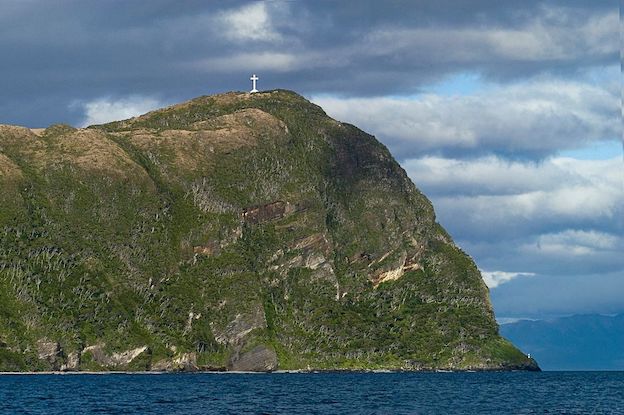
Cape Froward, Chile

Welcome to the World’s Largest New Year’s Celebration
For those traveling from North, Central, or South America, New Year's Eve in Rio offers a rich narrative about how a city can transform a universal holiday into a unique celebration, rooted in local traditions and open to the world.




|
Experiences Finder
(Search our catalog of Experiences here.) |
|---|