![]() |
Pan American Experiences
|
------- |

|
Cape Froward rises imposingly over the Strait of Magellan. Crowned by the Cross of the Seas, this point also known as Cape Damián marks one of the edges of the continent in the wild and windswept Chilean Patagonia, where nature dominates the landscape with overwhelming force. Photo: Image generated with Pixels.
|
CHILE ------------------------------------------1087[EXPERIENCE] | |||
Cape Froward, ChileAt the Edge of Chilean Patagonia, a Trail That Forces you to Feel the Weight of the Continental end of the WorldBy Jazmin Agudelo for Ruta Pantera on 8/14/2026 10:30:37 AM |
||||
| There is something deeply unsettling and at the same time liberating about reaching the end of a continent. It is not a dramatic ending with knife-cut cliffs or a solitary lighthouse blinking in the fog; it is more subtle, almost humble. Cape Froward looks out over the Strait of Magellan as if the world had grown tired of extending itself and had simply decided to stop right there, at the southern tip of the Brunswick Peninsula, about 90 kilometers southwest of Punta Arenas. The Patagonian wind greets you immediately, laden with salt and cold, reminding you that this place is not meant to be visited in haste. It is a territory that demands time, patience, and a certain resignation to the unpredictable.
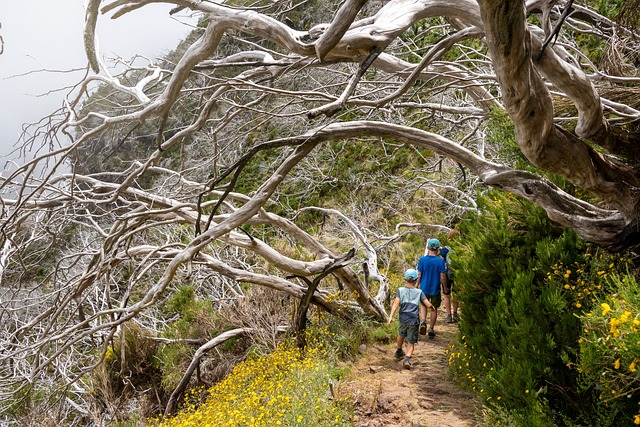
The way there is not a neat trail with signs and benches to rest. It begins at the “End of the Road,” where Route 9 ends abruptly, and from then on everything is walking: gravel beaches that crunch under your boots, dense sub-Antarctic forests where light barely filters through Guaitecas cypresses the southernmost conifers on the planet peat bogs that sink you to the knees if you do not choose your steps carefully, and rivers that must be forded at low tide because at high tide they become furious barriers. The full journey, round trip, is around 70–80 kilometers, spread over four or five days of demanding trekking, with a heavy backpack and improvised camps in coves exposed to the wind. There are no shelters or shops; only you, nature, and the certainty that if something goes wrong, help is very far away. But in that rawness lies the magic. Walking along the coast of the strait is like moving through a living museum of navigation history. Corsairs such as Thomas Cavendish passed through here, who in 1587 gave the cape that very descriptive name “froward” meaning fierce, hostile, untamed because the winds and storms made him curse every meter. Long before that, the Kawésqar, an Indigenous people who inhabited these coasts for thousands of years, knew every corner as part of their ancestral world. Today, the area is moving toward becoming Cabo Froward National Park, protecting more than 120,000 hectares of evergreen forests, millennia-old peat bogs that act as gigantic carbon sinks, and the southernmost habitat of the huemul, that elusive and vulnerable deer that seems like a ghost among the vegetation. Reaching the metal cross at the summit the Cross of the Seas, erected in honor of Pope John Paul II’s visit in 1987, although rebuilt several times because the climate knocks it down mercilessly is a moment that stays with you. From there, the panorama opens onto the strait: the grayish waters that Magellan navigated in 1520, the islands of Dawson and Aracena in the distance, and Mount Tarn rising like a silent guardian. The wind pushes you, the rain soaks you, and suddenly you understand why this cape feels like the edge of the world. There are no crowds, no easy selfies; only the feeling of being in a place that does not need to be beautiful to be unforgettable. The anecdotes shared among those who have done the trek speak of that mix of exhaustion and euphoria. Some tell how a storm forced them to take shelter under an improvised tarp for hours, listening to the roar of the sea and laughing at the absurdity of the situation. Others recall fording a river at low tide just as the water began to rise, with their hearts in their throats and their boots full of mud. And there is always that stillness at the end: sitting at the summit, with the cross at your back, watching humpback whales pass in the distance or dolphins playing in the waves, while the sun sinks into a horizon that seems infinite even though you know it is not. It is a place that forces you to disconnect from the noise of the world and connect with something older, more elemental. |
||||
| In a time when the New York Times includes it among the must-see destinations of 2026, Cape Froward does not seek to be trendy. It remains remote, demanding, sometimes inhospitable. But precisely because of that, when you manage to be there, you feel that you have touched something real: the end of a continent, the beginning of an understanding of how vast and fragile this planet is. It is not a trophy to hang on social media; it is an experience carried in the body in tired muscles, in skin weathered by the wind and in the soul, like a secret understood only by those who have walked to the edge. | ||||
|
|
||||
|---|---|---|---|---|
| |
|
|
|
|
×
|
||||
|
References: Chile Travel. (2026, enero 13). Cabo Froward: The Chilean destination you should visit in 2026 according to the New York Times. https://chile.travel/en/blog/the-chilean-destination-you-should-know-in-2026-according-to-the-new-york-times Chile Nativo. (s. f.). Cape Froward Trek: Backpacking Expedition. https://chilenativo.travel/destinations/punta-arenas/cape-froward-trekking-expedition Rewilding Chile. (s. f.). Cape Froward National Park Project. https://www.rewildingchile.org/en/projects/cape-froward-national-park-project Wikipedia. (s. f.). Cape Froward. https://en.wikipedia.org/wiki/Cape_Froward AllTrails. (s. f.). Cape Froward, Magallanes, Chile. https://www.alltrails.com/trail/chile/magallanes/cabo-froward Two Ramblers. (2018, abril 21). Cabo Froward – the end of the American mainland. https://tworamblers.com/south-america/chile/cabo-froward Patagon Journal. (2024, marzo 28). Cabo Froward: Hiking alongside the Strait of Magellan. https://www.patagonjournal.com/index.php?Itemid=279&catid=211:trekking&id=4505:cabo-froward-hiking-alongside-the-strait-of-magellan&lang=en&option=com_content&view=article Outdoor Index. (s. f.). Cape Froward: the southernmost point of the American continent. https://www.outdoorindex.cl/en-us/posts/cape-froward-the-southernmost-point-of-the-american- |
||||
Please leave a comment about this article: 1087 |
|
| Enter your email address: |
Your email will not be displayed. |
| Your nickname: | |
| Your comment: | |
| Was this article helpful to you? | |
|
|
|
Articles about exciting travel experiences in our hemisphere.
Cape Froward, Chile
Welcome to the World’s Largest New Year’s Celebration
For those traveling from North, Central, or South America, New Year's Eve in Rio offers a rich narrative about how a city can transform a universal holiday into a unique celebration, rooted in local traditions and open to the world.
|
Experiences Finder
(Search our catalog of articles here.) |
|---|