|
Pan American Experiences
|
------- |

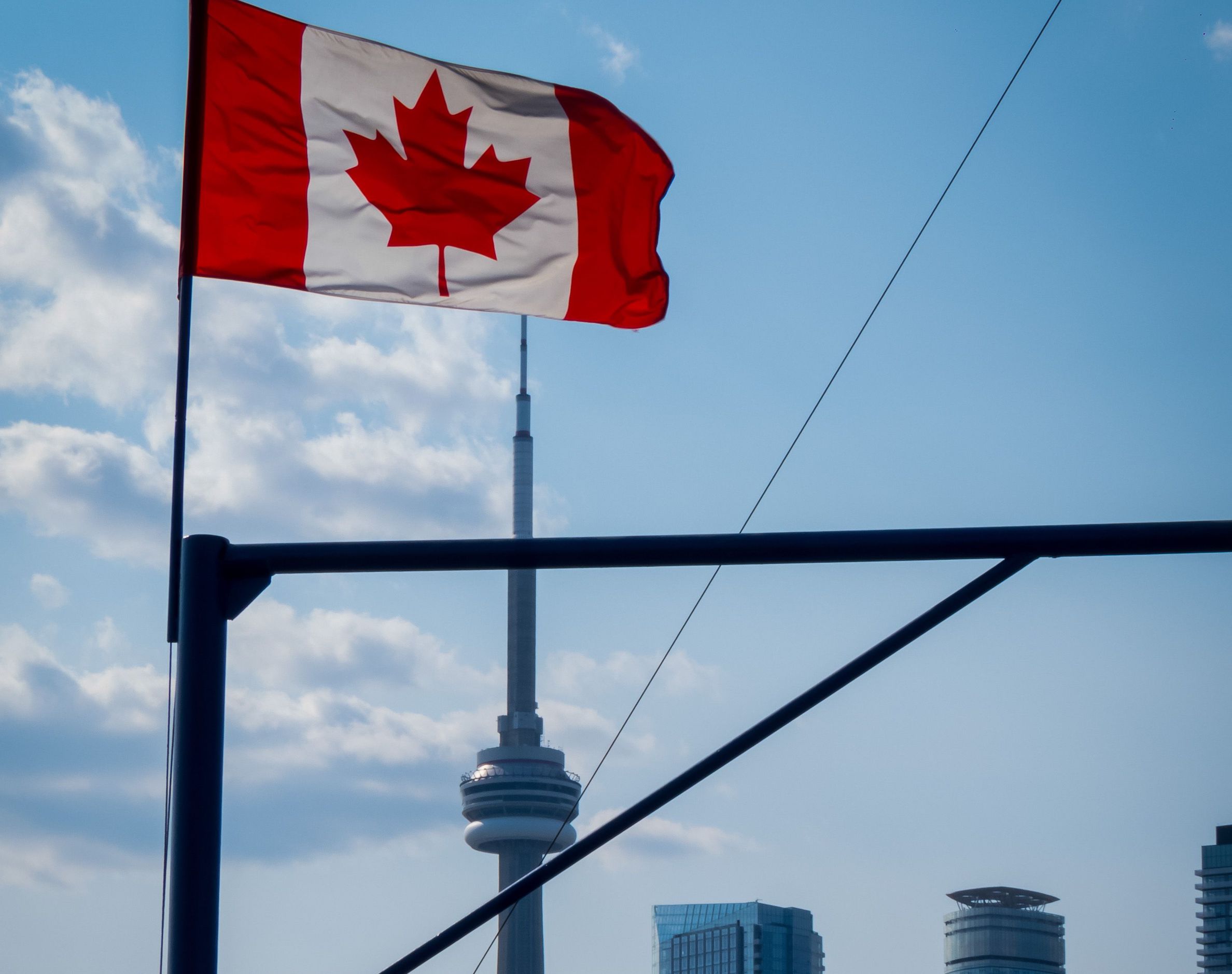
Canadian Banking for Americans: Understanding account options, requirements, cross-border access, and the financial considerations of keeping funds in Canada. Photo: Maicon Vinicius / Pexels
Protected Amazon, Unprotected Rainforest
The Rubber Tree: Indigenous Knowledge, Industrial Dreams, and the Ruins of Fordlandia
|
HEMISPHERE ------------------------------------------1078[EXPATS & NOMADS] | |||
Opening a Personal Bank Account Outside the United States: The Complete Guide for AmericansBy Heydi Bernal for Ruta Pantera on 9/25/2026 11:40:27 AM |
||||
| Thousands of Americans open foreign bank accounts every year, for reasons ranging from currency diversification to preparing for an eventual move abroad. The idea sounds simple in theory. In practice, the difficulty of actually doing it — and doing it correctly — varies enormously by country, and the details that trip people up are rarely the ones they expect going in. This guide walks through the legal groundwork that applies no matter which country is chosen, then goes deep on the four countries most commonly considered: Canada, Ecuador, Colombia, and Brazil, in that order of practicality for someone who isn't already a legal resident abroad.
Part One: The Legal Groundwork Every American Needs to Understand First Before comparing countries, it helps to understand the rules that apply universally, because they shape everything else. Opening a foreign bank account is completely legal. There is no law prohibiting a U.S. citizen from holding money in a bank outside the country. What exists instead is a reporting framework, built after 9/11 and expanded significantly after the 2008 financial crisis, designed to make sure the IRS knows these accounts exist. FBAR — the Foreign Bank Account Report. This is filed on FinCEN Form 114, not with the IRS but with the Financial Crimes Enforcement Network, a separate arm of the Treasury Department. The trigger is simple: if the combined balance of all foreign financial accounts a person has a financial interest in — or signature authority over — exceeds $10,000 at any single point during the calendar year, even for one day, an FBAR is required. It doesn't matter if the balance dropped back below $10,000 the next day; the threshold is a "high water mark" test, not an end-of-year snapshot. The deadline is April 15, with an automatic extension to October 15 that doesn't even need to be requested. Non-willful violations — meaning someone genuinely didn't know they had to file — can still carry penalties, and for 2026 the cap on non-willful FBAR penalties sits at $16,536. Willful violations are far more serious and can include criminal exposure in extreme cases, though that's reserved for people actively hiding money, not for someone who simply missed a filing deadline out of ignorance. FATCA — the Foreign Account Tax Compliance Act. This is a separate requirement, filed as Form 8938 attached to the regular federal tax return, covering a broader category of "specified foreign financial assets" — not just bank accounts, but also foreign stocks, foreign mutual funds, and certain foreign pension-like arrangements. The threshold is higher and depends on filing status and residence: for a single filer living in the U.S., it kicks in at $50,000 at year-end or $75,000 at any point during the year; for someone genuinely living abroad, the threshold roughly quadruples. FBAR and FATCA overlap in what they cover but are legally distinct — filing one does not exempt a person from the other, and yes, many people end up filing both for the same account. The part that surprises most people: it's not a secret, and the foreign bank is often the one who tells the IRS.Since 2014, Canada — like most developed countries — operates under an intergovernmental agreement (an "IGA") that implements FATCA locally. Canadian banks are legally required to screen every new account for U.S. indicators (a U.S. birthplace, a U.S. phone number, U.S. citizenship declared on the form, a U.S. mailing address, etc.) and, if found, to report that account annually to the Canada Revenue Agency, which automatically forwards the information to the IRS. This is why every serious Canadian bank application asks directly whether the applicant is a U.S. citizen or green card holder and requests a Social Security Number or ITIN — it's not optional paperwork, it's a legal screening step the bank itself is required to perform. Practically all of Latin America has similar agreements in place through the OECD's Common Reporting Standard framework or bilateral FATCA IGAs. The upshot: a foreign account should be treated as something the IRS will know about by default, not as something that needs to be hidden — because functionally, it can't be. Part Two: Canada — The Most Realistic Option, With Real Caveats Canada is the only one of the four countries covered here where a U.S. citizen can open a personal account without first securing legal residency status. That's the headline. The details underneath it matter a lot, though, because the reality on the ground is messier than the marketing pages of any single bank suggest. The legal starting point. Federally regulated Canadian banks are generally obligated to offer a basic retail deposit account to anyone who shows up with acceptable identification — this is actually a consumer-protection rule, not a courtesy. It exists specifically so that people who are unemployed, have no Canadian address, have declared bankruptcy, or have no prior Canadian banking history still have a right to basic banking access. But — and this is the part that catches people off guard — banks still run their own anti-money-laundering and identity checks on top of that baseline right, and different branches of the same bank sometimes give different answers to the exact same applicant. This isn't a myth or an exaggeration; it shows up repeatedly in expat forums. One American who married a Canadian described being refused when trying to deposit a wedding gift check made out to both spouses at a BMO branch — the bank wouldn't accept it without a Social Insurance Number, even though her spouse was a Canadian citizen with an account there. A different poster on the same forum had the opposite experience at TD: they opened a full chequing account using nothing but a U.S. passport and an American driver's license, no SIN, no issues at all, in a single visit. A third case described BMO opening an account for a foreign spouse in under twenty minutes with zero deposit required and no fees for the first year — though that applicant did have a temporary SIN, which likely smoothed the process. The lesson from all of this: policy on paper and practice at the counter are not the same thing, and it is worth calling the specific branch ahead of time and asking directly, because phone reps, branch managers, and different provinces don't always apply the rule identically. The "newcomer" trap. This is the single biggest point of confusion for Americans researching this online. Nearly every major Canadian bank advertises a prominent "New to Canada" or "Newcomer" banking package — TD, CIBC, Scotiabank, and BMO all have one, usually with perks like no monthly fees for the first year and a simplified onboarding process. These sound perfect for someone in Chris's position. They are not. Every one of these programs is built around immigration status — they ask for a work permit, a study permit, a Confirmation of Permanent Residence document, or an equivalent immigration form as one of the two required identification pieces. A U.S. citizen with no Canadian visa, work permit, or study permit doesn't qualify for the newcomer track at all. What actually applies to that person is the plain, ordinary non-resident personal account — a lower-profile product that isn't advertised nearly as aggressively, usually opened only in person, and often (as with Scotiabank specifically) requiring a reference letter or a recent statement from the applicant's existing U.S. bank as proof of good standing. Bank by bank, in practical terms: CIBC tends to come up most often in practical accounts as the most workable choice for a non-resident American opening in person — a valid U.S. passport plus a U.S. driver's license is generally enough at the counter, without needing Canadian immigration paperwork. TD is the other frequently-cited option, partly because of a genuine forum account describing exactly this scenario working smoothly, and partly because TD's own U.S. banking arm (TD Bank, with roughly 1,200–1,300 U.S. branches) gives it the most developed cross-border infrastructure of any Canadian bank, useful once the account is established. Scotiabank is more explicit that non-resident, walk-in applicants need a reference letter or an existing bank statement, which adds a small extra step but is far from a dealbreaker. RBC deserves a specific warning, because it's the bank most likely to mislead someone researching this online. RBC's heavily marketed "cross-border banking" product — the one at rbcbank.com — is built for Canadians who want a U.S. dollar account while living, working, or traveling in the United States. It explicitly requires the applicant to be a Canadian resident with a Canadian Social Insurance Number. It is the mirror image of what an American in this situation actually needs. The product an American should be asking about instead is a plain non-resident personal account at RBC Royal Bank (the Canadian-side bank), not RBC Bank (the U.S.-chartered subsidiary that RBC's cross-border marketing is about). BMO and the smaller institutions (Canadian Western Bank, National Bank of Canada, HSBC Bank Canada, Laurentian Bank) are viable but less consistently documented for this exact non-resident, non-immigrating scenario — worth a phone call, less worth relying on from web research alone. A workaround worth knowing about: digital-first Canadian banking. Tangerine (owned by Scotiabank) and Simplii Financial (owned by CIBC) are online-only divisions of the big banks. Some non-residents have had success starting the process through these digital channels, though ultimate identity verification still tends to require either an in-person step or, in some cases, is simply unavailable to a true non-resident with no Canadian address at all. It's a lead worth chasing but not a guarantee. |
||||
|
Documents to bring, consolidated from every source that covers this well: a valid, unexpired U.S. passport (the anchor document everywhere); a second piece of government ID — a U.S. driver's license works at several banks; proof of a U.S. residential address (a recent utility bill, lease, or similar — Canadian banks generally do not require a Canadian address for the non-resident product, which is the whole point of it); the Social Security Number or an ITIN, because the FATCA screening question isn't optional; and, at banks like Scotiabank, a reference letter or recent statement from the applicant's existing U.S. bank. Some banks ask for an opening deposit; the amount isn't standardized and is worth confirming by phone in advance.
A curiosity worth knowing: RBC alone serves more than 500,000 Canadians through its U.S. cross-border banking arm — that's the scale of the reverse flow (Canadians banking in the U.S.), which is precisely why RBC markets that direction so aggressively and the American-to-Canada direction so lightly by comparison. The market incentive runs the other way. Branch geography, if traveling to open in person matters. Contrary to what searching "Canadian bank Michigan" or "Canadian bank Minnesota" suggests, there is no meaningful Canadian bank presence in the U.S. Midwest. TD's roughly 1,300 U.S. branches run along the Eastern Seaboard, from Maine to Florida. RBC's U.S. banking subsidiary is chartered in Georgia and concentrated in the Southeast. The actual nearest Canadian bank branches to someone in Michigan or Minnesota are, unsurprisingly, in Canada itself — Windsor, Ontario, directly across the river from Detroit, has branches of all five major banks within a short drive of the border crossing. From Minnesota, the nearest crossings lead into Manitoba (near Emerson) or Ontario (near Fort Frances, across from International Falls, Minnesota), both of which have standard branches of the major banks. A short day trip across the border, with the documents listed above, is the most reliable way to open the account in person. Deposit protection. The Canada Deposit Insurance Corporation (CDIC) insures eligible deposits up to $100,000 CAD per depositor, per eligible category, per institution — comparable in spirit to FDIC coverage. As of this writing, Canada's federal government is in the middle of a public consultation about raising that limit to $150,000 CAD, following similar reviews prompted by the 2023 U.S. regional bank failures, but the $100,000 figure remains the law today. For anyone planning to deposit a substantial sum, splitting funds across account categories or institutions is the standard way to maximize coverage — the same logic used with FDIC insurance domestically. Costs to expect. Canadian bank fees vary widely — some no-fee accounts exist, others run $10–$30 CAD a month unless a minimum balance is maintained. International wire transfers commonly run $15–$45 depending on direction and bank. Foreign transaction fees on debit cards used back in the U.S. typically run 1–3% unless the account is specifically marketed as fee-free for cross-border use. Part Three: Ecuador — The Most Accessible Latin American Option, With One Very Important Catch Ecuador has a structural feature none of the other Latin American countries share: it fully adopted the U.S. dollar as its official currency in 2000, following a severe economic and banking crisis. Every account in the country is held in USD. There's no separate national currency to convert into, no exchange-rate exposure to manage, and no need to think about currency swings eating into a balance — a genuinely unusual and useful feature for an American depositor. What it takes to open an account. Foreigners can open personal accounts in Ecuador, but nearly every bank still expects some form of documented immigration status rather than a plain tourist stamp — a valid visa or a cédula (the Ecuadorian ID card) tends to be the baseline expectation, alongside proof of a local address. Banco Pichincha runs one of the more established foreigner-specific programs: applicants typically need a passport or ID card, a residence card, a recent utility bill (water, electricity, or phone) less than 60 days old as proof of address, and an opening deposit — commonly cited around $300 USD for the foreigner track. BanEcuador, the state bank, has historically taken an even broader approach, reportedly accepting a passport or even a refugee card as valid identification for opening current accounts, making it one of the more flexible options for someone without full residency papers. The catch: getting money back out costs a real tax. This is the detail most guides gloss over, and it matters enormously for anyone thinking about Ecuador as a place to park money. Ecuador imposes an "Impuesto a la Salida de Divisas" (ISD) — a currency-exit tax — on money leaving the country, currently set at 5% as of 2026 (raised from 3.5% in 2024). It applies to wire transfers sent abroad and, with some nuance, to cash carried out of the country above roughly $1,446 (three times the basic unified salary for 2026). In plain terms: moving $10,000 back out of Ecuador to a U.S. account could mean roughly $500 disappears in tax before it even accounts for any wire fees. This single fact changes the calculus substantially compared with Canada, where there are no capital controls or exit taxes of any kind on moving money back to the U.S. Anyone drawn to Ecuador specifically for dollar-denominated banking needs to weigh this cost against the currency-stability benefit. Part Four: Colombia — Workable, But Residency Has to Come First Colombia's banking system is modern, has a large branch network, and includes internationally recognizable names (Bancolombia — the country's largest bank by assets — along with Davivienda and Banco de Bogotá, plus Scotiabank Colpatria, the product of a merger between a Canadian bank and a Colombian one). None of that changes the core obstacle: opening a personal account as a foreigner in Colombia almost always requires a cédula de extranjería, the foreign-resident ID card, and that card is only issued after obtaining a qualifying visa — generally one granting more than 180 days of stay. A standard tourist stamp does not qualify a person for a cédula, and without one, the door to a normal personal account stays closed at most major banks. Colombian banks operate under a strict anti-money-laundering framework known as SARLAFT, which requires verifying not just identity but the origin of funds and the applicant's economic activity — a more invasive process than what's typical in Canada or the U.S. Interestingly, Colombia's Financial Superintendency (the country's banking regulator) issued a formal ruling in 2017 stating that immigration status alone is not a legally valid reason to deny a foreigner access to the banking system, and that requiring a cédula as an absolute, blanket condition may amount to a discriminatory practice. In practice, though, this legal opinion hasn't changed how most banks actually operate day to day — the cédula remains, for practical purposes, the real gatekeeper, whatever the formal regulatory position says. It's a good example of the gap that often exists between what a regulator says is technically true and what actually happens at a bank counter. For someone employed by a Colombian company and paid regularly, some banks will make an exception and open an account with just a passport, without a cédula — but that's a narrow exception tied to formal local employment, not something a visiting American without local work could rely on. A curiosity worth mentioning: Colombia's mobile-first digital wallets — Nequi (owned by Bancolombia) and Lulo Bank — have become hugely popular domestically and are sometimes discussed online as a possible workaround for foreigners, since they're app-based and marketed as simple to open. In practice, most require a Colombian phone number and, frequently, a Colombian cédula anyway, so they tend not to solve the underlying residency problem for a U.S. citizen without Colombian immigration status — worth investigating directly before assuming they're a shortcut. Part Five: Brazil — Effectively Closed Without Residency Brazil is the strictest of the four. Multiple firsthand accounts from Americans who've tried this describe the same outcome: it is illegal for non-residents to hold a traditional brick-and-mortar bank account in Brazil, and that includes simply being added as a joint holder on an account with a Brazilian citizen or spouse — even a spouse doesn't create an exception on its own. One American who asked about this directly in an expat forum, hoping to open a joint account with his Brazilian girlfriend, was told plainly by other members that it wasn't possible without a permanent visa, and that even marriage alone wouldn't be enough unless it resulted in permanent residency status; a small number of people reportedly do slip through despite the rule, but they risk having the account frozen or seized later, which is a real and reported outcome, not a theoretical one. On the corporate side, foreign-owned companies can open a business account only after registering a local entity with a CNPJ (Brazil's corporate tax ID) — individuals without residency have no comparable direct path. Some newer fintech products marketed toward Brazilians (offering USD account access from Brazil) exist, but they solve a different problem — a Brazilian wanting dollar exposure — not an American trying to bank inside Brazil. For nearly all practical purposes, Brazil should be considered off the table unless relocation and a permanent visa are already part of the plan. Part Six: How Cross-Border Access Actually Works Once the Account Is Open Having a foreign account is only half the picture — using it day to day from the U.S. is the other half, and the costs here are where people often get an unpleasant surprise. ATM withdrawals abroad, or accessing foreign funds from a U.S. ATM, typically come with two separate layers of cost: a fee from the account holder's own bank, and a second, independent fee charged by the ATM's owner (often $2–$5 per withdrawal), on top of a currency-exchange markup that isn't always disclosed up front. A related and very common trap is Dynamic Currency Conversion (DCC) — when an ATM or card terminal abroad offers to show the price in U.S. dollars "for convenience," accepting that option almost always means a worse exchange rate than simply letting the transaction process in local currency and letting the home bank convert it. The standard advice from every finance source covering this: always decline the conversion offer and pay in the local currency. International wire transfers commonly cost $15–$45 depending on the bank and direction, sometimes more, and both the sending and receiving bank can independently take a cut. Foreign transaction fees on debit and credit card purchases typically run 1–3% of the transaction unless the specific card is marketed as fee-free internationally — a detail worth checking before assuming any card will do. For people who expect to move money across borders regularly rather than occasionally, a growing number of Americans use fintech alternatives like Wise instead of, or alongside, a traditional foreign bank account. Wise (and similar providers like Revolut) issue local account details in multiple currencies — including CAD — without requiring residency, and typically charge close to the real mid-market exchange rate rather than a padded one, which can make a meaningful difference on larger transfers. The trade-off is that these are not full-service banks: they generally don't offer CDIC- or FDIC-equivalent deposit insurance to the same degree, don't build a local credit history, and don't offer products like mortgages — they solve the "access and transfer" problem well but not the "full banking relationship" problem. Part Seven: A Practical, Step-by-Step Roadmap For someone starting from zero and choosing Canada as the target — the most realistic option — the sequence that emerges from all of the above looks like this: first, call two or three candidate banks directly (CIBC and TD are the most consistently cited as workable) and ask specifically whether they can open a non-resident personal account for a U.S. citizen with no Canadian visa, using only a U.S. passport and a second U.S.-issued ID — not the "newcomer" package, since that requires immigration paperwork that doesn't apply here. Second, confirm exactly which documents that specific branch wants that week, since practice varies branch to branch. Third, plan an in-person visit — either to a Canadian branch reachable from home (Windsor, Ontario is the natural choice for anyone near Michigan), or during any other trip to Canada — since full functionality on these accounts is rarely available purely online for a non-resident with no Canadian address. Fourth, bring the passport, second ID, proof of U.S. address, and be ready to provide the Social Security Number when asked, since that's a legal requirement tied to FATCA screening, not a negotiable step. Fifth, once the account is open, mark the calendar: if the balance (combined with any other foreign accounts) crosses $10,000 at any point in the year, an FBAR is due the following April, and a CPA experienced with foreign-account reporting is worth involving before, not after, any significant transfer — the paperwork is straightforward once it's understood, but the penalties for skipping it, even unintentionally, are real. |
||||
 Add this article to your favorites
[FOR MEMBERS ONLY]
Add this article to your favorites
[FOR MEMBERS ONLY]
Copy this link to send this article to a friend: [FOR MEMBERS ONLY] |
||||
|
|
||||
|---|---|---|---|---|
| |
|
|
|
|
×
|
||||
Please leave a comment about this article: 1078 |
|
| Enter your email address: |
Your email will not be displayed. |
| Your nickname: | |
| Your comment: | |
| Was this article helpful to you? | |
|
|
|
Articles about exciting travel experiences in our hemisphere.


Cape Froward, Chile



Welcome to the World’s Largest New Year’s Celebration
For those traveling from North, Central, or South America, New Year's Eve in Rio offers a rich narrative about how a city can transform a universal holiday into a unique celebration, rooted in local traditions and open to the world.




















|
Experiences Finder
(Search our catalog of Experiences here.) |
|---|