|
Pan American Experiences
|
------- |

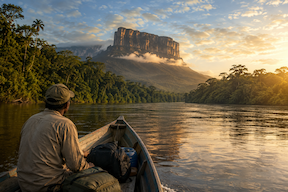
A traveler navigates the Orinoco River by canoe toward the towering Autana massif, deep in Venezuela’s Amazonian rainforest.
Protected Amazon, Unprotected Rainforest
The President’s Portfolio: What Tourism Can Read Between the Lines
|
HEMISPHERE ------------------------------------------1071[EXPERIENCE] | |||
Enter the Lost World: Descending the Orinoco RiverA Journey Through One of South America’s Greatest Rivers, Following the Footsteps of Explorers, Indigenous Navigators, and Modern ExpeditionsBy Marbel Montoya for Ruta Pantera on 9/28/2026 11:40:27 AM |
||||
| The Orinoco does not feel like an ordinary river. At first, it appears on a map as a blue line cutting across northern South America. But on the ground, the Orinoco becomes something much larger: a road, a border, a source of food, a cultural landscape, and one of the great geographical systems of the continent. For centuries, traveling along it meant entering a world where the river was often the only practical highway. Long before modern roads reached the Venezuelan Amazon, Indigenous communities were navigating its waters in canoes and other traditional boats. European and South American explorers later followed those same waterways, searching for routes through a landscape that remained poorly understood by outsiders. One of the most remarkable accounts came from Colombian traveler Santiago Pérez Triana. In 1902, his travel narrative Down the Orinoco in a Canoe, originally published in Spanish as De Bogotá al Atlántico, described a journey that began near Bogotá and eventually followed waterways toward the Atlantic. His book remains one of the most vivid firsthand records of travel through the Orinoco region. The challenge today is not simply to repeat his journey. It is to understand whether a modern traveler could still recreate the experience. The answer is fascinating: parts of it can be experienced, but the entire historical journey cannot realistically be treated as one continuous tourist expedition today. What You Are Really Following Pérez Triana's journey was not a simple river cruise. It involved horses, overland travel, boats, river crossings and long stretches of uncertainty before reaching the Orinoco system. His account makes the river feel like an enormous natural corridor. At certain points, however, navigation was interrupted by rapids and difficult sections of river. The great cataracts of Atures and Maipures historically forced travelers and cargo to find ways around them rather than simply continuing downstream. That detail is important for anyone attempting to recreate the experience. The romantic idea of putting a canoe into the upper Orinoco and simply paddling all the way to the Atlantic is misleading. The river itself determines the itinerary. Today, the most credible reconstruction is therefore a multi-stage expedition, combining land travel with contemporary river journeys in different parts of the Orinoco basin. Where The Road Ends A modern journey into the Venezuelan Orinoco region can be imagined beginning in Puerto Ayacucho, the capital of Amazonas state. The city is an important gateway to the surrounding Indigenous territories and to the river routes leading toward the interior. From Puerto Ayacucho, a documented modern expedition operated by Angel-Eco Tours travels by road to Puerto Samariapo, where travelers board a traditional-style covered bongo. From there, the expedition follows the Orinoco before entering the Sipapo and Autana river systems. The transition is dramatic. One moment there is a road beneath the vehicle. The next, the road is gone. The river becomes the highway. The documented itinerary describes roughly five hours of river travel on the Orinoco, with rainforest rising from the banks and Indigenous communities appearing along the route. Travelers may also encounter numerous species of river and forest birds and see Colombia across the river in sections of the journey. This is perhaps the closest modern traveler can come to understanding what the old expedition narratives meant when they described the psychological sensation of leaving the conventional world behind. The Bongo The boat is part of the experience. Rather than imagining an expedition aboard a conventional tourist vessel, the modern journey uses a bongo, a long covered river boat adapted to the conditions of the region. The vessel moves between forested banks, rocky islands and enormous stretches of open water. The river is so wide in places that the opposite shore can feel distant. Then suddenly the landscape narrows. A tributary appears. The boat turns. The main channel disappears behind the forest. For a traveler accustomed to roads, signs and fixed destinations, this changes the perception of distance completely. There are no highway markers. No roadside restaurants. No obvious indication of how far the next community might be. The river itself becomes the itinerary. Autana: Entering A Sacred Landscape The journey toward Autana provides one of the most extraordinary chapters of the experience. The Autana massif rises dramatically from the surrounding forest. For the Piaroa people, the mountain is connected with the story of the Tree of Life and carries profound cultural and spiritual meaning. Modern expeditions describe traveling from the Orinoco into the Sipapo and Autana rivers by bongo before reaching the area around the mountain. |
||||
|
This is where the concept of a "Lost World" needs to be handled carefully. The landscape may feel remote and almost prehistoric to an outsider, but it is not an empty wilderness. People live here. Communities have histories here. The rivers have names, meanings and routes known to local navigators. The forest is not simply scenery. For Indigenous communities, it is territory, livelihood and culture. A responsible expedition therefore depends on local guides and community relationships rather than attempting to treat the landscape as an untouched adventure playground. Life Along The River One of the most compelling elements of the historic and contemporary accounts is the realization that the Orinoco has never been merely a geographical obstacle. It is a transportation network. Communities use waterways to travel, exchange goods, fish, visit relatives and maintain connections between settlements. Modern expeditions through the Amazonas region can encounter Indigenous communities along the river, but travelers should understand that seeing a community does not automatically mean having the right to enter, photograph people or wander through private areas. The best experiences are those organized with local guides and with clear community permission. The difference is significant. The objective is not to "discover" people. It is to travel through a living cultural landscape while allowing local communities to determine how visitors participate. The Final Transformation: The Delta If the historic journey is being reconstructed rather than literally repeated, the experience can continue conceptually toward the Orinoco Delta. Here the river changes character once again. The enormous central waterway breaks into countless channels before eventually reaching the Atlantic. The geography becomes labyrinthine. Forest replaces conventional riverbanks. Small boats become essential. The Warao people have lived throughout the delta for generations, developing a culture deeply connected with the waterways and wetlands. This final stage of the journey offers a different sensation from the upper Orinoco. In the highlands and Amazonas region, the landscape is dominated by enormous forested horizons and dramatic rock formations. In the Delta, the traveler enters a world of channels, mangroves, palms, flooded forests and shifting water. The river is no longer simply carrying you somewhere. It seems to surround you. When To Go There is no single ideal season for the entire Orinoco experience because conditions vary enormously between the upper river, Amazonas and the Delta. Water levels influence navigation, river crossings and access to remote areas. Weather can also affect transportation and excursions. For that reason, the departure date should be determined together with an experienced local operator rather than chosen solely according to a generic tourism calendar. The more remote the expedition, the more important current local information becomes. How The Experience Works Today The most realistic contemporary version is not a single Puerto-Ayacucho-to-Atlantic cruise. Instead, think of it as an Orinoco expedition assembled from several real journeys. A possible structure would be: Puerto Ayacucho → Puerto Samariapo → Orinoco River → Sipapo River → Autana region → return to Puerto Ayacucho → separate journey toward the Orinoco Delta. The Autana portion is particularly useful for recreating the sensation of the historic journey because an actual operator currently publishes a multi-day expedition beginning in Puerto Ayacucho, continuing by road to Puerto Samariapo and then traveling by bongo along the Orinoco, Sipapo and Autana rivers. Angel-Eco Tours lists the expedition as a multi-day experience including Puerto Ayacucho, river transportation, the Autana region and encounters with Indigenous communities. Its published itinerary should be treated as a starting point for current availability rather than a guarantee that departures are operating at any particular moment. Experience Details Experience: Autana Expedition / Orinoco–Sipapo–Autana river journey Starting point: Puerto Ayacucho, Amazonas, Venezuela River departure: Puerto Samariapo Transportation: Road transfer followed by covered bongo Main waterways: Orinoco, Sipapo and Autana rivers Main attraction: Autana mountain and surrounding Indigenous territories Duration: Multi-day; the operator's published itinerary describes an arrival day followed by the river journey and subsequent expedition stages. Difficulty: Remote expedition rather than conventional sightseeing. Conditions can be physically and logistically demanding. Group size: Confirm directly with the operator before booking. Price: Current pricing should be requested directly from the operator, as availability and expedition conditions can change. Best suited for: Experienced adventure travelers, expedition-minded travelers, photographers, naturalists and travelers interested in Indigenous cultures and river landscapes. A Necessary Reality Check This is not an ordinary vacation. As of September 2026, the British Foreign, Commonwealth & Development Office advises against all travel within 80 kilometers of Venezuela's border with Colombia and against all travel to certain areas of the Orinoco Mining Arc. It also advises against all travel to the area south of the Orinoco River in Delta Amacuro because of the presence of drug traffickers and illegal armed groups. That means an editorial article about this experience must distinguish between historical reconstruction and a currently bookable journey. The existence of an operator's published expedition does not remove the need to check current security conditions, transportation, permits, border restrictions and insurance requirements. Travelers should not attempt to improvise their own route through remote Venezuelan territory. The river may be ancient. The logistics are not. The Lost World Was Never Lost Perhaps the most powerful conclusion to this experience comes from comparing Pérez Triana's account with the modern journey. More than a century ago, an explorer entered a landscape that seemed impossibly distant from the world he knew. Today, roads and aircraft have made parts of that journey easier. But once the bongo leaves Puerto Samariapo, the psychological transformation remains. The road disappears. The forest takes over. The river becomes the clock. And the horizon becomes enormous. The greatest mistake would be to describe this as a search for an untouched or "lost" world. The Orinoco was never lost. It has always belonged to the people who navigate it, fish it, live beside it and understand its seasonal changes. The modern traveler is the one who is lost. And perhaps that is precisely what makes the experience so powerful. For a few hours, there are no highways to follow. No familiar landscape. No easy sense of direction. Only the current carrying the boat through one of South America's greatest river systems. |
||||
 Add this article to your favorites
[FOR MEMBERS ONLY]
Add this article to your favorites
[FOR MEMBERS ONLY]
Copy this link to send this article to a friend: [FOR MEMBERS ONLY] |
||||
|
|
||||
|---|---|---|---|---|
| |
|
|
|
|
×
|
||||
|
References: Down the Orinoco in a Canoe* — Santiago Pérez Triana, Project Gutenberg — relato histórico utilizado como base narrativa de la experiencia. Autana Expedition — Angel-Eco Tours — expedición contemporánea publicada y utilizada para reconstruir la experiencia. Autana Trip Itinerary — Angel-Eco Tours — itinerario, Puerto Samariapo, bongo y navegación por Orinoco/Sipapo. Venezuela Travel Advice — UK Foreign, Commonwealth & Development Office — situación de seguridad vigente a septiembre de 2026. |
||||
Please leave a comment about this article: 1071 |
|
| Enter your email address: |
Your email will not be displayed. |
| Your nickname: | |
| Your comment: | |
| Was this article helpful to you? | |
|
|
|
Articles about exciting travel experiences in our hemisphere.

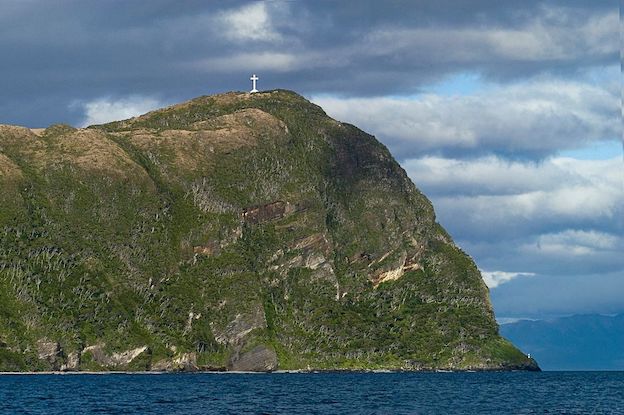
Cape Froward, Chile

Welcome to the World’s Largest New Year’s Celebration
For those traveling from North, Central, or South America, New Year's Eve in Rio offers a rich narrative about how a city can transform a universal holiday into a unique celebration, rooted in local traditions and open to the world.





|
Experiences Finder
(Search our catalog of Experiences here.) |
|---|