|
Pan American Experiences
|
------- |

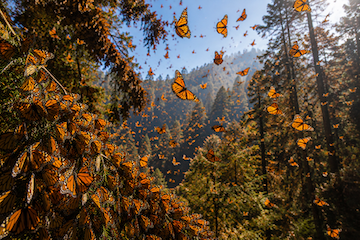
Millions of monarch butterflies cluster on oyamel fir trees in Mexican sanctuaries during their winter migration from Canada and the United States.
The Harpy Eagle and the People Who Still Tell Stories about It |
HEMISPHERE ------------------------------------------1068[TRAVEL+NATURE] | |||
Monarch Butterflies: The Migration That Turns a Forest Into a Sea of WingsEvery Winter, Millions of Monarch Butterflies Reach Mexico’s Mountain Forests in One of North America’s Most Remarkable Migrations.By Marbel Montoya for Ruta Pantera on 10/19/2026 11:40:27 AM |
||||
| Every year, from late autumn into winter, millions of monarch butterflies arrive in the mountain forests of central Mexico after traveling thousands of miles from Canada and the United States. Their destination includes sanctuaries in Michoacán and the State of Mexico, where they cluster along the branches and trunks of oyamel fir trees. The butterflies can cover entire trees in shades of orange and black, creating one of the most distinctive wildlife spectacles in North America.
The Monarch Butterfly Biosphere Reserve, a UNESCO World Heritage Site, protects essential parts of these wintering forests. Its importance lies not simply in the number of butterflies that arrive each season, but in the specific conditions the landscape provides: elevation, humidity, relatively stable temperatures, and shelter from climatic extremes. This microclimate allows the butterflies to reduce their activity and conserve energy during the colder months. A Migration Across Three Countries The eastern monarch migration connects very different landscapes across North America. Butterflies that spend the winter in Mexico reproduce during spring and summer in parts of the United States and Canada. Their descendants continue moving north, and when autumn arrives, a special generation begins the journey south toward the Mexican forests. This migratory generation lives considerably longer than monarchs born during the summer. While many adult monarchs live for approximately a month, those undertaking the autumn migration can survive for several months. Their extended lifespan allows them to travel long distances, overwinter in Mexico, and begin the reproductive cycle when conditions become favorable. Monarch navigation involves biological mechanisms linked to the sun’s position and an internal clock that helps compensate for its apparent movement across the sky. Researchers have made important progress in understanding these processes, although questions remain about how environmental cues and navigation mechanisms work together throughout the entire migration. The Forests That Make Their Return Possible The Mexican sanctuaries are not simply the endpoint of a long journey. They provide essential habitat for the survival of the eastern migratory population. Oyamel fir forests offer the conditions monarchs need to gather during winter. When temperatures rise and sunlight reaches the colonies, many butterflies temporarily leave the branches to fly, drink water, or obtain minerals from damp ground. The arrival of monarchs also carries cultural significance for some communities in the region. In certain local traditions, the butterflies are symbolically associated with the return of ancestral souls during Día de Muertos, or Day of the Dead. These interpretations form part of the area’s cultural heritage, although beliefs and practices vary among communities. Butterfly tourism creates economic opportunities for residents who work as guides, provide transportation, operate food services, or sell local products. Sanctuaries such as El Rosario and Sierra Chincua welcome visitors during the migration season, offering organized routes designed to minimize disturbance to the colonies. Access conditions and butterfly activity vary with the weather and the stage of winter, so checking official information before traveling is advisable. |
||||
|
A Migration Under Pressure
The monarch’s survival depends on a network of habitats spread across its migration route. In breeding areas, the loss of milkweed plants from the genus Asclepias—the only plants on which monarchs lay their eggs and their caterpillars feed—reduces opportunities for reproduction. Agricultural expansion, herbicide use, and other changes to the landscape can also limit the resources available to adult butterflies. In Mexico, forest degradation, changing climatic conditions, and extreme weather events threaten the wintering grounds. Severe storms can cause significant mortality, while shifts in temperature and humidity affect the conditions that allow colonies to conserve energy through the winter. Conservation therefore requires coordinated action across all three countries: protecting Mexican wintering forests, restoring milkweed and nectar-producing plants in breeding areas, and reducing threats along migration routes. Communities surrounding the sanctuaries also play an essential role, because forest protection must remain compatible with local livelihoods. Visiting these refuges offers an opportunity to witness one of the continent’s most remarkable migrations while understanding its vulnerability. Monarch butterflies depend on a chain of suitable conditions extending across thousands of miles. Protecting them means preserving not only the trees where they spend the winter, but also the landscapes they need throughout the rest of the year. |
||||
 Add this article to your favorites
[FOR MEMBERS ONLY] Copy this link to send this article to a friend: [FOR MEMBERS ONLY] |
||||

|
|
||||
|---|---|---|---|---|
| |
|
|
|
|
×
|
||||
|
References: UNESCO. Monarch Butterfly Biosphere Reserve. https://whc.unesco.org/en/list/1290/ U.S. Fish & Wildlife Service. Monarch Butterfly. https://www.fws.gov/initiative/pollinators/monarchs WWF-Mexico. Monarch Butterfly. https://www.wwf.org.mx/ |
||||
Please leave a comment about this article: 1068 |
|
| Enter your email address: |
Your email will not be displayed. |
| Your nickname: | |
| Your comment: | |
| Was this article helpful to you? | |
|
|
|
Articles about exciting travel experiences in our hemisphere.
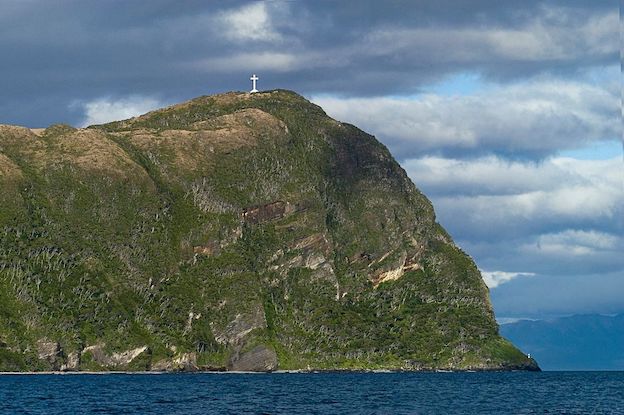
Cape Froward, Chile

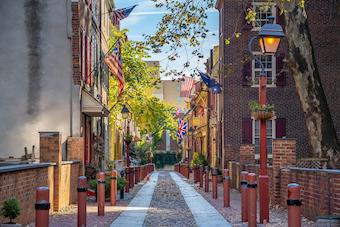


Welcome to the World’s Largest New Year’s Celebration
For those traveling from North, Central, or South America, New Year's Eve in Rio offers a rich narrative about how a city can transform a universal holiday into a unique celebration, rooted in local traditions and open to the world.












|
Experiences Finder
(Search our catalog of Experiences here.) |
|---|