|
Pan American Experiences
|
------- |

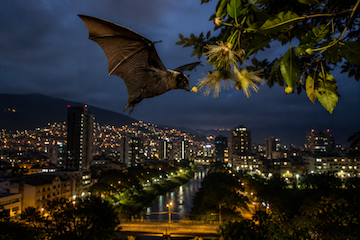
As night falls over the city, bats move silently above rivers, rooftops, and streetlights — pollinating the urban landscape long after most people stop looking at the sky.
|
HEMISPHERE ------------------------------------------1063[TRAVEL+NATURE] | |||
Urban Bats: The Wildlife Flying Above Latin American CitiesAcross Latin America, Bats Control Insects, Disperse Seeds, and Pollinate Plants While Most Residents Sleep.By Marbel Montoya for Ruta Pantera on 10/16/2026 11:40:27 AM |
||||
| When night falls over a Latin American city, a hidden layer of wildlife begins moving above traffic, buildings, and illuminated streets. Bats emerge from their shelters and follow aerial corridors connecting parks, rivers, gardens, and flowering trees. Most residents barely notice them, yet these mammals perform essential ecological functions in urban environments. They may shelter beneath bridges, in building crevices, inside older structures, or among tree foliage. The availability of roosting sites and food, along with the presence of vegetation and water sources, influences which species can survive in each city. Nighttime Allies of Urban Biodiversity Not all bats eat the same foods. Many insect-eating species catch moths, beetles, and other insects in flight. Their activity helps regulate invertebrate populations and can benefit urban ecosystems and certain agricultural activities. Other species consume fruit and disperse seeds, an important process for vegetation regeneration and the recovery of degraded areas. Nectar-feeding bats perform another critical function: they transfer pollen between flowers as they feed. In Mexico, some species pollinate agaves and cacti that bloom at night. This ecological relationship is particularly important for the reproduction of certain plants in arid regions and for maintaining genetic diversity within their populations. Although bats help pollinate plants associated with agave production, not all cultivated varieties depend on them to the same extent. In tropical cities, fruit trees, ornamental plants, and native vegetation can provide food for different bat species. Green corridors and riverbanks also facilitate movement between feeding areas and roosting sites. In Medellín, Bogotá, Quito, and other cities across the region, protecting these spaces can benefit a wide range of wildlife, including bats. |
||||
|
Living Alongside a Misunderstood Species Despite their ecological benefits, bats often inspire fear because of myths and concerns about disease. However, most bat species pose little risk to people when observed from a distance. As with other wild mammals, some can carry pathogens, so they should never be handled or captured without appropriate training and authorization. If a bat enters a home, the safest approach is to keep children and pets away and avoid direct contact. If a colony appears in a roof or another structure, residents should consult local environmental authorities before attempting to remove it. Improvised interventions can injure the animals and, in some cases, cause them to enter other parts of the building. Urban conservation also requires attention to roosting sites. Sealing cracks or carrying out renovations without first checking for wildlife can destroy colonies or separate young bats from their mothers. Preventive measures should consider both residents’ safety and the protection of wildlife. Bats offer a different perspective on nature in Latin American cities. Their presence reminds us that ecosystems do not end where the pavement begins. They continue along rivers, among tree canopies, and through the small spaces that allow wildlife to adapt to human-built landscapes. Protecting these corridors and understanding the role of bats are also ways to conserve urban biodiversity. |
||||
 Add this article to your favorites
[FOR MEMBERS ONLY]
Add this article to your favorites
[FOR MEMBERS ONLY]
Copy this link to send this article to a friend: [FOR MEMBERS ONLY] |
||||

|
|
||||
|---|---|---|---|---|
| |
|
|
|
|
×
|
||||
|
References: Bat Conservation International. Bats and Ecosystems. https://www.batcon.org/ Pan American Health Organization (PAHO). Rabies. https://www.paho.org/en/topics/rabies National Commission for the Knowledge and Use of Biodiversity (CONABIO). Bats of Mexico. https://www.biodiversidad.gob.mx/ |
||||
Please leave a comment about this article: 1063 |
|
| Enter your email address: |
Your email will not be displayed. |
| Your nickname: | |
| Your comment: | |
| Was this article helpful to you? | |
|
|
|
Articles about exciting travel experiences in our hemisphere.


Cape Froward, Chile




Welcome to the World’s Largest New Year’s Celebration
For those traveling from North, Central, or South America, New Year's Eve in Rio offers a rich narrative about how a city can transform a universal holiday into a unique celebration, rooted in local traditions and open to the world.















|
Experiences Finder
(Search our catalog of Experiences here.) |
|---|