|
Pan American Experiences
|
------- |

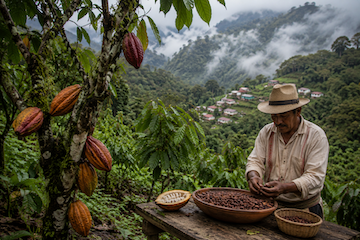
Cloud forests, cacao trees, and generations of local knowledge come together in Oaxaca’s Sierra Norte, where the flavor of chocolate begins long before the harvest—in the mist, water, and biodiversity of the mountains themselves.
|
MEXICO ------------------------------------------1054[TRAVEL+NATURE] | |||
Oaxaca: Cloud Forests, Indigenous Knowledge, and CacaoThe ecosystems of the Sierra Norte reveal how biodiversity, community stewardship, and agricultural traditions are interconnected.By Marbel Montoya for Ruta Pantera on 10/19/2026 11:36:15 AM |
||||
| In Oaxaca’s Sierra Norte, clouds descend over the mountains, enveloping trees in persistent moisture. Moss-covered trunks, ferns, orchids, and other plants growing on branches are part of an exceptional ecosystem: the montane cloud forest. Its importance extends far beyond the scenery. These forests help capture and regulate water, shelter a remarkable diversity of species, and sustain ecological processes essential to nearby communities. The connection between nature and culture is especially visible in this region of Mexico, where Zapotec communities have developed collective approaches to managing and using natural resources. Their knowledge of the land, passed down through generations, is part of a history in which forests are not isolated spaces but sources of water, materials, food, and economic opportunity. |
||||
|
A Small but Essential Ecosystem Cloud forests cover approximately 1% of Mexico’s territory and occur in mountainous areas across several regions of the country. Although their overall extent is limited, they have distinctive environmental conditions, including frequent cloud cover, high atmospheric humidity, and layered vegetation. Ferns and epiphytes—plants that grow on other plants without drawing nutrients from them—find favorable conditions in these forests. Cloud forests have also served as refuges for species during climatic changes over thousands of years. In Oaxaca, forest conservation partly depends on decisions made by communities that manage their own territories. Pueblos Mancomunados, a community organization bringing together Zapotec localities in the Sierra Norte, illustrates how forest management and local economic activities can contribute to a broader conservation strategy. Protecting a forest, however, requires more than keeping its trees standing. Soil degradation, land-use changes, and shifts in rainfall patterns can affect biodiversity and water availability. Effective conservation therefore requires planning, ecological monitoring, and long-term community participation. Cacao and the Importance of Agricultural Landscapes Cacao adds another dimension to the relationship between biodiversity and culture in Mexico. Its agricultural history is closely associated with Tabasco and Chiapas, the country’s leading cacao-producing states. There, agroforestry systems combine cacao trees with shade trees, fruit trees, and other vegetation. When carefully managed, these systems can support biodiversity, nutrient cycling, and soil protection. It is important to distinguish these cacao-growing landscapes from the cloud forests of the upper Sierra Norte. Cacao requires warm, humid conditions, so Mexican production is concentrated mainly in lower-elevation tropical regions. Its connection to Oaxaca provides an opportunity to explore a broader cultural history, but cacao is not a characteristic crop of the highlands around Cuajimoloyas. In producing regions, farming practices, the selection of shade trees, and knowledge passed down among growers influence how cultivation systems function. Research in Chiapas has documented considerable tree diversity within cacao plots, as well as significant carbon storage in their biomass. Results vary according to the species present, the structure of each plot, and management practices. This relationship between agriculture and nature offers an important lesson for conservation: agricultural landscapes do not necessarily have to be devoid of biodiversity. When thoughtfully designed and managed, they can retain tree cover and contribute to certain ecosystem services, although they cannot replace the protection of natural forests. The Sierra Norte of Oaxaca demonstrates why conservation is also a social issue. Biodiversity, water, livelihoods, and community traditions are closely connected, and decisions about land management can affect them all. Recognizing these relationships is essential to protecting ecosystems without separating their natural wealth from the communities that have learned to live within them. |
||||
 Add this article to your favorites
[FOR MEMBERS ONLY]
Add this article to your favorites
[FOR MEMBERS ONLY]
Copy this link to send this article to a friend: [FOR MEMBERS ONLY] |
||||
|
|
||||
|---|---|---|---|---|
| |
|
|
|
|
×
|
||||
|
References: National Commission for the Knowledge and Use of Biodiversity (CONABIO). Cloud Forests. https://www.biodiversidad.gob.mx/ecosistemas/bosqueNublado National Forestry Commission of Mexico (CONAFOR). (2015, June 29). Pueblos Mancomunados of Oaxaca: An Example of Sustainable Forest Management. https://www.gob.mx/conafor/prensa/pueblos-mancomunados-de-oaxaca-ejemplo-de-aprovechamiento-forestal-sostenible?idiom=es Morán-Villa, V. L., et al. (2022). Floristic composition and arrangement of agroforestry systems of cocoa in Tabasco, Mexico. Tropical and Subtropical Agroecosystems. https://www.revista.ccba.uady.mx/ojs/index.php/TSA/article/view/3840 Tree diversity and stored carbon in cocoa agroforestry systems in Soconusco, Chiapas, Mexico. https://www.scielo.org.mx/scielo.php?pid=S2007-40182019000300315&script=sci_arttext |
||||
Please leave a comment about this article: 1054 |
|
| Enter your email address: |
Your email will not be displayed. |
| Your nickname: | |
| Your comment: | |
| Was this article helpful to you? | |
|
|
|
Articles about exciting travel experiences in our hemisphere.
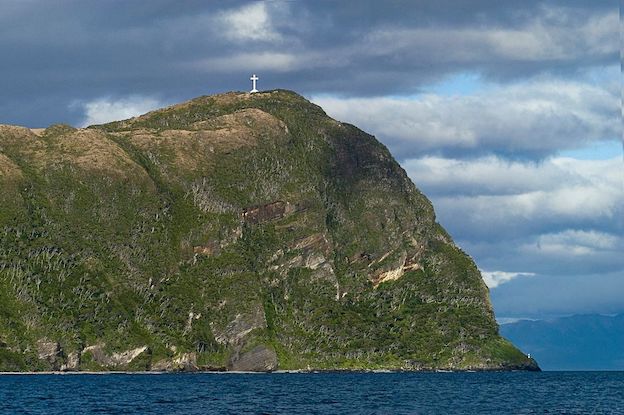
Cape Froward, Chile



Welcome to the World’s Largest New Year’s Celebration
For those traveling from North, Central, or South America, New Year's Eve in Rio offers a rich narrative about how a city can transform a universal holiday into a unique celebration, rooted in local traditions and open to the world.












|
Experiences Finder
(Search our catalog of Experiences here.) |
|---|