|
Pan American Experiences
|
------- |

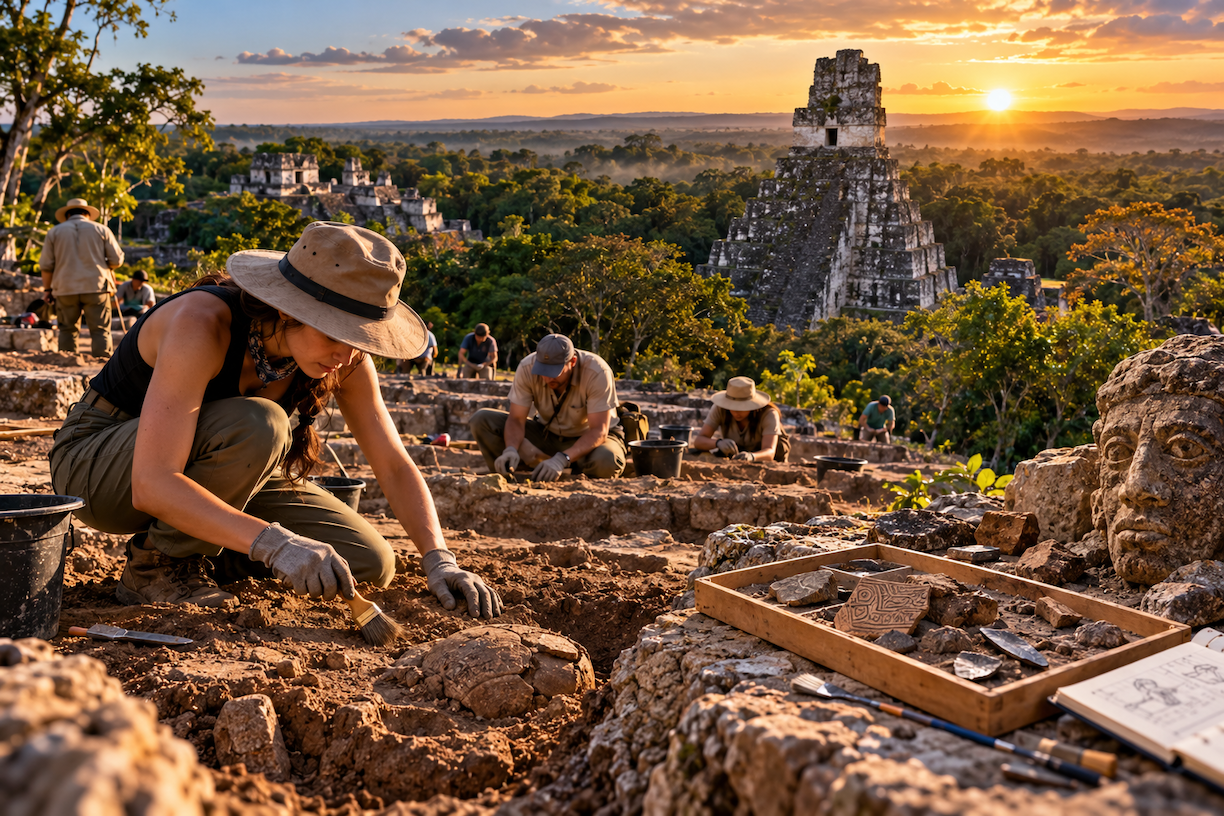
Travelers step beyond sightseeing and into the past, joining archaeologists in the field to uncover artifacts, ancient structures, and stories hidden beneath the earth.
Six Places in the Americas Where You Can Still Hear Real Silence
How Giant Murals Are Transforming Cities Across South and Central America
|
HEMISPHERE ------------------------------------------1050[TRAVEL PLANNING] | |||
Commune With the Past | Archaeological Tourism and the Art of the DigBring Your Curiosity, Put on Your Boots, and Help Archaeologists Uncover the Human Story Across the HemisphereBy Marbel Montoya for Ruta Pantera on 10/7/2026 11:36:15 AM |
||||
| What if your next vacation did not end with a photograph of an archaeological site, but with dirt underneath your fingernails and an artifact sitting in a tray in front of you? Imagine traveling to an ancient Maya settlement in the Belizean rainforest and spending the morning carefully excavating a structure that has been hidden for more than a thousand years, joining archaeologists in Maryland as they screen soil for artifacts from an historic homestead, or working alongside researchers in Canada as they investigate one of the oldest archaeological sites in British Columbia. This is the world of archaeological tourism, and one of its most fascinating forms is the archaeological field experience: travel in which visitors do not simply observe the past but participate, under professional supervision, in the process of discovering and preserving it. The idea could be summed up as: “Help solve the mysteries of humanity. Destination: excavation. I have a shovel, I’ll travel.” The shovel, however, comes with rules. This Is Not Treasure Hunting The first thing prospective archaeology travelers need to understand is that archaeological excavation is scientific research, not treasure hunting. Artifacts are valuable because of their context. A broken piece of pottery, a stone tool, animal bone, shell, charcoal fragment, or piece of metal can tell researchers something about how people lived, traded, ate, worked, worshipped, or died, but only if its location and relationship to surrounding material are carefully documented. That is why legitimate programs work under permits, research designs, professional supervision, and conservation rules. Volunteers may dig, screen soil, map features, clean artifacts, photograph discoveries, record information, or assist with laboratory processing, but they do not simply take objects home. UNESCO's World Heritage Volunteers initiative demonstrates how international travelers can become involved in heritage preservation. Its 2026 campaign included 87 projects at 82 World Heritage properties and sites in 37 countries, including archaeological locations in Guatemala and heritage projects in Mexico. Belize — Become a Maya Archaeologist at La Milpa For travelers who want the closest thing to the classic “I came here to dig” experience, Belize is one of the most interesting destinations in the hemisphere. The Tzaman Acropolis Research Project at La Milpa, in northwestern Belize, offers a four-week Maya archaeology field school scheduled for May 20 through June 13, 2027. Participants live at a remote archaeological research camp inside the Programme for Belize conservation area and work six days a week on excavation and related archaeological activities. This is not a simulated dig. Participants receive hands-on training in archaeological excavation, survey and instrument mapping, technical drawing, photography, documentation, artifact processing, identification, and basic laboratory procedures. No previous archaeological experience is required, and the minimum age is 18. The 2027 program fee is listed at US$2,650 and includes room and board, project transportation, laundry, field equipment, operational costs, and weekend trips to other archaeological sites. Six academic credits are available through Western Colorado University for an additional fee. How to Visit: Apply directly to the Tzaman Acropolis Research Project through Western Colorado University. The 2027 application deadline is March 26, 2027, and the program is physically demanding, with participants working in a remote tropical environment. For a traveler who has always wondered what it would feel like to disappear into the jungle and become part of an archaeological expedition, this is about as close as tourism gets. Guatemala — Volunteer Among the Maya Guatemala offers another extraordinary possibility because its archaeological landscape contains some of the hemisphere's most important Maya sites, including Tikal, Quiriguá, and Tak'alik Ab'aj. UNESCO's 2026 World Heritage Volunteers campaign selected all three Guatemalan sites for volunteer projects: Tikal National Park, the Archaeological Park and Ruins of Quiriguá, and the National Archaeological Park Tak'alik Ab'aj. The 2026 project dates ran from May through August, so travelers planning a future trip should watch for the next campaign rather than assuming that volunteers can simply join an excavation independently. Tak'alik Ab'aj is particularly fascinating because its archaeological history stretches roughly 1,700 years and records the transition between Olmec and early Maya cultural traditions. UNESCO describes evidence of long-distance exchange, ceramics, lithic and lapidary artifacts, water-management systems, and sacred architecture at the site. Quiriguá offers a different experience, centered on monumental Maya sculpture and architecture, while Tikal preserves an enormous ancient urban landscape of temples, palaces, ceremonial platforms, residences, roads, and plazas surrounded by tropical forest. How to Visit: Travelers can visit all three sites as conventional archaeological tourists, but participation in official volunteer projects must be arranged through the organizations selected by UNESCO. The World Heritage Volunteers program instructs applicants to contact project organizers directly rather than applying through UNESCO itself. Maryland — Dig Into an African American Homestead You do not have to travel to a Maya jungle to get your hands dirty. At Jefferson Patterson Park and Museum in Maryland, the state's Public Archaeology Program allows members of the public to work with archaeologists on an actual archaeological site. Participants can excavate, screen soil for artifacts, and wash and process objects in the Maryland Archaeological Conservation Lab. The current project focuses on a Black homestead dating from approximately the 1830s to the 1930s. That makes the experience particularly valuable because visitors are not merely uncovering anonymous objects; they are participating in research into the lives of real families and communities whose histories can sometimes be poorly represented in traditional historical records. How to Visit: Travel to Jefferson Patterson Park and Museum in St. Leonard, Maryland, register for an available Public Archaeology session, wear clothes that can get dirty, and be prepared to spend several hours working alongside professional archaeologists. No archaeological degree is required, making this an accessible introduction to hands-on archaeology. Calgary, Canada — Archaeology in the City Canada offers another model of public archaeology through the University of Calgary's Public Archaeology Program. During its 2026 excavation program at Edworthy Park, members of the public were invited to spend a day excavating alongside university archaeologists and students. The volunteer experience included a site tour, an artifact showcase, and guided excavation. The important lesson here is that archaeology does not always happen in remote jungles or deserts. Archaeological sites can exist underneath parks, neighborhoods, farms, and urban landscapes, sometimes preserving evidence of thousands of years of human activity. How to Visit: The 2026 Calgary excavation ran from May 21 through June 10, so travelers should monitor the University of Calgary's Public Archaeology Program for the next season's registration. |
||||
|
Pennsylvania — Dig Into Ice Age and Colonial History Pennsylvania has developed another interesting public archaeology model. The Pennsylvania Archaeological Council and Society for Pennsylvania Archaeology launched a hands-on public training program in 2026 that brought avocational archaeologists, students, and lifelong learners into supervised archaeological research. The week-long program worked at Fort Halifax, an eighteenth-century frontier fort, and the Shoop Paleoindian Site, which dates to approximately 12,800 years ago. Participants learned excavation, screening, artifact identification, mapping, documentation, and archaeological ethics. The Shoop site is particularly intriguing for travelers fascinated by deep human history because it reaches back to the earliest chapters of human occupation in the region. How to Visit: The 2026 field school has already taken place, so this is one to watch for the next program cycle. Its model demonstrates how archaeological organizations can give members of the public meaningful field experience without turning excavation into recreational treasure hunting. Mexico — Volunteer Through World Heritage Mexico's enormous archaeological and historic heritage also creates opportunities for travelers interested in combining cultural tourism with volunteer service. UNESCO's 2026 World Heritage Volunteers campaign included projects associated with the sixteenth-century monasteries on the slopes of Popocatépetl and the Historic Centre of Puebla. These programs are a useful reminder that archaeological tourism does not always mean digging into a pre-Columbian pyramid. Heritage preservation can involve historic architecture, archaeological landscapes, documentation, maintenance, conservation, community activities, and public interpretation. New Mexico — Learn the Archaeologist's Craft New Mexico offers another route into archaeology, particularly for travelers who are considering something more substantial than a single volunteer day. The New Mexico Office of Archaeological Studies has developed field-training and volunteer opportunities that can involve archaeological collections, artifact cleaning and processing, preparation of artifacts and samples for analysis, and other preservation work. These programs demonstrate the professional pathway available to people who want to go beyond recreational archaeology. For travelers already planning a trip through New Mexico, Santa Fe and Albuquerque can serve as gateways to understanding archaeology beyond the famous ruins: museums, laboratories, historic sites, pueblos, field projects, and professional research all form part of the state's archaeological landscape. What About Human Bones? This is where the romantic image of the archaeological adventure needs some clarification. Archaeological excavations can uncover human remains, animal bones, burials, and other forms of biological evidence, but these discoveries are treated very differently from ordinary artifacts. Human remains may involve legal protections, descendant communities, Indigenous cultural authorities, religious considerations, and strict professional protocols. A volunteer should never handle, remove, photograph, or publicly display human remains unless specifically instructed and authorized by the archaeological project. In many projects, volunteers will never work directly with them at all. The same principle applies to artifacts. If you discover something in the soil, the exciting moment is not “I found something I can keep.” The exciting moment is “I found something that might help explain what happened here.” How to Choose Your Archaeological Adventure If you want to spend several weeks actually excavating, look for an accredited or university-affiliated field school such as the 2027 La Milpa program in Belize. If you want a single afternoon or day of hands-on work, public archaeology programs such as Jefferson Patterson Park are more appropriate. If your interest is heritage preservation rather than excavation specifically, UNESCO's World Heritage Volunteers program provides another pathway. And if archaeology has become a serious interest rather than a vacation experiment, university field schools and professional training programs can take you much further. The Archaeological Traveler's Code Go where you are invited. Work only under the direction of qualified archaeologists or authorized heritage organizations. Do not remove artifacts. Do not dig independently at archaeological sites. Respect Indigenous communities and descendant groups. Follow photography rules and leave archaeological sites exactly as you found them. Sometimes the most important contribution you can make is not discovering something new, but helping professionals document and preserve something that has already survived for centuries. The Reward Archaeological tourism changes the meaning of a vacation because it replaces passive sightseeing with participation. You are no longer simply standing in front of a Maya temple, walking through an ancient settlement, or looking at an artifact behind glass. You are beginning to understand the enormous amount of work that goes into recovering the evidence behind those experiences. The real thrill is not finding gold. It is finding a tiny piece of pottery that tells archaeologists where people lived, a burned seed that reveals what they ate, a stone tool that shows how technology traveled, an animal bone that changes an interpretation of the landscape, or a foundation that reveals how a vanished community organized its world. That is the great promise of archaeological travel: you arrive as a tourist, put on your field clothes, learn how to read the ground, and leave with a completely different understanding of the human story. Bring your curiosity. Bring your boots. And, yes, bring the shovel—but only when the archaeologist tells you where to dig. References UNESCO World Heritage Centre — World Heritage Volunteers 2026 Campaign; Archaeological Institute of America — Archaeological Fieldwork Opportunities Bulletin; Tzaman Acropolis Research Project at La Milpa, Belize; Jefferson Patterson Park and Museum Public Archaeology Program; University of Calgary Public Archaeology Program; Pennsylvania Archaeological Council and Society for Pennsylvania Archaeology; New Mexico Office of Archaeological Studies. |
||||
 Add this article to your favorites
[FOR MEMBERS ONLY]
Add this article to your favorites
[FOR MEMBERS ONLY]
Copy this link to send this article to a friend: [FOR MEMBERS ONLY] |
||||
|
|
||||
|---|---|---|---|---|
| |
|
|
|
|
×
|
||||
Please leave a comment about this article: 1050 |
|
| Enter your email address: |
Your email will not be displayed. |
| Your nickname: | |
| Your comment: | |
| Was this article helpful to you? | |
|
|
|
Articles about exciting travel experiences in our hemisphere.
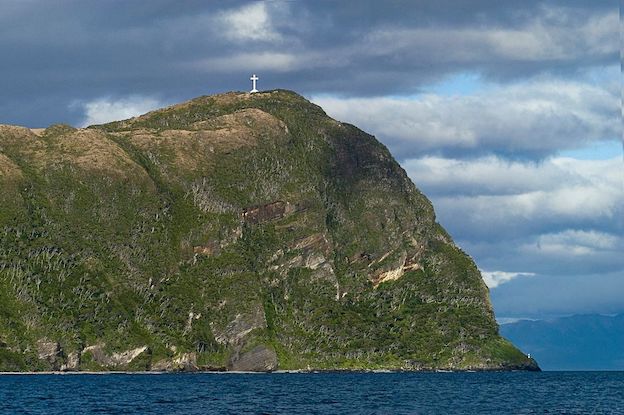
Cape Froward, Chile


Welcome to the World’s Largest New Year’s Celebration
For those traveling from North, Central, or South America, New Year's Eve in Rio offers a rich narrative about how a city can transform a universal holiday into a unique celebration, rooted in local traditions and open to the world.










|
Experiences Finder
(Search our catalog of Experiences here.) |
|---|