|
Pan American Experiences
|
------- |

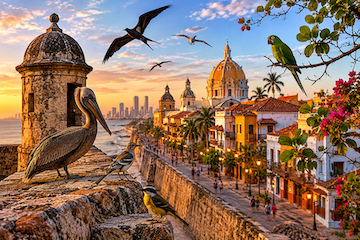
At sunrise, Cartagena’s ancient walls become a perch for pelicans, kiskadees, and frigatebirds — a reminder that one of the Caribbean’s great birdwatching destinations hides in plain sight among the city’s colonial stones.
Conscious tourism on the final frontier
|
HEMISPHERE ------------------------------------------1040[TRAVEL+NATURE] | |||
Cartagena’s Urban Birdwatching Guide: What Lives Along the City’s Ancient WallsBirds, Mangroves, and Wildlife Thriving Among Cartagena’s Historic Streets and Coastal FortificationsBy Marbel Montoya for Ruta Pantera on 10/8/2026 11:36:15 AM |
||||
| Just after sunrise, before the Caribbean heat settles over the city, a small movement flashes across the weathered stones of Cartagena’s centuries-old walls. A tropical mockingbird lands briefly on a cannon overlooking the sea, pauses, and disappears toward a cluster of almond trees growing beside the fortifications. At this hour, Cartagena feels different. The vendors have not yet filled the plazas. Horse-drawn carriages remain parked in the shade. The narrow streets of the walled city are still quiet enough to hear waves striking the rocks below the ramparts. And above those walls, among the churches, plazas, balconies, and colonial rooftops, another city is already awake. One built from feathers. Most visitors arrive in Cartagena looking for architecture, history, food, or Caribbean sunsets. Few realize that the city also functions as an urban ecosystem where dozens of bird species have adapted to life among stone fortifications, tropical gardens, fishing boats, and mangrove wetlands. Birdwatching here rarely begins in a forest. It begins on a sidewalk. Walking along the walls near the old city at dawn, the first sounds usually come from great kiskadees calling from palm trees. Their sharp whistles echo between colonial buildings while frigatebirds circle high above the Caribbean, barely moving their wings as they ride rising air currents from the coastline. The contrast feels unusual. Below, a UNESCO World Heritage city built by the Spanish Empire. Above, birds following routes that existed long before the first stones were laid. Near the bastions facing the sea, brown pelicans glide just above the water’s surface, occasionally plunging headfirst into schools of fish moving close to shore. Royal terns gather along rocky edges where waves break against the ancient walls. Magnificent frigatebirds drift overhead like black kites suspended against the morning sky. The city and the coastline overlap completely here. There is no clear boundary between them. A short walk away, the atmosphere changes again. Inside plazas shaded by enormous trees, tropical species move through the urban canopy almost unnoticed. Palm tanagers hop between branches. Bananaquits visit flowering plants growing in courtyards and balconies. Saffron finches gather around café terraces waiting for crumbs left behind by early customers. Some residents barely notice them anymore. Others know exactly where to look. Parque del Centenario: A Wildlife Pocket in the Historic Center Experienced local birders often recommend beginning near Parque del Centenario, one of the most interesting wildlife pockets inside the historic center. While visitors often arrive searching for sloths that inhabit the park’s trees, the area also attracts a surprising variety of birds. Green iguanas bask on branches while orioles, flycatchers, and parakeets move through the canopy overhead. The city seems to compress multiple ecosystems into a few blocks. |
||||
|
And then there are the mangroves. A short distance from the colonial center, the mangrove systems surrounding Cartagena reveal an entirely different side of urban birdlife. Places like La Boquilla and the wetlands connected to the Ciénaga de la Virgen function as biological corridors linking the city to the wider Caribbean coast. Here, birdwatching becomes quieter. The sounds of traffic fade behind reeds and shallow lagoons. Herons stand motionless in the water. Snowy egrets stalk small fish through the shallows. Ospreys scan the wetlands from dead branches before diving suddenly toward the surface. The skyline of modern Cartagena remains visible in the distance. Glass towers rising above wetlands filled with wildlife. It is one of the city’s most striking contrasts. For centuries, Cartagena developed around water. The sea shaped its defenses. The bays shaped its commerce. The mangroves shaped the coastline itself. Even today, many of the birds living within the city depend on habitats that survived urban expansion rather than disappearing beneath it. A City on the Migratory Route That relationship becomes most visible during migration season. Every year, migratory birds traveling between North and South America pass through the Caribbean coast of Colombia. Some remain briefly in Cartagena’s wetlands, parks, and coastal habitats before continuing their journeys. Others spend entire seasons feeding among the lagoons and mangrove forests surrounding the city. To birdwatch in Cartagena is therefore not only to observe local wildlife. It is to witness movement. Birds arriving from distant continents. Coastal species moving between sea and city. Urban-adapted birds nesting inside landscapes transformed by centuries of human history. By late morning, the city becomes louder. The plazas fill. The cafés open. The heat settles heavily over stone streets and church facades. Most visitors shift their attention toward museums, beaches, and restaurants. But the birds remain. A pelican crossing the harbor. A parakeet vanishing between balconies. A kestrel perched atop a colonial bell tower. Small reminders that even in one of Latin America’s most visited cities, nature never entirely left. It simply learned how to live among the walls. |
||||
 Add this article to your favorites
[FOR MEMBERS ONLY]
Add this article to your favorites
[FOR MEMBERS ONLY]
Copy this link to send this article to a friend: [FOR MEMBERS ONLY] |
||||
|
|
||||
|---|---|---|---|---|
| |
|
|
|
|
×
|
||||
Please leave a comment about this article: 1040 |
|
| Enter your email address: |
Your email will not be displayed. |
| Your nickname: | |
| Your comment: | |
| Was this article helpful to you? | |
|
|
|
Articles about exciting travel experiences in our hemisphere.
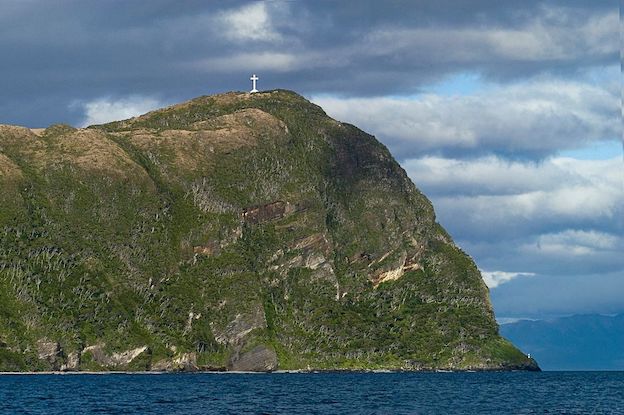
Cape Froward, Chile



Welcome to the World’s Largest New Year’s Celebration
For those traveling from North, Central, or South America, New Year's Eve in Rio offers a rich narrative about how a city can transform a universal holiday into a unique celebration, rooted in local traditions and open to the world.













|
Experiences Finder
(Search our catalog of Experiences here.) |
|---|