|
Pan American Experiences
|
------- |

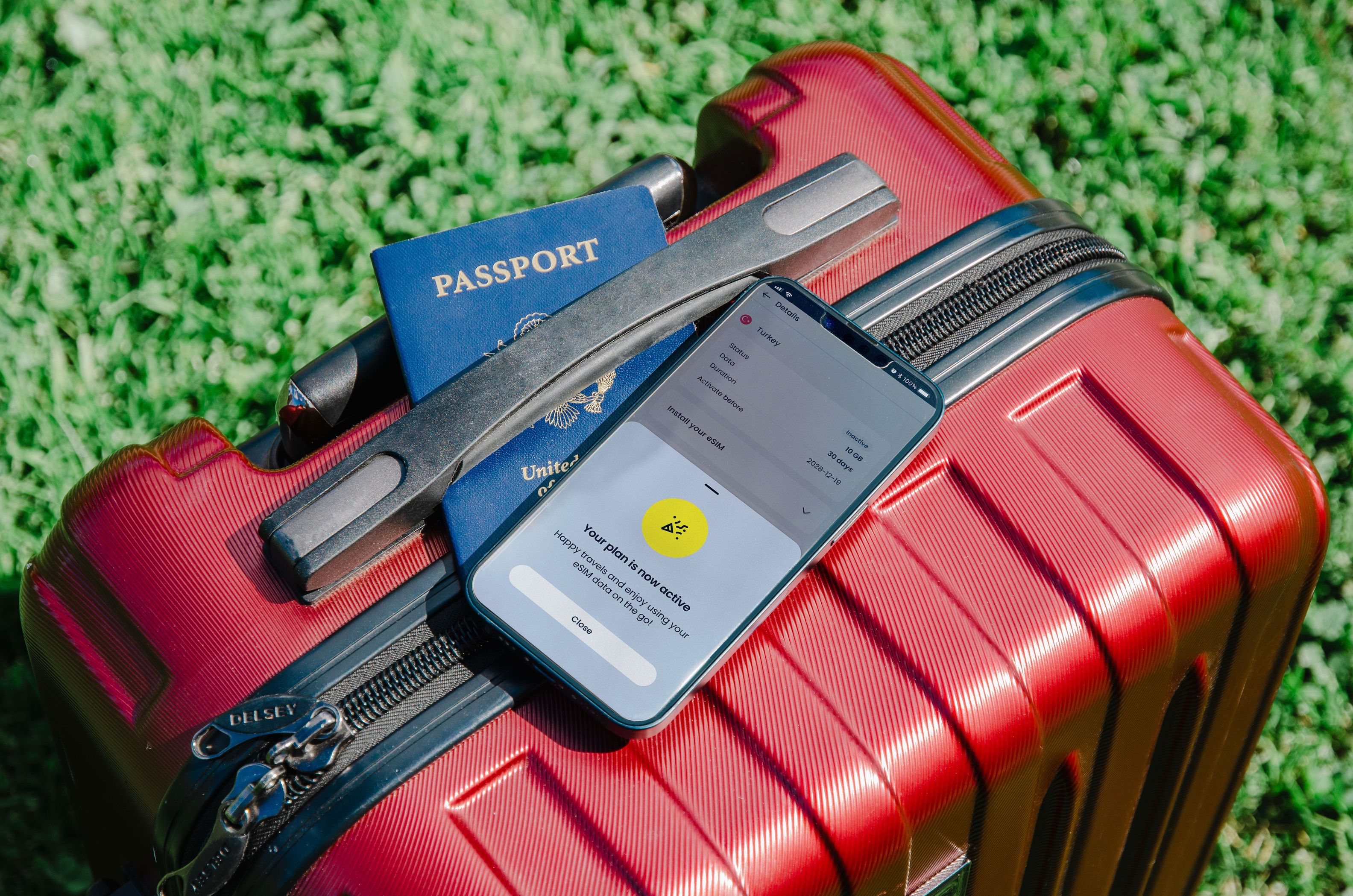
AI can speed up an agent's work, but it cannot replace their judgment. Photo by Jacob/Pexels.
Get Naked In a Coastal Paradise
Iran-Contra War: The Cost to Pan-American Tourism
Night Bats: The Pollinators Nobody Talks About in Latin American Cities |
HEMISPHERE ------------------------------------------1007[BUSINESS FEATURE] | |||
AI: a Double-Edged Sword for Travel AgentsAI Can Boost Agency Productivity, but Trust, Judgment, and Human Oversight Remain Key Assets.By Estefanía Muriel for Ruta Pantera on 10/9/2026 11:23:18 AM |
||||
| Can a travel agency use artificial intelligence to work faster without turning its service into an automated conversation? The question is no longer futuristic. By 2026, AI is already involved in searching, comparing, and planning trips, while agents face new competitive pressure: to be more efficient without losing the core values that justify their role in the industry.
This shift doesn't mean travelers no longer need human interaction. Expedia Group found that nearly 70% of respondents prefer to book with trusted travel brands rather than directly with chatbots or AI agents. The opportunity, therefore, lies less in replacing the travel advisor and more in combining automation, destination knowledge, and human support during the moments when a decision matters most. For agencies, this transition also has a technological and regulatory dimension. AI systems can reduce repetitive tasks, accelerate responses, and expand customer service capacity, but they introduce risks of errors, inaccurate data, and a lack of transparency. Furthermore, in Latin America, the regulation of artificial intelligence is progressing unevenly, but it is converging on greater demands for transparency, data protection, risk assessment, and accountability. AI in Travel Agencies: From Testing to Productivity The most immediate advantage lies in the work that happens before and after a sales conversation. An agency can use AI to summarize preferences, compare alternatives, structure itineraries, prepare draft messages, or identify information that needs updating. Phocuswright reported in 2016 that more than 60% of surveyed travel companies were experimenting with agentic AI or expanding its use, a sign that the technology has already moved from isolated testing to widespread implementation. Productivity, however, shouldn't be measured solely by how many minutes a tool saves. The real benefit emerges when that time is translated into more inquiries handled, sales follow-up, personalization, or problem resolution. AI can handle organizing information and producing an initial draft; the agent must then decide what to recommend, what to discard, and what to explain to the customer. Thus, automation functions as business infrastructure, not as a substitute for judgment. This division of labor can also benefit smaller agencies. The World Economic Forum warns that digital skills gaps continue to hinder many small tourism businesses from taking advantage of technological transformation. For an independent agency, a phased approach can reduce this disadvantage: starting with concrete, measurable internal processes before investing in complex systems. The business question isn't how much AI it can buy, but what profitable problem it can solve. Trust and Data: The New Risk of AI in Travel The risk arises when efficiency begins to be confused with trust. Expedia Group points out that travelers accept AI to suggest options, monitor prices, and build itineraries, but maintain a strong preference for well-known brands when booking and receiving support. For travel agents, this gap is strategic: if the tool makes discoveries, the agency must demonstrate why its expertise remains crucial when money, changes, restrictions, or unforeseen circumstances are involved. There's also a new visibility problem. Accenture argues that AI agents are changing how travelers compare airlines, hotels, rewards, and policies, and that companies will need sufficiently connected information and systems to be understood and selected by these tools. This forces agencies to carefully manage the quality of their own data, terms and conditions, and content, because a poor digital infrastructure can make them less visible to the algorithmic intermediary. The political dimension of AI is also gaining momentum in Latin America. Countries in the region are making progress, albeit at different paces, in developing policies and regulatory frameworks to guide its development and responsible use. For travel agencies, this means that incorporating artificial intelligence goes far beyond simply adopting a new tool: it requires paying attention to data protection, system transparency, and consumer responsibility—aspects that could become new business standards. |
||||
|
Travel Agents: The Hybrid Model That's Coming
The most sustainable model appears to be hybrid: AI to expedite repetitive tasks and people to interpret what matters. An agency can automate initial research but reserve professional intervention for complex journeys, changes, specific needs, sensitive decisions, and trust-building. UN Tourism has approached the adoption of AI in the sector from a perspective that combines innovation with considerations for tourism stakeholders, reinforcing the need for a service-oriented implementation. In the coming years, the competitive advantage may shift from those who simply “use AI” to those who have better processes for overseeing it. Phocuswright identifies 2026 as a turning point toward systems capable of performing real-world tasks, while Accenture observes that travelers want assistance without completely relinquishing control. For agencies, this opens up a clear opportunity: designing workflows where the machine prepares, the professional validates, and the client retains the final decision. AI doesn't eliminate the value of travel agents; it changes where they need to demonstrate it. The economic opportunity lies in using technology to provide better service, respond faster, and free up time that can be dedicated to relationship building, consultative selling, and problem-solving. But trust will remain a human asset that's difficult to automate. Agencies that understand this combination will be able to transform AI from a potential threat into a tool for differentiation and productivity. |
||||
 Add this article to your favorites
[FOR MEMBERS ONLY]
Add this article to your favorites
[FOR MEMBERS ONLY]
Copy this link to send this article to a friend: [FOR MEMBERS ONLY] |
||||

|
|
||||
|---|---|---|---|---|
| |
|
|
|
|
×
|
||||
|
References: Accenture. (2026, September 9). Win the AI agent, win the traveler . Accenture. https://www.accenture.com/en/insights/travel/win-ai-agent Deloitte. (2025). The new regulatory map of artificial intelligence in Latin America . Deloitte. https://www.deloitte.com/latam/es/services/consulting/perspectives/el-nuevo-mapa-regulatorio-de-la-inteligencia-artificial-en-latin.html National Planning Department. (2025, November 14). CONPES 4144: National Artificial Intelligence Policy . Government of Colombia. https://colaboracion.dnp.gov.co/CDT/Conpes/Econ%C3%B3micos/4144.pdf National Planning Department. (2025). CONPES 4144: Colombia's roadmap for artificial intelligence: current challenges and future transformation . Government of Colombia. https://dnp.gov.co/publicaciones/Planeacion/Paginas/conpes-4144-hoja-de-ruta-colombia-inteligencia-artificial-retos-actuales-transformacion-futura.aspx European Commission. (2026). Guidelines on transparency obligations for providers and deployers of AI systems . European Commission. https://digital-strategy.ec.europa.eu/en/library/guidelines-transparency-obligations-providers-and-deployers-ai-systems Expedia Group. (2026, April 14). Expedia Group reveals “The AI Trust Gap”: Travelers embrace AI for planning but rely on trusted brands to book . Expedia Group. https://ir.expediagroup.com/news-and-events/news/news-details/2026/Expedia-Group-Reveals-The-AI-Trust-Gap-Travelers-Embrace-AI-for-Planning-but-Rely-on-Trusted-Brands-to-Book/default.aspx Licks Attorneys. (2025). Regulation of artificial intelligence in Brazil and worldwide . Licks Legal. https://www.lickslegal.com/post/regulation-of-artificial-intelligence-in-brazil-and-worldwide/ Phocuswright Research. (2026). 61% of travel businesses surveyed experimenting with or scaling agentic AI . Phocuswright. https://www.phocuswright.com/Travel-Research/Research-Updates/2026/61-of-travel-business-surveyed-experimenting-with-or-scaling-agentic-ai National Tourism Service. (2025). Sernatur launches Chile Travel App, a new digital tool to discover and plan trips around Chile . Government of Chile. https://www.sernatur.cl/sernatur-lanza-chile-travel-app-una-nueva-herramienta-digital-para-descopia-y-planificador-viajes-por-chile/ Federal Senate of Brazil. (2025). Legislative activity: Draft Law No. 2,338/2023 . Federal Senate. https://www25.senado.leg.br/web/atividade/materias/-/materia/172838 World Economic Forum. (2026). Travel & Tourism Development Index 2026: Global performance trends . World Economic Forum. https://www.weforum.org/publications/travel-tourism-development-index-2026/in-full/3-global-performance-trends/ |
||||
Please leave a comment about this article: 1007 |
|
| Enter your email address: |
Your email will not be displayed. |
| Your nickname: | |
| Your comment: | |
| Was this article helpful to you? | |
|
|
|
Articles about exciting travel experiences in our hemisphere.


Cape Froward, Chile



Welcome to the World’s Largest New Year’s Celebration
For those traveling from North, Central, or South America, New Year's Eve in Rio offers a rich narrative about how a city can transform a universal holiday into a unique celebration, rooted in local traditions and open to the world.




















|
Experiences Finder
(Search our catalog of Experiences here.) |
|---|