|
Pan American Experiences
|
------- |

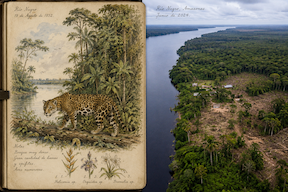
A nineteenth-century naturalist’s sketch and a modern aerial view of the Amazon reveal the same landscape through two very different lenses — one documenting discovery, the other recording transformation.
The Republican Loyalty Cracks — And In the Fissure: Cuba, Greenland, and the World
Why Does India Lead the 2025 Cryptocurrency Adoption Ranking? Benefits and Drawbacks
|
HEMISPHERE ------------------------------------------1004[TRAVEL+NATURE] | |||
The Naturalist’s Notebooks: What Nineteenth-Century Illustrations Reveal About the Amazon We No Longer HaveWhat Early Naturalists Recorded About a Changing AmazonBy Marbel Montoya for Ruta Pantera on 10/9/2026 11:23:18 AM |
||||
| The jaguar occupies the center of the page. Its body is slightly turned, one paw lifted as if it has just paused beside a riverbank. Behind it rises a dense wall of vegetation rendered with meticulous attention: broad tropical leaves, tangled vines, palms, orchids, and trees whose crowns disappear beyond the limits of the illustration. Above the animal, a pair of macaws crosses an empty patch of sky. Every feather is carefully drawn. Every plant seems identified, measured, and catalogued. The image feels scientific. But it is also a portrait of imagination. Like many illustrations produced by naturalists traveling through South America during the nineteenth century, the drawing is not simply documenting the Amazon. It is attempting to explain it to people who would never see it for themselves. Long before photography became practical in tropical forests, the Amazon existed for much of Europe and North America as a collection of sketches, watercolors, engravings, journals, and expedition notebooks. Scientists, artists, explorers, missionaries, and surveyors filled volumes with drawings intended to capture landscapes that seemed impossibly vast and biologically overwhelming. Today, those illustrations remain among the most fascinating visual archives of the rainforest. Not because they show us exactly what the Amazon looked like, but because they reveal how people learned to see it. One of the greatest challenges facing nineteenth-century naturalists was scale. The Amazon resisted simplification. Travelers arriving from Europe often found themselves confronting ecosystems unlike anything they had previously experienced. Rivers stretched beyond visible horizons. Trees rose dozens of meters into the air. Thousands of species surrounded them simultaneously. Photography was still in its infancy, and the equipment was heavy, fragile, and poorly suited to humid tropical conditions. So naturalists drew. Figures such as Alexander von Humboldt, Alfred Russel Wallace, Henry Walter Bates, and dozens of lesser-known illustrators carried sketchbooks into the rainforest. Some drew directly in the field. Others created detailed studies later from specimens, notes, and memory. Their notebooks became laboratories. A leaf collected beside a river might later appear in a published engraving. A bird observed for only a few moments could become the basis for a carefully rendered scientific plate. Entire ecosystems were reconstructed through observation, annotation, and artistic interpretation. The result was a visual Amazon assembled one page at a time. Looking closely at these nineteenth-century images, certain patterns emerge. The forests often appear astonishingly dense. Illustrators repeatedly emphasized enormous trees, continuous canopies, and tangled vegetation extending in every direction. Riverbanks seem crowded with plant life. Wetlands overflow with birds. Mammals appear integrated into landscapes rather than isolated from them. In many drawings, the forest feels uninterrupted. There are villages, certainly. Canoes. Indigenous communities. Occasional settlements. But roads are absent. Power lines do not cross the horizon. Large clearings rarely dominate the composition. The illustrations reflect an Amazon where ecological continuity still defined much of the landscape. |
||||
|
Not untouched, but connected. The animals that appear most frequently in these notebooks are also revealing. Jaguars, harpy eagles, scarlet macaws, giant river otters, tapirs, and anacondas fascinated naturalists because they represented forms of life that seemed both familiar and extraordinary. Many illustrations depict them with remarkable detail, while others contain inaccuracies produced by secondhand observations or preserved specimens. Yet even the mistakes tell a story. They reveal how knowledge moved during the nineteenth century. Before wildlife documentaries, field guides, and digital databases, understanding an animal often depended upon conversations, written descriptions, preserved skins, and sketches exchanged between travelers. The image became part science and part interpretation — a record not only of the species itself, but of what observers believed about it. Perhaps the most revealing aspects of these notebooks are the things that receive little attention. Smoke. Clearings. Extraction. Deforestation. Industrial activity. Large-scale environmental change. Many nineteenth-century illustrations present the Amazon as an endless wilderness because that was often the aspect naturalists considered most significant. Yet even during that era, the region was already deeply shaped by human history. Indigenous societies had managed landscapes for centuries. Trade routes connected distant communities. The rubber boom would soon transform vast portions of the basin. The drawings often minimize these realities while emphasizing biological abundance. They tell us as much about nineteenth-century ideas of nature as they do about the rainforest itself. Modern photographers frequently revisit locations described by early naturalists. Sometimes the continuity is striking. Certain sections of the western Amazon still contain forests that appear remarkably similar to nineteenth-century descriptions. Rivers continue flooding seasonal forests. Macaws still cross above clay licks. Jaguars continue moving through remote territories largely unseen by humans. In other places, however, the differences are impossible to ignore. Satellite imagery now reveals roads extending into regions once reached only by river travel. Agricultural frontiers interrupt continuous forest. Mining operations alter river systems. Some species occupy smaller ranges than they once did. The comparison does not require dramatic language. The images speak for themselves. A nineteenth-century sketch showing uninterrupted canopy beside a modern aerial photograph often reveals decades of change more clearly than statistics alone. But perhaps the greatest value of these notebooks is not the information they contain. It is the method they represent. Nineteenth-century naturalists spent extraordinary amounts of time observing. A single illustration might require days of field notes. Artists studied feather patterns, leaf structures, insect anatomy, and riverbank vegetation with an intensity that feels almost unfamiliar today. The drawings remind us that understanding begins with attention. Before measurement. Before analysis. Before argument. Someone first had to sit quietly beside a river and look. The Amazon preserved inside these illustrations no longer exists exactly as it appears on the page. Neither do the people who drew it. Yet the notebooks remain valuable because they offer something rare: a visual record of how one of Earth’s largest ecosystems appeared to observers living more than a century ago. They allow us to compare, to question, and to notice. And perhaps most importantly, they remind us that every generation inherits its own version of the forest. The artists of the nineteenth century recorded the Amazon they could see. The responsibility of the present is to look just as carefully at the one that remains. |
||||
 Add this article to your favorites
[FOR MEMBERS ONLY]
Add this article to your favorites
[FOR MEMBERS ONLY]
Copy this link to send this article to a friend: [FOR MEMBERS ONLY] |
||||
|
|
||||
|---|---|---|---|---|
| |
|
|
|
|
×
|
||||
Please leave a comment about this article: 1004 |
|
| Enter your email address: |
Your email will not be displayed. |
| Your nickname: | |
| Your comment: | |
| Was this article helpful to you? | |
|
|
|
Articles about exciting travel experiences in our hemisphere.
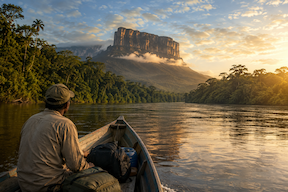
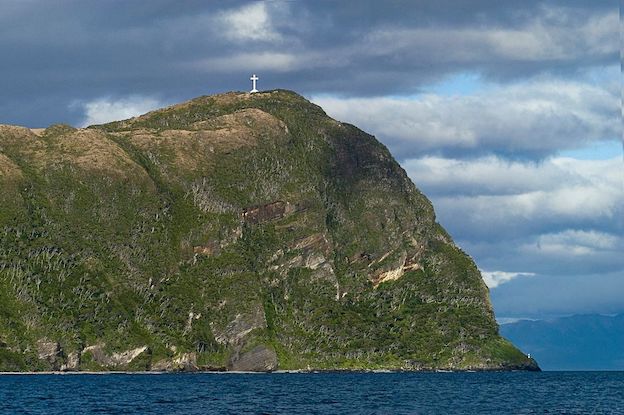
Cape Froward, Chile
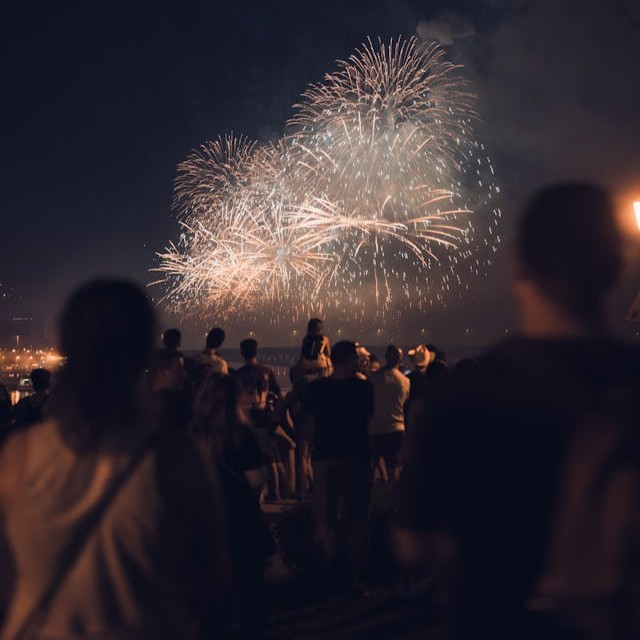

Welcome to the World’s Largest New Year’s Celebration
For those traveling from North, Central, or South America, New Year's Eve in Rio offers a rich narrative about how a city can transform a universal holiday into a unique celebration, rooted in local traditions and open to the world.









|
Experiences Finder
(Search our catalog of Experiences here.) |
|---|